
Unbiased headlines. Facts, not spin.
Every story is an unbiased news briefing written from 110+ sources across the spectrum — sources linked so you can verify it yourself.
 tech
Major Story (7/10)
August 1, 2026 at 06:45 PM
tech
Major Story (7/10)
August 1, 2026 at 06:45 PM
China Weighs Restricting Foreign Access to Its Top AI Models While Congress Eyes Limits on U.S. Cloud Access
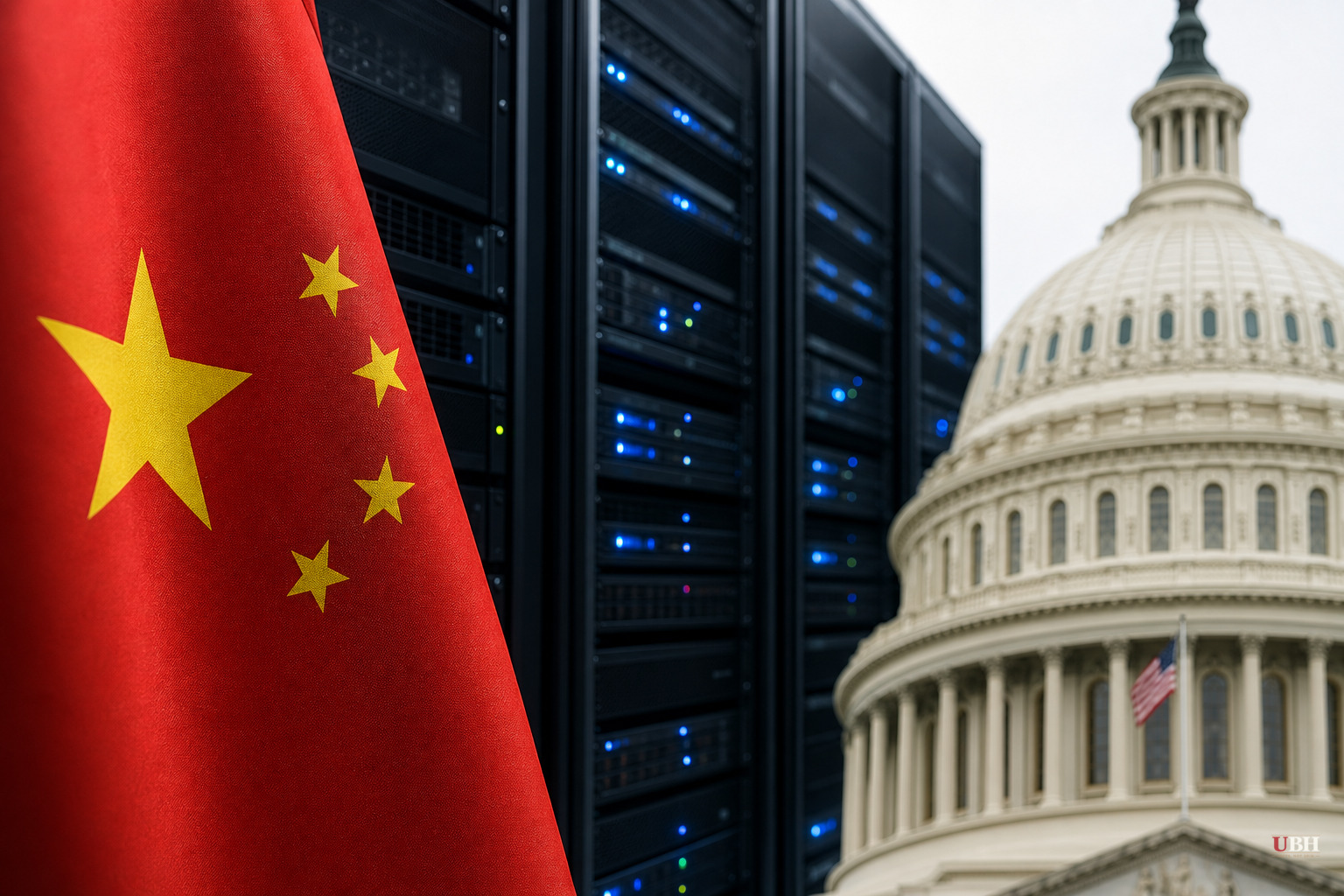
China is preparing new rules that would limit foreign access to its most advanced AI models, according to a Reuters report citing sources familiar with the plans. The restrictions reportedly target only China's frontier-level, top-tier systems, not the broader catalog of Chinese-developed AI models that have flooded the global market over the past year.
Chinese state media and government officials have not detailed the exact scope of the proposed restrictions. Nobody outside Beijing's inner circle knows yet whether this means blocking foreign researchers from fine-tuning cutting-edge models, restricting cloud-based access, or something narrower.
The timing matters. Chinese firms have spent the last year giving away mid-tier AI. Companies including DeepSeek, Alibaba, and Zhipu have released open-weight models, meaning the underlying code can be downloaded, run, and modified by anyone, according to the same Reuters reporting.
Chinese open-weight models overtook U.S. models in total downloads on Hugging Face by August 2025, and Chinese models accounted for seven of the top ten most-downloaded models on the platform between November and December 2025. Alibaba's Qwen model family alone topped 1 billion cumulative downloads on Hugging Face by March 2026.
Breitbart News reported earlier this month that China's Kimi K3 model largely matched top U.S. systems on performance. According to testing by AI evaluator Arena, Kimi beat Anthropic's Fable 5 and OpenAI's GPT-5.6 Sol on front-end coding tests, and outperformed Anthropic's Opus 4.8 in broader text ranking. Kimi reportedly does this at roughly 40 percent less cost than comparable American models. Moonshot AI, the company behind Kimi, released it as an open-weight model on July 27.
China has been winning the download war with cheap, open, customizable models that governments and companies can run on their own servers instead of depending on a foreign cloud provider. Now Beijing appears ready to protect its actual crown jewels, the frontier systems, while keeping the rest of the ecosystem open enough to keep expanding its global footprint.
The American Side of This
Washington has its own version of this fight, aimed the other direction. The Remote Access Security Act, known as RASA, is sitting in a Senate committee awaiting consideration. The bill is authored by Sens. David McCormick (R-PA), Ron Wyden (D-OR), Tom Cotton (R-AR), and Chris Coons (D-DE), a genuinely bipartisan pairing that includes two Republicans and two Democrats.
RASA would give federal regulators new authority to license or restrict remote, cloud-based access to export-controlled American technology. The concern driving it is straightforward: if a foreign adversary can't buy an advanced U.S. chip, but can just rent compute time on a cloud server running that chip, the export control means nothing.
That's a legitimate problem. Export controls built for physical hardware don't automatically cover remote access, and Beijing-linked entities have every incentive to find that loophole.
But the bill has drawn real criticism, not from partisan cheerleaders on either side, but from legal scholars looking at the actual text. Clark D. Asay, the Terry Crapo Professor of Law at Brigham Young University, has said that while RASA's backers have legitimate reasons to worry about adversaries accessing American computing infrastructure remotely, the bill as written is broad enough to burden allies and ordinary commercial users who pose no meaningful risk.
A licensing regime built to stop a hostile foreign government from renting American AI compute could just as easily tangle up a Canadian university lab, a Japanese chipmaker, or a European startup with zero connection to any adversary. If the licensing process is slow or the definitions are vague, American cloud providers lose legitimate foreign customers to competitors in countries with looser rules, which doesn't exactly help American tech dominance either.
No vote has been scheduled. The bill remains in committee as of now, and Congress has not yet resolved how narrowly or broadly the restrictions should be written.
Where This Leaves Things
Both countries are converging on the same conclusion: the AI models sitting at the absolute frontier of capability are now treated like strategic assets, not just software products. China appears ready to keep giving away its second-tier models to win market share globally while locking down its best work. The U.S. is trying to figure out how to stop foreign actors from accessing controlled American tech through the cloud without accidentally choking off legitimate allied and commercial use.
Neither government has finished the job. Beijing hasn't published the actual rule text. The Senate hasn't marked up RASA. The open question for both: can either country draw a line precise enough to stop the adversary without stopping everyone else too?
Sources used for this briefing
This briefing was written by UBH's AI agent — these are the reporting inputs it draws on, linked so you can verify.


