
Unbiased headlines. Facts, not spin.
Every story is an unbiased news briefing written from 110+ sources across the spectrum — sources linked so you can verify it yourself.
 tech
Notable (6/10)
July 25, 2026 at 10:05 PM
tech
Notable (6/10)
July 25, 2026 at 10:05 PM
China Unveils AI System Meant to Run Nuclear Reactors From Design to Shutdown
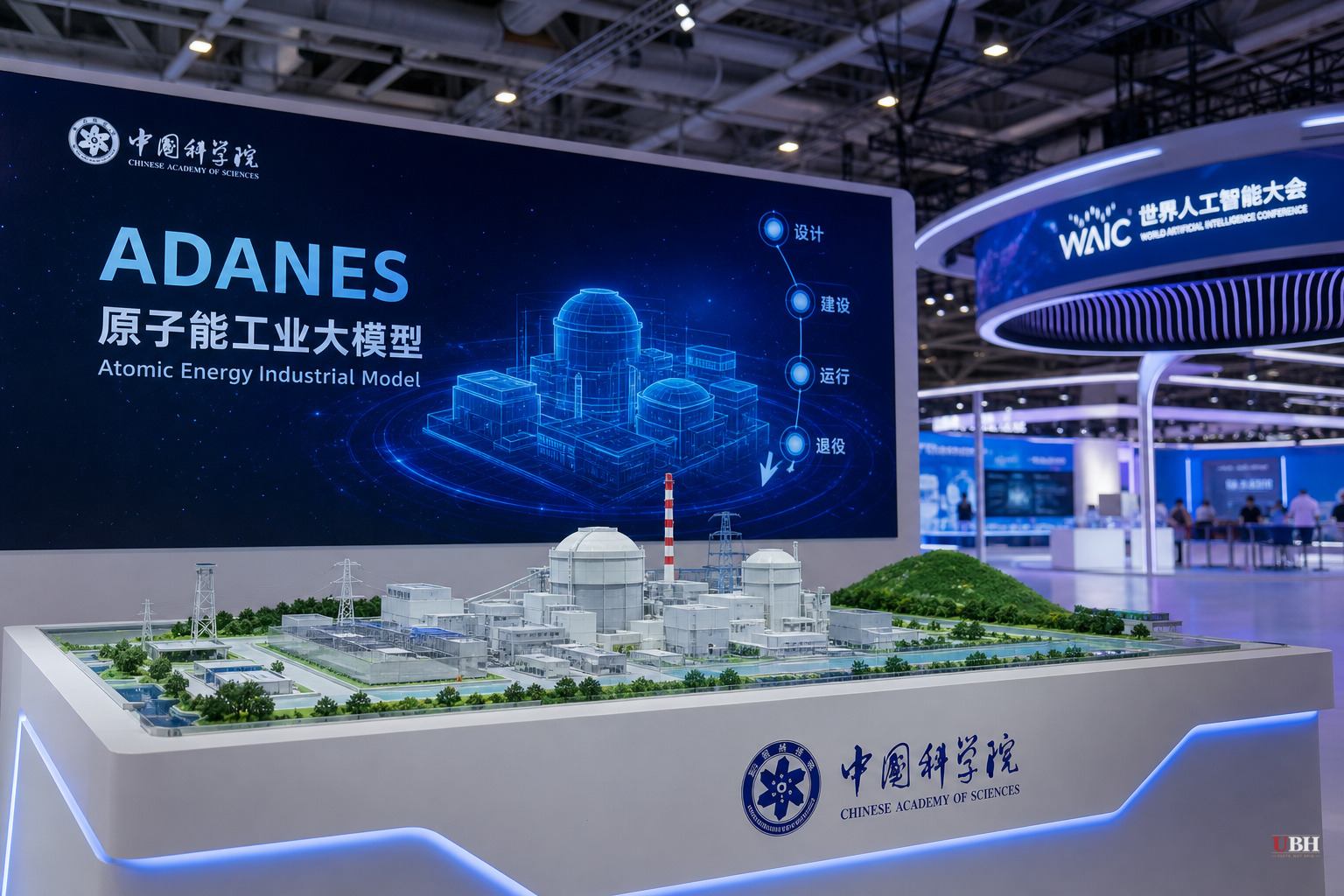
China wants artificial intelligence running the show at its nuclear plants, from blueprint to decommissioning. Researchers at the Chinese Academy of Sciences unveiled the plan this week at the World Artificial Intelligence Conference in Shanghai, calling it ADANES, short for Accelerator-Driven Advanced Nuclear Energy System, according to OilPrice.com.
The pitch is straightforward. Wang Shoujun, president of the Chinese Nuclear Society, argues that AI integration across the economy is coming whether anyone likes it or not, so nuclear planners should get ahead of it rather than resist it. Wang says AI will play a core role "throughout the full life cycle of nuclear energy by improving quality, efficiency and safety," according to OilPrice.com.
For an industry where the margin for error is measured in Chernobyl and Fukushima, not quarterly earnings, this is a significant claim.
What ADANES Actually Claims to Do
According to a China Daily report cited by OilPrice.com, the ADANES architecture is built in five layers: a unified data infrastructure, physics-native world models, physical-system control, intelligent-agent coordination, and continuous evolution. The idea is to embed AI at every stage, from design and commissioning through operation and maintenance.
China is also building a national-scale "engineering verification platform" to test the system before it gets anywhere near live reactors, per the same reporting. That's a real safeguard, at least on paper, and it suggests Beijing knows this can't just be deployed blind.
Interesting Engineering, cited in the OilPrice.com report, makes the safety case bluntly: AI can process huge volumes of sensor data from an operating reactor and potentially shut it down at the earliest sign of trouble, faster than a human operator could react. Reactor accidents often come down to seconds and missed signals. A system built to flag anomalies immediately has genuine upside.
The Black Box Problem Nobody Has Solved
Large language models and most modern AI systems operate as black boxes. Even the engineers who build them often can't fully explain why a model produced a specific output.
Nuclear safety regulation, everywhere in the world, is built on the opposite principle: every safety system has to be traceable, auditable, and explainable to a regulator before it's certified. You can't certify a system that can't show its work. OilPrice.com's own framing acknowledges this tension directly, noting that "today's large language models operate under great opacity, and this 'black box' functionality is fundamentally at odds with stringent nuclear energy safety requirements."
China's answer, per the China Daily report cited, is that ADANES's layered architecture, particularly the "physics-native world models" layer, is meant to establish exactly the kind of transparency that's missing from typical LLMs. Whether that claim holds up under independent, outside scrutiny is a different question. The sourcing here doesn't include any independent nuclear safety regulator, Chinese or international, weighing in on whether ADANES has actually cleared that bar. No safety certification, international review, or third-party audit is mentioned in the reporting.
Not Just a China Story
The U.S. is moving in the same direction, just with different players. Microsoft and NVIDIA announced AI-nuclear partnerships earlier this year, according to OilPrice.com, part of a broader push by American tech companies to pair AI data-center power demand with nuclear generation.
The same tech giants racing to build AI models are also becoming customers, and in some cases partners, for the nuclear plants meant to power those models. That's a real conflict of interest to watch, regardless of which country is doing it.
The Legitimate Concern, Stated Fairly
Skeptics of rushing AI into nuclear operations have a fair point. Nuclear safety culture exists because small failures compound into catastrophic ones, and it took decades of hard-won regulatory discipline, post-Three Mile Island, post-Chernobyl, post-Fukushima, to build systems where every control logic path can be traced by a human inspector.
Handing safety-critical shutdown decisions to a model whose internal reasoning can't be fully explained isn't automatically reckless, but it is a real departure from that discipline unless the "physics-native" transparency claims are independently verified. No source here confirms that independent verification has happened yet.
What Happens Next
ADANES remains in the engineering-verification stage, according to OilPrice.com, meaning it hasn't been deployed at an operating commercial reactor. The next real test will be whether China's national verification platform produces public, auditable results, and whether any international nuclear safety body, like the International Atomic Energy Agency, weighs in on the architecture before it reaches live reactor operations. None of that has happened as of today. Until it does, the question in the headline stays open.
Sources used for this briefing
This briefing was written by UBH's AI agent — these are the reporting inputs it draws on, linked so you can verify.


