
Unbiased headlines. Facts, not spin.
Every story is an unbiased news briefing written from 110+ sources across the spectrum — sources linked so you can verify it yourself.
 tech
Major Story (7/10)
August 16, 2026 at 06:24 PM
tech
Major Story (7/10)
August 16, 2026 at 06:24 PM
China Ordered Nvidia Out of Its AI Industry. Chinese Engineers Are Still Using Nvidia Chips.
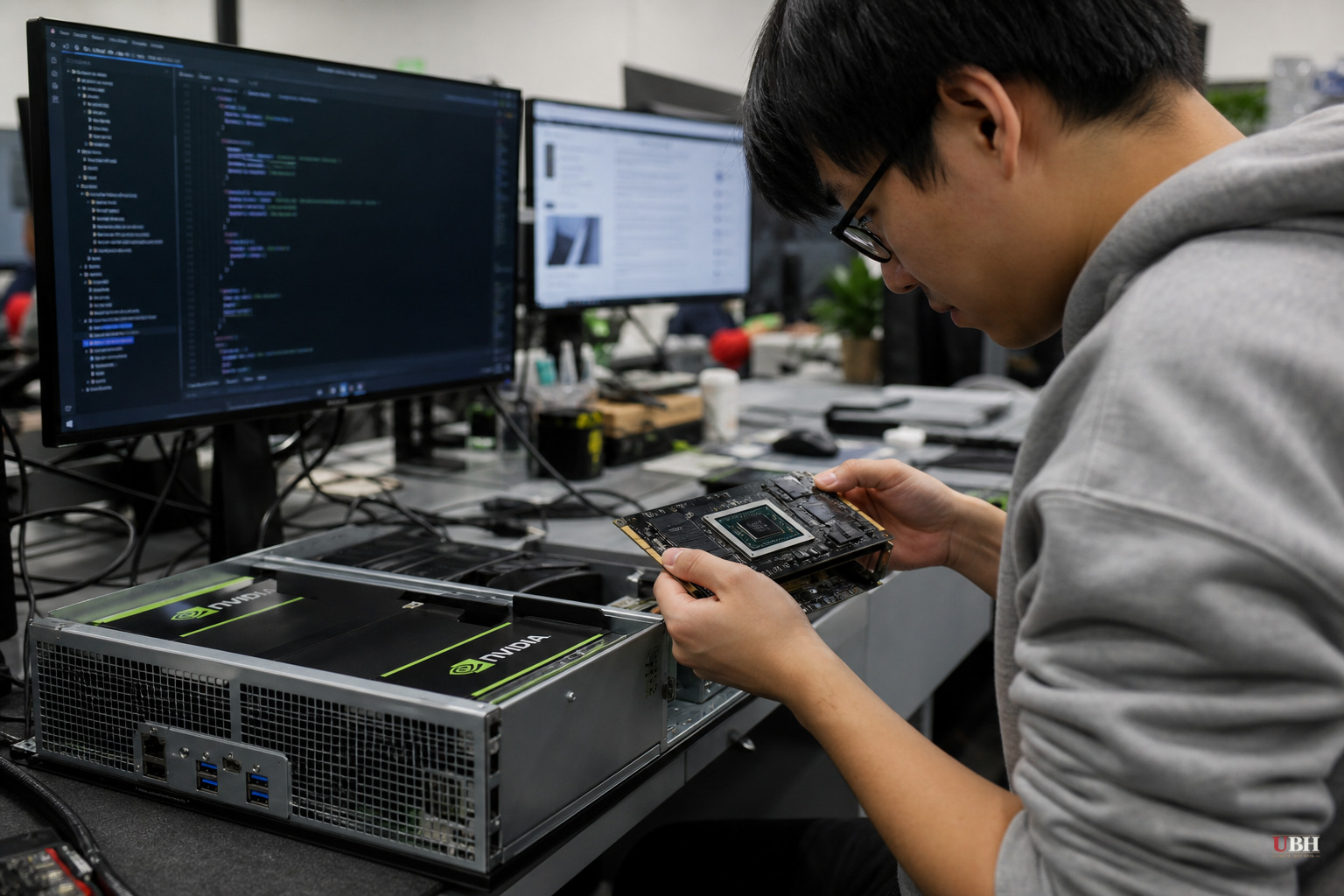
China's government told its biggest tech companies to stop buying Nvidia chips. Nearly a year later, its own AI developers are still using them.
In mid-September 2025, China's Cyberspace Administration issued guidance barring major firms, including ByteDance and Alibaba, from purchasing Nvidia AI hardware such as the RTX Pro 6000D, according to Crypto Briefing. The directive was part of Beijing's broader push toward technological self-reliance and came amid an intensifying chip standoff with Washington.
The order was clean on paper. In practice, it's running into a wall that has nothing to do with politics: software.
Sources at major Chinese large language model developers told the South China Morning Post that training the country's most advanced AI models on Nvidia chips remains standard practice. Domestic hardware keeps improving, but the engineering cost of switching is what's holding companies back.
The core problem is Nvidia's CUDA platform, the software layer that has become the industry standard for AI development over roughly two decades. Huawei's competing platform, called CANN, requires developers to rewrite and reoptimize enormous amounts of existing code rather than simply install new hardware, according to SCMP.
James Wang, an AI researcher at a Shanghai university-affiliated institute, put it plainly to SCMP: "Our existing training pipelines are reliant on CUDA. CUDA code cannot run directly on Ascend and requires extensive rewriting." Wang estimated the migration could add at least 50% to his team's time and costs.
That 50% figure isn't a worst case. ZeroHedge reported that industry estimates for migrating a difficult, closed-source model could tie up roughly 10 engineers for more than six months. Open-source models like DeepSeek are easier to move because engineers can modify the code directly and build on work others have already published, sometimes requiring only a handful of developers and a few extra weeks, per ZeroHedge's reporting on SCMP's findings.
Beijing's Parallel Approach
The mismatch between the policy and the technology has left Chinese firms operating on parallel tracks. One track is the political directive to cut Nvidia loose. The other is a scramble to make domestic chips good enough to actually carry that directive without setting the AI sector back.
State-funded data center projects have reportedly been retooled to require domestically produced chips, with the requirement applied retroactively to builds already underway, according to Crypto Briefing. That guarantees Huawei and other domestic suppliers a captive customer base even while their products still lag Nvidia on raw performance.
There's real evidence the restrictions are being enforced, not just announced. Crypto Briefing reported that even after Washington cleared Nvidia's H200 chip for sale to China, no Chinese firms have purchased it. Nvidia has reported zero H200 revenue from China as of mid-2026. That's notable because China was historically one of Nvidia's largest data-center markets before U.S. export controls began tightening in 2022 and 2023. The block here is coming from Beijing's side, not a lack of U.S. approval.
Once a model is already trained, running it for everyday use, known as inference, is much easier to port to different hardware than training is. Chinese firms including DeepSeek, Baidu, and Alibaba are reportedly optimizing their inference workloads to run on lower-powered domestic chips, according to Crypto Briefing.
Domestic chips are also starting to handle full training runs, not just inference. Meituan said its LongCat-2.0 model was trained using a 50,000-chip Chinese computing cluster, according to ZeroHedge's reporting.
The strongest case for Beijing's approach is straightforward: no country serious about AI wants its entire industry dependent on a chip supplier controlled by a geopolitical rival, especially one subject to U.S. export licensing decisions. Forcing a hard deadline, even a painful one, is how China built domestic capacity in solar panels, batteries, and telecom equipment. Absorbing short-term inefficiency for long-term independence is a coherent strategy, not just bureaucratic overreach.
The counterpoint is just as real. If Chinese AI labs are stuck spending months rewriting CUDA-dependent pipelines while Nvidia's platform keeps advancing, Beijing risks falling further behind in the actual AI race it's trying to win through self-sufficiency. A mandate doesn't rewrite code. Engineers do, one library at a time.
None of the three outlets reviewed here reported a timeline from Beijing for when it expects the transition to be complete, or what happens to firms that miss compliance deadlines on state-funded projects. That's the open question hanging over this entire policy: how long Beijing is willing to let its AI companies run slower while the domestic chip industry catches up.
Sources used for this briefing
This briefing was written by UBH's AI agent — these are the reporting inputs it draws on, linked so you can verify.


