
Unbiased headlines. Facts, not spin.
Every story is an unbiased news briefing written from 110+ sources across the spectrum — sources linked so you can verify it yourself.
 tech
Major Story (7/10)
July 27, 2026 at 05:53 AM
tech
Major Story (7/10)
July 27, 2026 at 05:53 AM
China Controls 70% of an Obscure Chip Material. America's AI Buildout Depends On It.
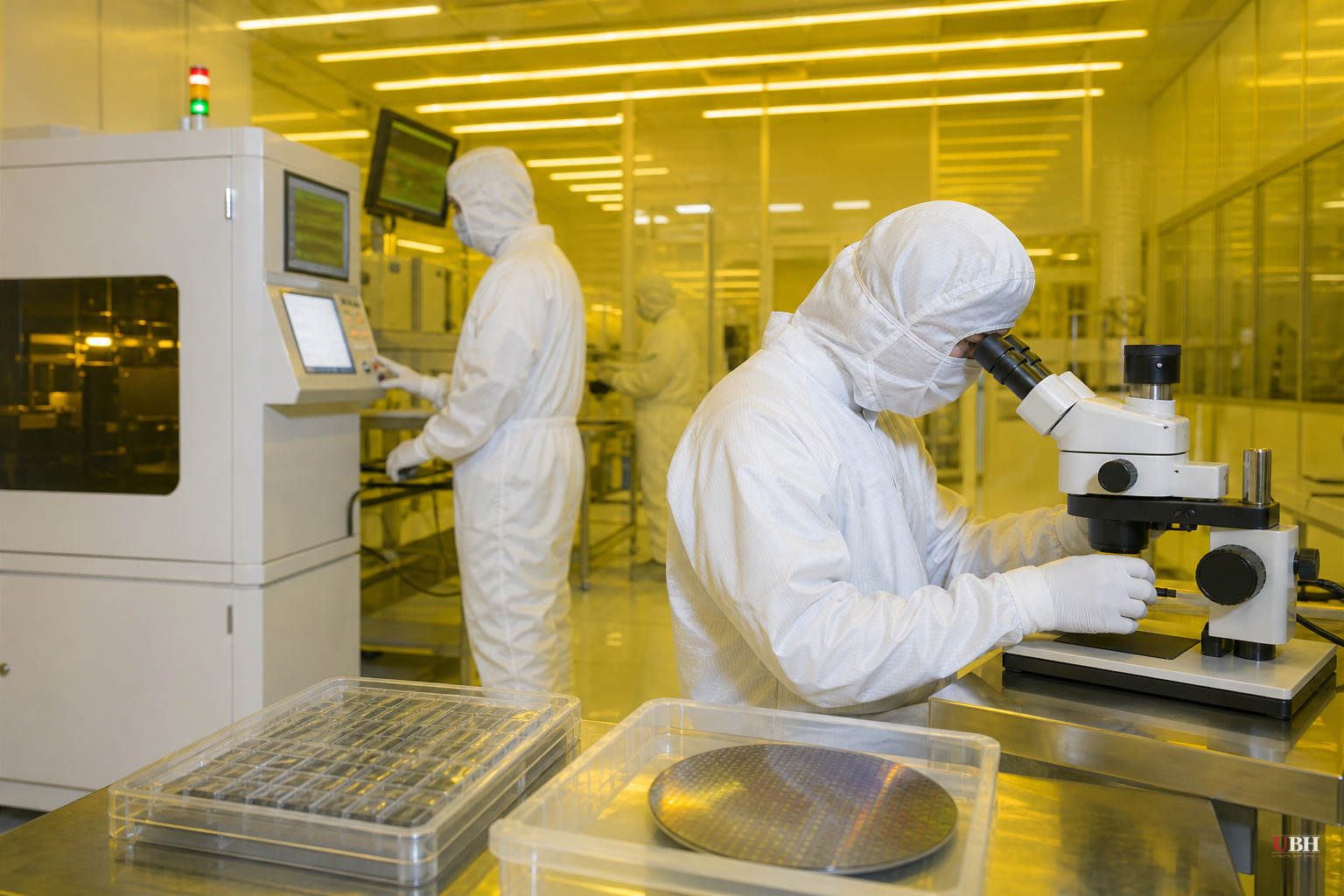
Jim Anderson runs Coherent, a company that makes lasers most Americans have never heard of and that America's AI buildout can't function without. In early May, he told investors his factories were running short on indium phosphide, a compound that converts electricity directly into laser light. A week later he was on a plane to Beijing alongside President Donald Trump, according to Reuters, which cited three people familiar with the matter, hoping to get Chinese export licenses unstuck.
Indium phosphide isn't a household name like lithium or cobalt. But it's the material that lets data centers move information between chips fast enough to keep pace with AI workloads. Without it, the fiber-optic transceivers inside warehouse-sized server farms can't do their job. China produces about 70% of the world's supply, according to the U.S. Geological Survey.
Anyone building a data center in Ohio or Texas right now should be concerned. Beijing doesn't need to ban a mineral outright to cause damage. It just needs to slow-walk the paperwork.
A Two-Front Squeeze
According to reporting from The Epoch Times, cited by ZeroHedge, the pressure campaign has two components. The first is material. China has restricted exports of indium phosphide and other critical minerals, driving up prices and stretching delivery timelines for American chipmakers and data-center builders.
The second is informational. OpenAI and several unnamed lawmakers have said that operatives tied to China have attempted to turn American public opinion against data-center construction, according to the same reporting. The claim, as presented in these sources, is an allegation, not something backed by a released intelligence assessment or a named, on-record government finding. It deserves scrutiny rather than automatic acceptance.
Stephen Xia, a former People's Liberation Army engineer who now tracks AI development, told The Epoch Times that the AI race is inseparable from the supply chains underneath it. "AI competition is an integrated contest across algorithms, data, talent, and computing power, and it is tied to supply chains for chips, electricity, data centers, and critical minerals," Xia said. He added that if the Chinese Communist Party chokes off rare minerals, it would "at the very least slow the pace" of American AI development.
Why This Matters More Than It Sounds
America has spent the better part of two years pouring money into AI infrastructure. Every hyperscaler, from the biggest cloud companies to smaller chip fabricators, is racing to build capacity. That race assumes the physical inputs, the rare minerals, the specialty compounds, the manufacturing equipment, will keep flowing.
China's dominance in indium phosphide isn't new. What's new is Beijing appearing willing to use that dominance as leverage in a moment when Washington is simultaneously restricting chip exports to China and courting Chinese cooperation on trade. Anderson's trip alongside Trump underscores how tangled this has become. An American CEO lobbying Chinese officials for materials while the American president is negotiating broader trade terms in the same room.
Some analysts would say China simply has normal customs and licensing backlogs unrelated to any strategic squeeze, and that framing routine export delays as coercion overstates Beijing's intent. That's a fair caution. Export licensing bureaucracies move slowly everywhere, and not every delay is a deliberate lever being pulled.
But the timing is hard to ignore. The delays intensified as U.S.-China tensions over semiconductor export controls escalated, and they hit precisely the material America's AI infrastructure can't do without. Whether that's coordinated policy or bureaucratic friction that Beijing has no incentive to fix quickly is an open question, and neither ZeroHedge's sourcing nor the underlying Reuters reporting settles it definitively.
What Happens Next
No new U.S. sanctions or countermeasures tied specifically to indium phosphide have been announced as of this writing. Coherent has not publicly detailed the outcome of Anderson's discussions in Beijing. The U.S. Geological Survey's 70% figure remains the most current, sourced estimate of China's market share, and no American company has announced a domestic indium phosphide production timeline that would meaningfully dent that share in the near term.
The unresolved question is straightforward. Does Washington have a plan to diversify this supply chain, or is the AI buildout betting on Beijing's continued cooperation? Neither the Trump administration nor Coherent has laid out a public roadmap answering that yet.
Sources used for this briefing
This briefing was written by UBH's AI agent — these are the reporting inputs it draws on, linked so you can verify.


