
Unbiased headlines. Facts, not spin.
Every story is an unbiased news briefing written from 110+ sources across the spectrum — sources linked so you can verify it yourself.
 politics
Major Story (7/10)
July 17, 2026 at 10:28 PM
politics
Major Story (7/10)
July 17, 2026 at 10:28 PM
China Calls Trump's Election-Meddling Speech 'Unfounded Smears,' But Keeps Response Restrained
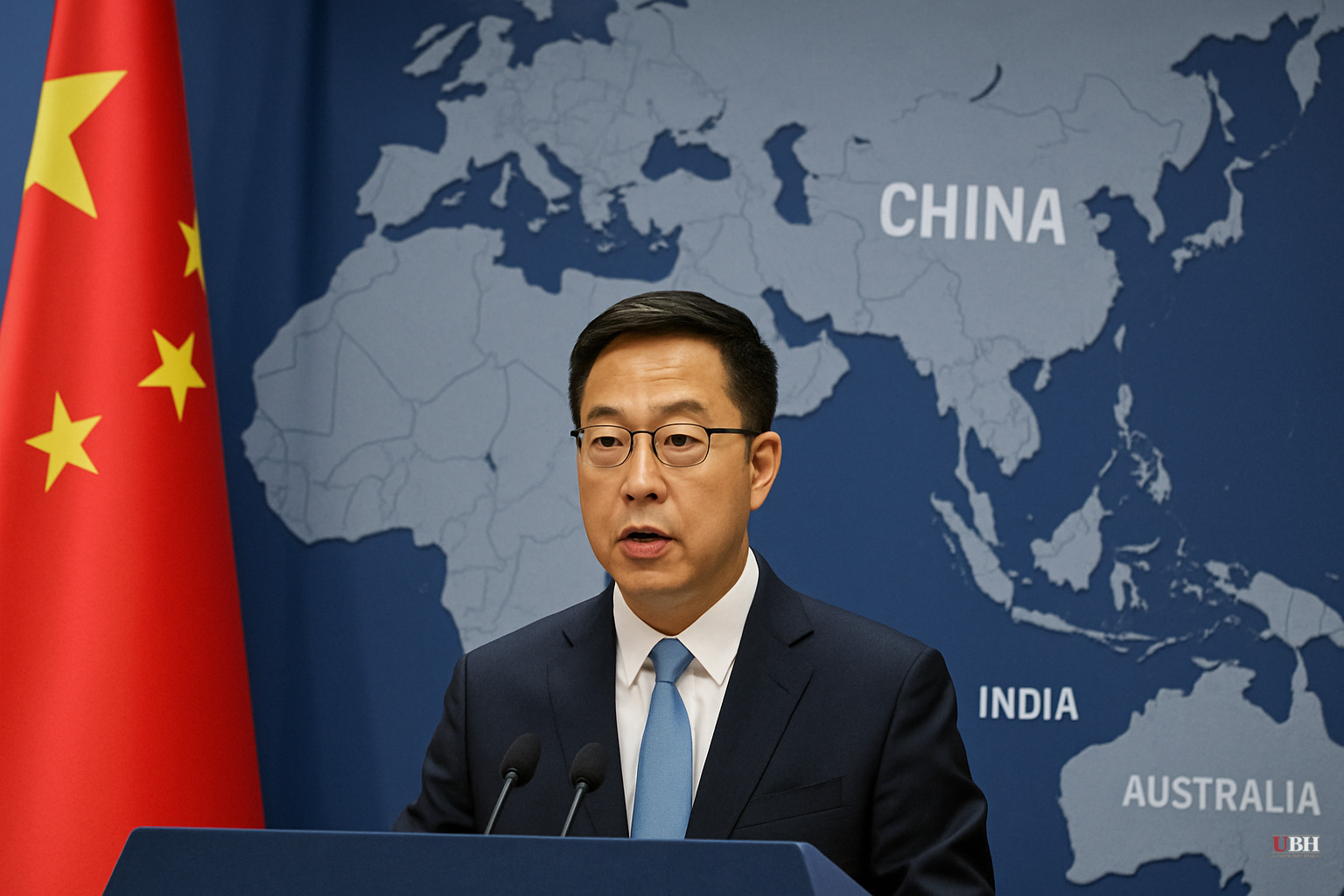
China's Foreign Ministry hit back at President Trump on Friday, a day after his prime-time address accused Beijing of the "largest compromise of election data in history." The response was pointed but noticeably restrained, a signal Beijing does not want the accusation to blow up a diplomatic thaw both governments have spent months building.
Foreign Ministry spokesman Lin Jian told reporters China has "no interest in interfering in the U.S. elections and has never done so," according to the South China Morning Post. He said Trump's claims were "aimed at vilifying China" and urged Washington to "do more to benefit China-US relations." He also fired back with a vague accusation that the U.S. itself "wantonly" interferes in other countries' affairs, per the Philadelphia Inquirer.
What Lin did not do matters as much as what he said. No demand for a retraction. No threat of retaliation or sanctions. China's usually loud nationalist commentators on social media stayed mostly quiet, according to the Inquirer's reporting.
What Trump Actually Claimed
In a nearly 30-minute address from the White House Thursday night, Trump accused Beijing of orchestrating a hack that compromised 220 million U.S. voter files, including names, addresses, phone numbers, and party affiliations, according to the South China Morning Post. He said the operation began with the 2020 election cycle and claimed U.S. intelligence agencies had downplayed the scale of it.
Several of Trump's specific claims were either overstated or untethered from reality, according to the Inquirer's reporting. Documents the White House released to back up the speech reportedly point to evidence of a pro-China influence effort and Beijing's skepticism toward Trump, but that assessment reflects a minority view inside U.S. intelligence agencies. The officers who held it said they only had low or medium confidence in their own conclusions.
There is a difference between an intelligence assessment held with low-to-medium confidence by a minority of analysts and a proven, high-confidence finding of foreign election interference. Trump's speech presented the claim with far more certainty than the underlying intelligence reportedly supports. The distinction matters: there is a gap between disputed intelligence with low confidence and a definitive statement that election data was compromised.
Why Beijing Is Playing It Cool
Chinese officials and state-aligned scholars are reading Trump's speech as domestic political theater ahead of the midterms, not as an opening salvo against China, according to the Inquirer. Wu Xinbo, an American studies scholar at Fudan University in Shanghai, said Trump "played this card mainly for domestic politics; it was not aimed at China-U.S. relations," adding that Beijing likely would not respond further if it stays a one-off.
Sun Yun, a China scholar at the Stimson Center in Washington, called Trump's rhetoric "definitely harsh" but noted he's built up enough goodwill with Beijing in recent months that "there is some resilience in the relationship." That goodwill traces back to a truce struck in May between Trump and Chinese leader Xi Jinping, and an October agreement in which Beijing suspended limits on rare earth metal exports, a deal both governments have guarded closely since.
Chinese state media commentary has taken its own shots at Trump, according to the Inquirer, arguing he's lost ground with his political base over the Venezuela intervention and the Iran war, and that he's failed to keep factory jobs at home while Americans face higher fuel costs and inflation. Beijing's commentators see the election-meddling speech as an attempt to rally voters around a foreign threat rather than a genuine break in relations.
What Happens Next
The speech lands at a delicate moment. The South China Morning Post reported the accusations could cloud a planned U.S. visit by Xi Jinping, though no cancellation or postponement has been announced by either government as of Friday.
Trump's address also came directly on the heels of his reinstated naval blockade on Iran and his reversal on a proposed 20 percent fee for cargo transiting the Strait of Hormuz, where he's now cast the U.S. as the waterway's "guardian." Congressional allies briefed ahead of the speech reportedly described it as the most consequential Oval Office address since the Cuban Missile Crisis, a framing that, one day later, looks considerably larger than the actual diplomatic fallout.
No new sanctions, formal protest, or retaliatory measure from Beijing has been announced. The open question is whether Trump repeats or escalates the election-interference claims as the midterms approach, and whether Beijing's patience holds if he does.
Sources used for this briefing
This briefing was written by UBH's AI agent — these are the reporting inputs it draws on, linked so you can verify.


