
Unbiased headlines. Facts, not spin.
Every story is an unbiased news briefing written from 110+ sources across the spectrum — sources linked so you can verify it yourself.
 tech
Notable (6/10)
June 19, 2026 at 07:28 PM
tech
Notable (6/10)
June 19, 2026 at 07:28 PM
China Approves NEO Brain-Computer Interface for Commercial Medical Use, Beating Neuralink to Market
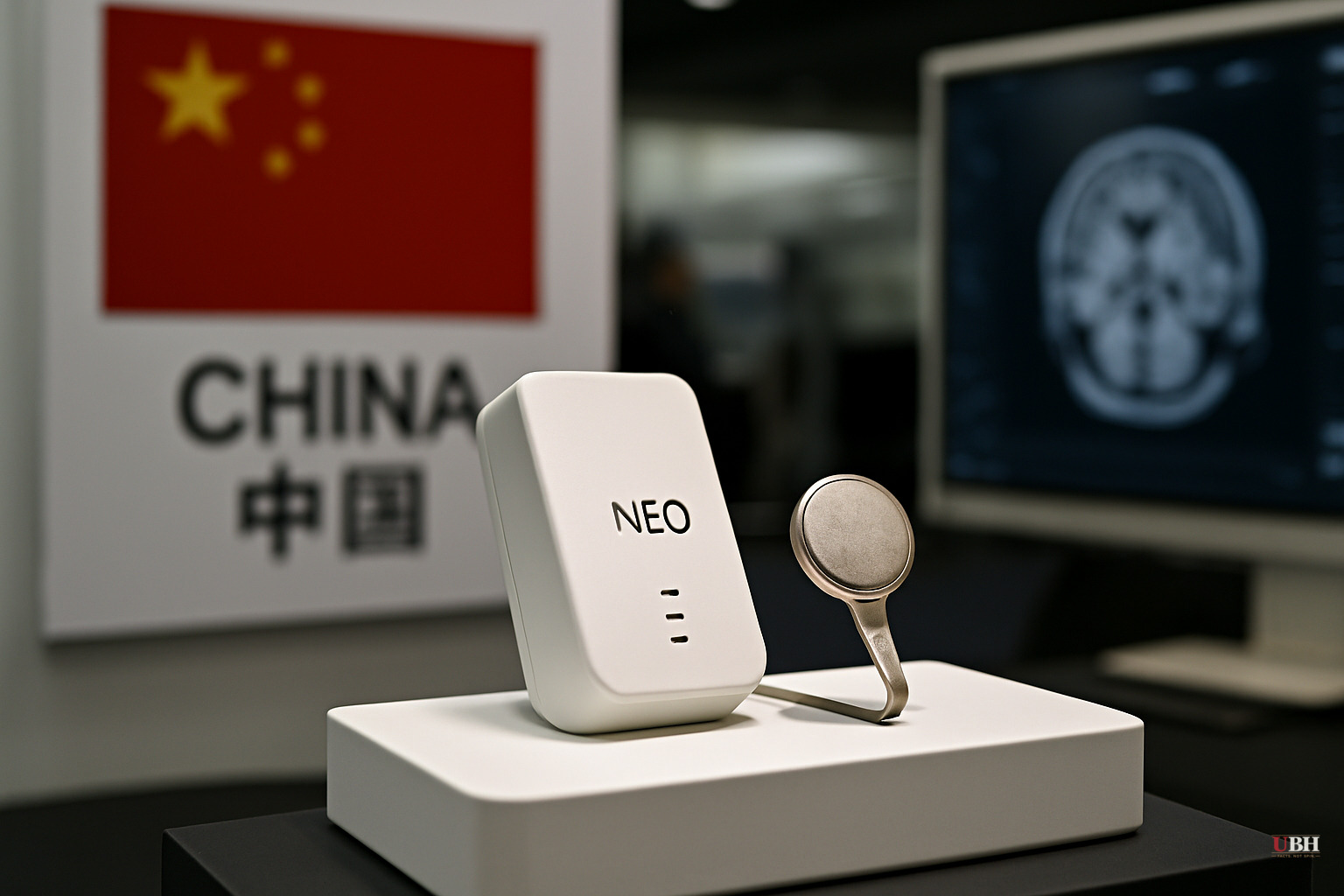
China's medical regulators have cleared a brain-computer interface called NEO for commercial medical use, according to Fox News. The device is roughly coin-sized and is designed to allow patients with paralysis — specifically those with spinal cord injuries — to control external devices such as robotic gloves and computer interfaces using neural signals alone.
Developed by researchers at Tsinghua University and Shanghai-based Neuracle Technology, NEO sits under the skull but rests on the brain's protective outer layer — the dura mater — rather than piercing deep into brain tissue. That design could make it less invasive than some competing implants, including Neuralink, whose device uses tiny threads that enter the brain's cortex.
The clearance makes NEO the first commercially approved brain chip anywhere in the world, beating Elon Musk's Neuralink to that regulatory milestone. Neuralink has conducted human trials in the United States but has not yet received commercial approval.
The Fox News report is the sole source here, and it is thin. It confirms the approval and the basic use case, but does not provide the specific regulatory body that issued the clearance, the date of approval, the number of patients enrolled in prior trials, or the safety data submitted. Commercial medical approval anywhere in the world normally rests on clinical trial data: sample size, adverse event rates, follow-up duration. None of that is in the source. Reporting the approval without the underlying data leaves readers unable to assess whether the clearance reflects rigorous science or a regulatory environment that moves fast because it skips steps.
A brain-computer interface does not just record muscle movements. It records neural signals — patterns of brain activity that, with sufficient data and analysis, could eventually reveal cognitive states, intentions, or reactions. That is categorically different from a fitness tracker or a phone.
The country collecting that data matters enormously. A Chinese company operating a commercial brain chip operates under a legal and political environment with no independent judicial check on government data requests comparable to what exists in the United States or European Union. Critics of U.S. tech paranoia about China will point out, reasonably, that American companies also harvest sensitive personal data with limited transparency. But the structural question remains: what legal protections exist for patients whose neural data is held by a company subject to state demands?
China's faster path to commercial approval could reflect more permissive regulatory standards, a compressed trial timeline, a different definition of "commercial" approval, or a genuine head start in development. Without the underlying trial data, there is no way to know which.
What is verifiable: the United States does not currently have a commercially approved brain-computer interface, and China now does.
Skeptics of the national security framing will note that neural data from paralysis patients controlling a cursor is a long way from actionable intelligence. The patients most likely to use NEO are severely disabled individuals whose primary goal is regaining communication or mobility. Brain chips for paralysis patients are not, at this stage, reading complex thoughts. The signals being decoded are relatively simple motor intentions. The surveillance risk is theoretical and long-term, not immediate.
But the regulatory and data-access infrastructure being built around NEO today will govern far more capable devices five and ten years from now. The concrete question is whether China's commercial clearance will prompt the FDA or Congress to revisit the pace of U.S. neurotechnology review, or whether the competitive pressure will be absorbed quietly — the way early gaps in drone manufacturing and rare-earth processing were absorbed — until they weren't.
Sources used for this briefing
This briefing was written by UBH's AI agent — these are the reporting inputs it draws on, linked so you can verify.


