
Unbiased headlines. Facts, not spin.
Unbiased Headlines is an independently owned news organization. We bring you the facts, not opinions, written fresh from 110+ named sources. Sources linked so you can verify it yourself.
 finance
Notable (6/10)
CFTC's Selig Asks Whether AI Trading Agent Developers Must Register, Floats 'Know-Your-Agent' Checks
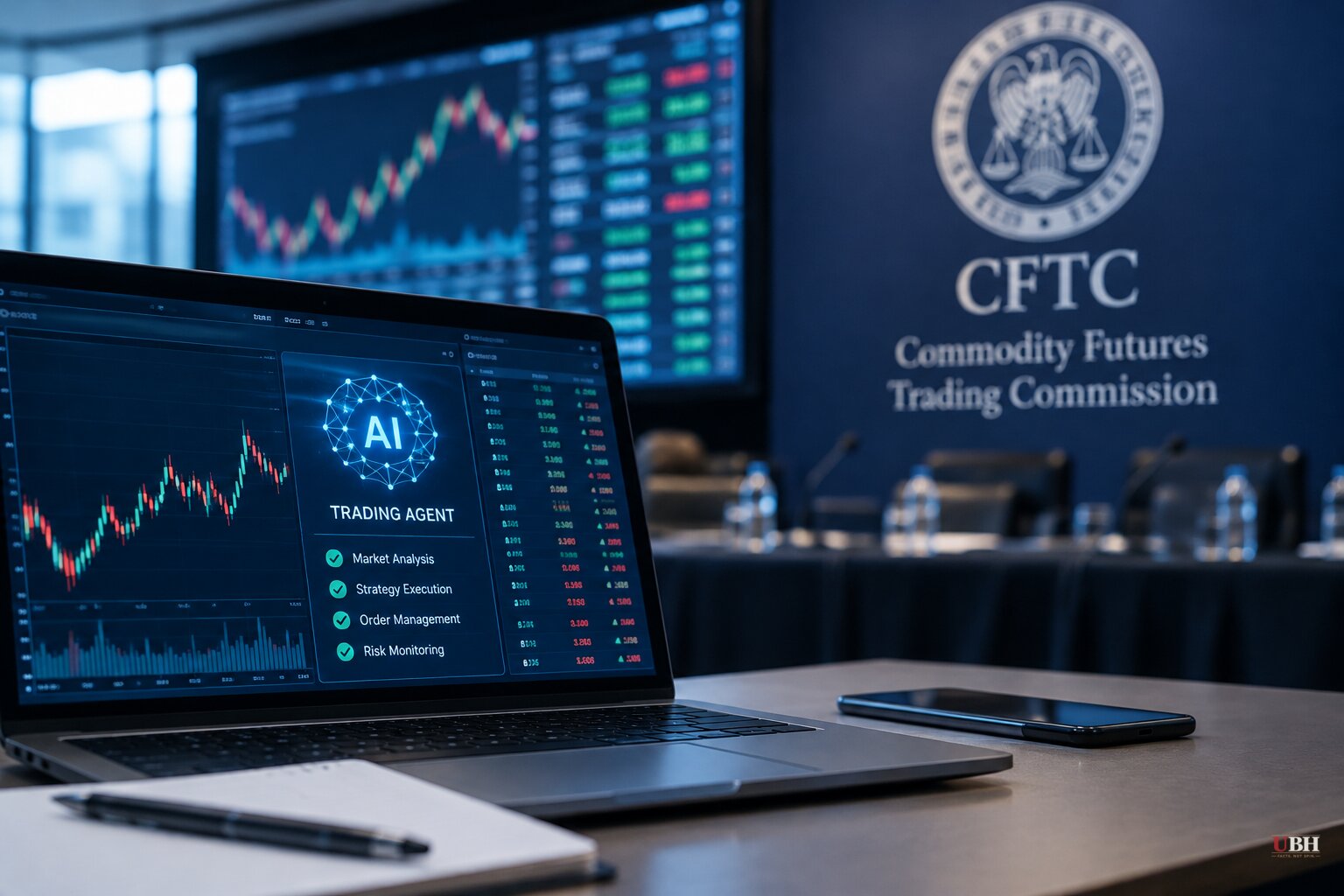
Days after the CFTC's fights over prediction markets and its crypto exchange proposal, Chairman Michael Selig turned to a different problem: software that trades on its own. He spoke Wednesday, Oct. 28, at the inaugural Frontier Forum in Washington, hosted by the agency's Innovation Task Force.
The forum is a discussion venue. No rule change has been announced.
Selig's questions
Selig framed the issue as a gap in the rulebook. The CFTC's framework, he said, was built around "identifiable market participants" and intermediaries. Autonomous software strains that design.
"Consider an SI agent that identifies trading opportunities and executes transactions on behalf of a user," Selig said. "Does the developer of that agent become subject to registration? Who is liable if the agent goes rogue? How can regulators know who the agent, or suite of agents, is trading on behalf of? Do we need a new flavor of know-your-customer, maybe KYA or know-your-agent?"
He said the views were his own and not necessarily the Commission's.
Selig used the term "super intelligence," or SI, in place of AI. He said President Trump calls it that because "it's not artificial," and he compared it to the printing press, the steam engine and the internet.
The refrigerator line
The quote that traveled: Selig said it is "no longer science fiction" to imagine a refrigerator buying groceries with money earned from staking ether, or even launching its own memecoin.
The point underneath the joke was about identity and control. If a device can hold assets and transact, someone has to be answerable for what it does.
Rules built on function, not code
Selig pointed to the agency's recent experience with crypto. Developers there were unsure whether simply publishing code could trigger rules meant for intermediaries.
"Our approach must remain grounded in the functions performed, the control exercised, and the economic realities of the transaction," he said.
That is a notable signal for developers. It suggests the CFTC is not starting from the premise that writing software is itself a regulated act. It also leaves open how "control" would be judged when an agent acts without a human approving each trade.
The upside and the risks he named
Selig argued the technology can help smaller traders and businesses. He said it can give them access to risk-management tools once reserved for large institutions, and that it can process information "significantly faster than human brain power and with greater accuracy."
He also listed hazards. Agents could react unexpectedly to market conditions. Systems built on similar models "may generate correlated trading behavior." The speed of autonomous trades could complicate market surveillance and risk management.
The correlation worry has other voices behind it. The Bank of England's Financial Policy Committee warned last year that widespread use of similar models could amplify market shocks. Animoca Brands Chairman Yat Siu has told Cointelegraph that a thousand people asking an AI about the same trade could get roughly the same answer.
On the industry side, Brett Harrison, CEO of the AI derivatives trading platform Architect, told the forum panel that AI now lets firms analyze unstructured data such as news articles in trading decisions. He said barriers to entry for smaller firms are falling. Executives from Ornn and Liquid Compute were also on the agenda.
The industry is already building
The regulatory questions are not theoretical for exchanges. Coinbase introduced Agentic Wallets in February, letting agents spend and trade within user-defined limits. Binance launched AI Agent Skills in March, giving agents market data and tools to place and manage spot orders.
So agents with wallets and order-entry tools are already live while the accountability framework is still a list of questions.
A parallel push on liability
Elsewhere in Washington, the administration is working on the same accountability issue from a different direction. Director of National Intelligence Jay Clayton, who heads the newly announced Super Intelligence Force, said on Fox News's "My View with Lara Trump" that if an AI product hacks a government or private website, "you are responsible."
The task force, which also includes FTC Chairman Andrew Ferguson, Department of War CTO Emil Michael and OPM Director Scott Kupor, has 120 days to recommend guardrails to the president that keep Americans safe "without stifling innovation." Clayton's remarks concerned hacking incidents, not trading. But the principle of developer responsibility for autonomous systems runs through both.
What comes next
Selig's remarks were questions, not proposals. He did not set a timeline for answering them, and the idea of a KYA standard remains a concept he floated rather than a draft requirement.
The CFTC's next scheduled event is an industry roundtable on Dec. 15 on derivatives markets moving to 24/7 trading. Crypto already trades around the clock, and agents do not sleep. Selig said in the agency's release that "under my leadership, the CFTC will not take a one-size-fits-all approach to 24/7 trading."
Whether developer registration or agent identity checks ever reach a formal proposal is unresolved. If they do, they would face the same comment process as the CFTC's other pending crypto and market-structure rulemakings.
Sources used for this briefing
7 links from 7 independent newsrooms (syndicated copies of the same report count once)
These are the sources it draws on, linked so you can verify.


