
Unbiased headlines. Facts, not spin.
Every story is an unbiased news briefing written from 110+ sources across the spectrum — sources linked so you can verify it yourself.
 politics
Notable (6/10)
July 24, 2026 at 12:47 AM
politics
Notable (6/10)
July 24, 2026 at 12:47 AM
California's Late-Arriving Mail Ballot Rate Quadrupled in 2025 Special Election, State Data Shows
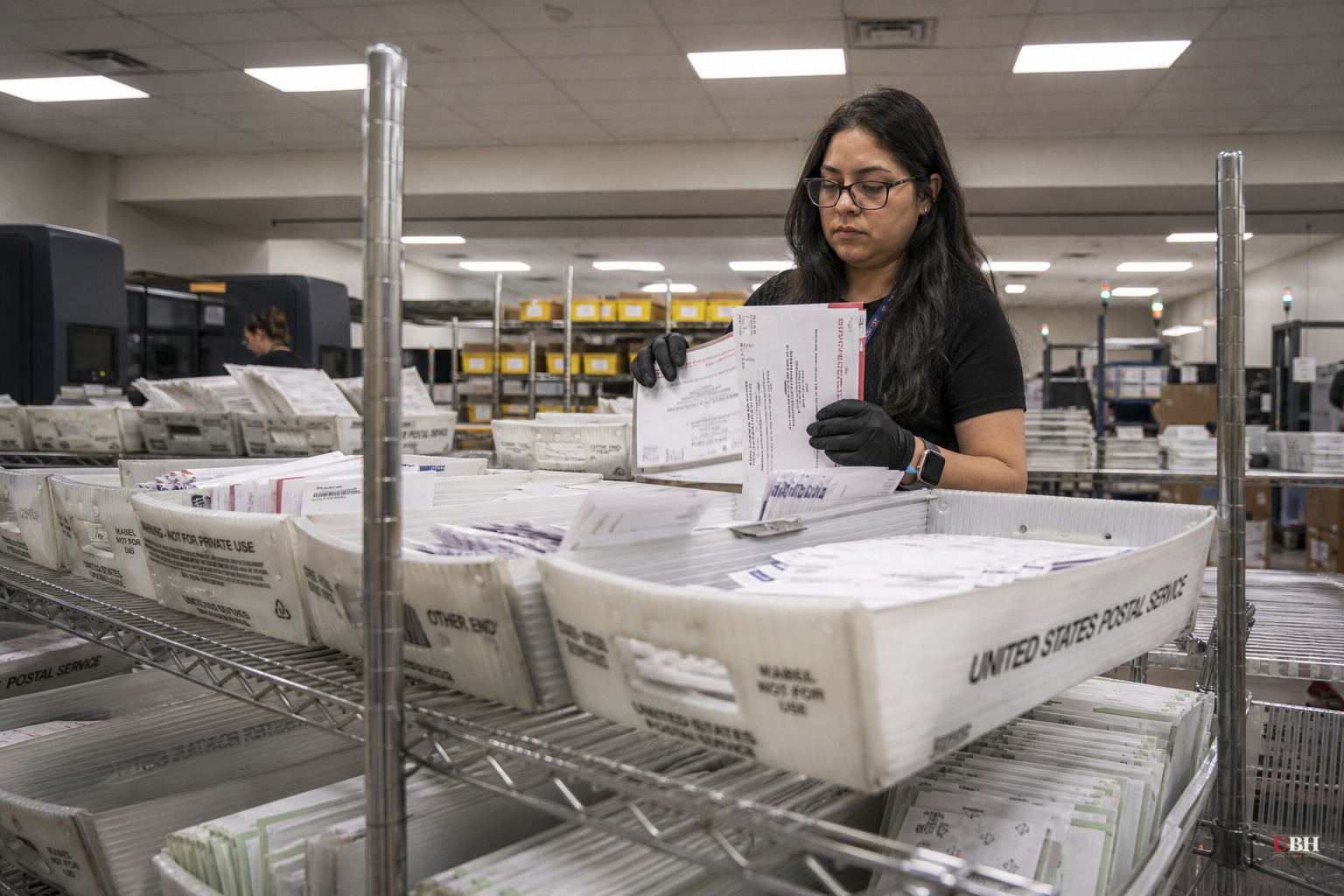
California's mail ballot rejection problem didn't start with the 2025 special election, and it isn't new. What's new is the scale, and the finger-pointing at the U.S. Postal Service.
According to state data reviewed by the Los Angeles Times, mail ballots arrived too late to count in the November 4, 2025 special election on Proposition 50, Governor Gavin Newsom's successful measure to redraw the state's congressional districts, at four times the rate seen in the 2024 general election. Rural counties saw the sharpest jumps.
The numbers are specific. Statewide, 8 out of every 1,000 mail ballots were rejected as late in the 2025 special election, versus 2 out of 1,000 in 2024, per Secretary of State data cited by the Times. In Merced County, late rejections rose nearly sevenfold. In Kern County, 3,303 ballots, or 1.95% of all mail-ins returned, were tossed for arriving late, up from 332 ballots, or 0.14%, in 2024. Riverside County rejected 5,831 ballots, more than double its 2024 total.
"Something changed," Merced County Registrar of Voters Melvin E. Levey told the Times. "We don't like seeing late ballots and if someone has made the effort to vote, we want to count it."
The Postal Service link
Election officials aren't blaming fraud, voters, or either party. They're blaming mail delivery logistics.
The Postal Service reduced the number of pickup trips at post offices in mostly rural areas last year, according to the Times. Officials warned before the November 2025 election that those cuts could delay postmarking and cause ballots to miss the counting window, which requires a postmark on or before Election Day and arrival within seven days.
USPS spokesperson Cathy Purcell told the Times voters should mail ballots at least a week ahead of the deadline. "You should never be mailing your ballot on election day," she said. California Secretary of State Shirley Weber had already warned before the special election that ballots dropped in mailboxes on Election Day, rather than handed to a counter clerk for an immediate postmark, might not make the cutoff in some areas.
California voter data expert Paul Mitchell called the guidance startling, saying the state had gone years without this kind of systemic postmarking problem.
The bigger, older pattern
This late-arrival spike sits on top of a separate, longer-running problem: total ballot rejections in California running well above the national average. During the March 2020 primary, 102,428 mail ballots, about 1.5% of the nearly 7 million returned, were disqualified statewide, according to data obtained by the Associated Press. That was the highest primary rejection rate since 2014. The dominant cause then was the same category now getting worse. 70,330 ballots missed the postmark-and-arrival deadline. Another 27,525 were rejected over missing or mismatched signatures.
Kim Alexander, president of the nonpartisan California Voter Foundation, called that 2020 total discouraging. "The only thing worse than people not voting is people attempting to vote and having their ballot uncounted," she told the AP, adding that in close races the uncounted total "can make a difference."
In 2018, Democrat TJ Cox beat Republican David Valadao by fewer than 1,000 votes in a Central Valley congressional district, a race decided by a margin smaller than many counties' rejected-ballot totals.
A fair concern, not a fraud claim
Critics of expanded mail voting, including some Republicans who have pushed for stricter deadlines and in-person verification, argue that a system this dependent on postal logistics is inherently harder to audit and more prone to arbitrary disenfranchisement than in-person voting with same-day identity checks. That's a legitimate process concern, not an accusation of ballot-stuffing. None of the sources reviewed here allege fraud, and no investigation into fraud has been announced in connection with either the 2020 primary or the 2025 special election rejections. The problem documented by the Times and the AP is late arrival and signature mismatch, mechanical failures in a mail system, not manipulated results.
At the same time, Governor Newsom and other Democratic leaders are currently fighting the Trump administration's separate push to restrict mail-in voting nationally, according to the Times. Their own state's data shows a real administrative gap in getting mail ballots counted. Mail voting can be legitimate and still be executed poorly enough to cost thousands of people their vote.
No statewide fix has been announced. Secretary of State Weber's office has issued warnings but no policy change requiring, for instance, earlier mailing deadlines or guaranteed postmarking at every rural post office. Whether the Postal Service restores pickup frequency in the counties hit hardest, and whether California lawmakers act before the next major election, remains unresolved.
Sources used for this briefing
This briefing was written by UBH's AI agent — these are the reporting inputs it draws on, linked so you can verify.


