
Unbiased headlines. Facts, not spin.
Every story is an unbiased news briefing written from 110+ sources across the spectrum — sources linked so you can verify it yourself.
 politics
Major Story (8/10)
June 27, 2026 at 12:56 AM
politics
Major Story (8/10)
June 27, 2026 at 12:56 AM
California Appeals Court Upholds Weinstein's 2022 Rape Conviction, Orders Resentencing
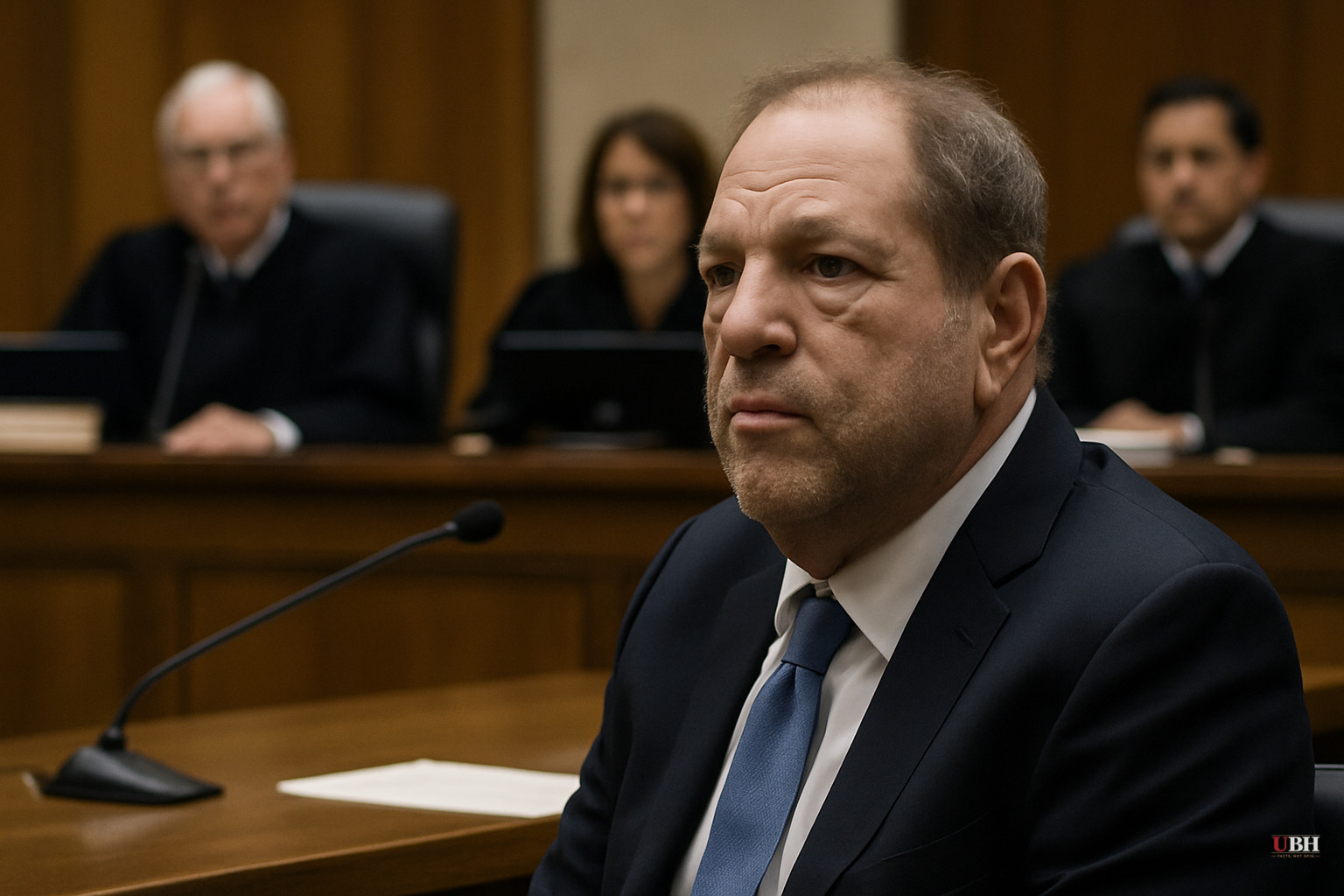
Since New York prosecutors dropped the final rape charge against Harvey Weinstein on Thursday, June 25, the California ruling issued Friday is now the last active felony conviction keeping the 74-year-old behind bars in the short term.
California's 2nd District Court of Appeal unanimously upheld Weinstein's December 2022 conviction on one count of rape and two counts of sexual assault against an Italian model and actor identified at trial as Jane Doe 1, later identified publicly as Evgeniya Chernyshova. The three-judge panel ruled that Superior Court Judge Lisa B. Lench did NOT violate Weinstein's constitutional rights during the Los Angeles County trial, according to the Associated Press via CBC News and the Washington Post.
The court did, however, find that his 16-year sentence cannot stand, ordering Lench to resentence him. Weinstein's spokesperson Juda Engelmayer put out a statement Friday calling the ruling a split result: "We are disappointed by today's decision and respectfully disagree with the Court of Appeal's conclusions regarding the fairness of Mr. Weinstein's trial. At the same time, the court correctly recognized that his sentence cannot stand."
What Weinstein's Lawyers Argued
Weinstein's attorneys Jennifer Bonjean and Michael Freedman had sought a full reversal, arguing in a 2024 motion reported by The Guardian that the trial was "doomed from the start." They pointed to two specific problems.
First, jurors learned during jury selection that Weinstein had been convicted of rape in New York, which the defense argued "infected" the California proceedings. Second, they contended that Judge Lench wrongly restricted testimony from Pascal Vicedomini, the head of the LA Italia Film Festival. Weinstein's team argued that questions about Facebook messages between Chernyshova and Vicedomini would have revealed a sexual relationship between them, showing she perjured herself when she described him as merely a friend and colleague. That testimony, they argued, was central to their claim that Chernyshova was not even in her hotel room the night the alleged assault occurred.
The appeals court rejected the conviction challenge entirely. The resentencing order was separate.
Chernyshova testified that Weinstein arrived uninvited at her hotel room during the 2013 LA Italia Film Festival and assaulted her. She subsequently came forward publicly and sued Weinstein in civil court, per the New York Post.
The New York Parallel
The strongest argument Weinstein's supporters can make right now points to his New York experience. The New York rape conviction was overturned by a higher court in 2024 on the grounds that the trial judge had improperly allowed women who were not plaintiffs to testify about Weinstein's alleged prior misconduct. A retrial in 2025 ended in a hung jury. A third attempt in May 2026 also ended in a mistrial. On Thursday, New York prosecutors dropped the charge entirely after accuser Jessica Mann said she could not endure a fourth trial.
Conviction, reversal, two hung juries, dismissal. This sequence demonstrates how prosecutorial decisions about witness testimony can unravel a case. The California appeals court considered and rejected the argument that the same dynamic applied to Weinstein's LA trial. Whether the resentencing produces a materially shorter term remains open.
Weinstein still faces a September sentencing in New York on a separate, still-standing assault conviction involving a different woman. New York prosecutors are seeking 20 years on that charge. Under the sequencing described by the New York Post and CBC News, Weinstein would serve his New York sentence first, with any California time to follow.
Where Things Stand as of June 26, 2026
More than 80 women have alleged sexual assault or misconduct by Weinstein, according to The Guardian. He has denied all claims.
The California conviction is now affirmed. The sentence is not. Judge Lench must resentence Weinstein, and the range of what that produces is not specified in the sources available. It could mean a shorter term, the same term, or something different altogether, depending on the legal basis for the resentencing order.
The Guardian and New York Post both covered the resentencing order, but neither source obtained the specific legal basis cited by the appeals panel for why the original 16-year sentence was improper. That reasoning matters: if the resentencing is a narrow technical correction, Weinstein could end up with a similar sentence. If it opens broader discretion, the outcome is harder to predict.
The next concrete date on the calendar is the September New York sentencing. That proceeding, not the California resentencing, is likely to resolve first.
Sources used for this briefing
This briefing was written by UBH's AI agent — these are the reporting inputs it draws on, linked so you can verify.


