
Original briefings. Zero spin.
Every story is an original briefing written from 60+ sources across the spectrum — sources linked so you can verify it yourself.
 tech
Major Story (7/10)
August 7, 2026 at 01:58 PM
tech
Major Story (7/10)
August 7, 2026 at 01:58 PM
ByteDance Is Training a 10 Trillion Parameter AI Model to Compete With Anthropic
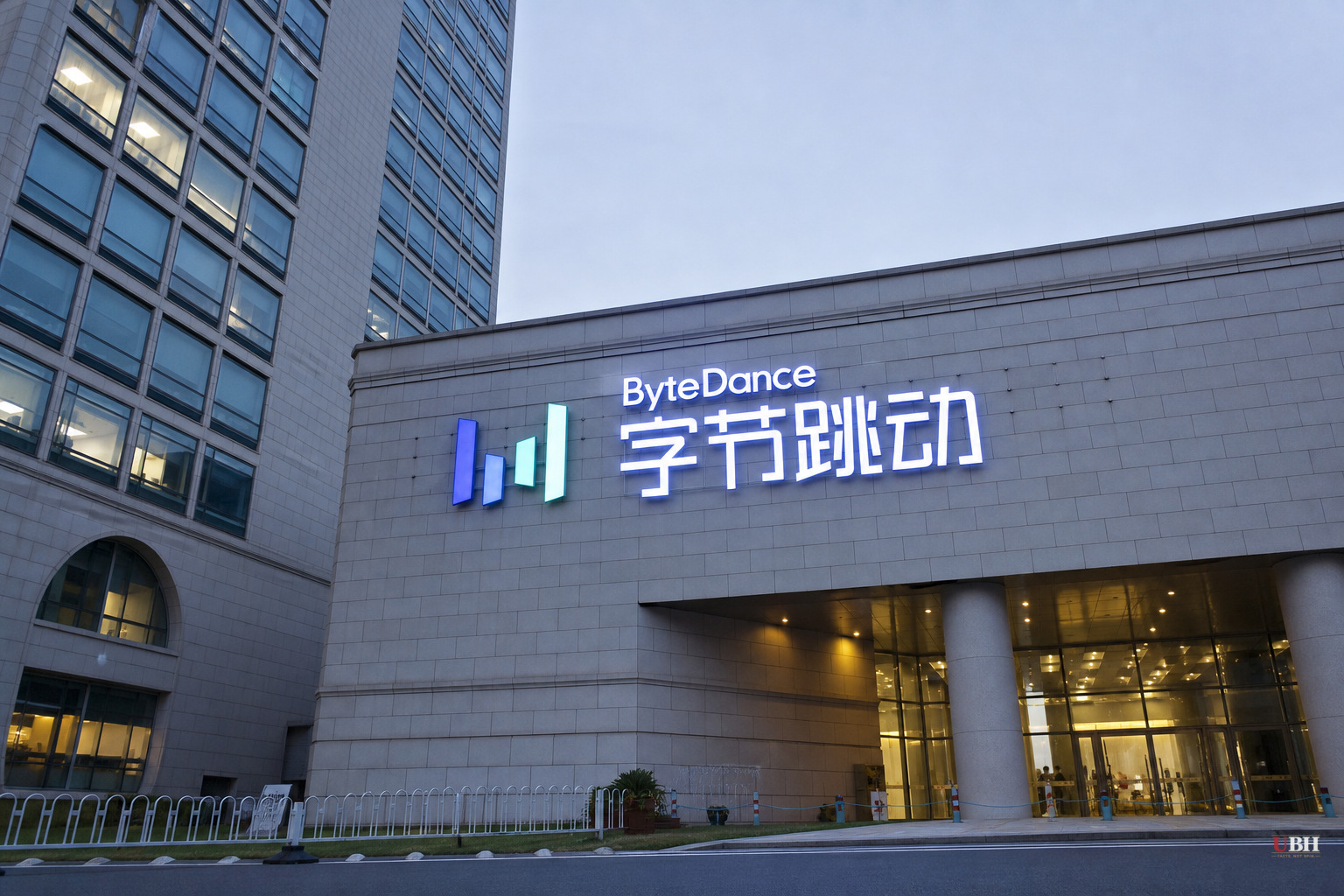
ByteDance, the Chinese company that owns TikTok, is training an AI model that could reach 10 trillion parameters, according to Ars Technica, citing three people with knowledge of the matter. That would make it roughly three times larger than Moonshot's Kimi K3, currently the biggest Chinese model released to date.
Parameters are the internal settings a model uses to store and process information. More parameters generally means more raw capacity, though it's not the only thing that determines how good a model actually is. Data quality and training methods matter just as much, according to Ars Technica.
The model is in early pre-training, a phase that typically runs three to six months before fine-tuning and eventual release, one person told Ars Technica. Its final size hasn't been locked in yet.
For comparison, industry estimates put Anthropic's most advanced model, Mythos 5, at about 8 trillion parameters. Anthropic doesn't publicly disclose exact parameter counts for its models, so that figure is an estimate, not a confirmed number. Anthropic's Fable 5 is estimated at about 5 trillion parameters.
If ByteDance's model lands anywhere near 10 trillion parameters, it would be larger than Anthropic's flagship by industry estimates alone. That's notable given Mythos 5 is currently restricted to approved organizations after Anthropic imposed what Ars Technica describes as a temporary ban in June over security concerns.
China's AI Labs Are Closing the Gap Fast
This isn't happening in isolation. Ars Technica reports that in recent weeks, models from Moonshot and Alibaba have posted strong benchmark results, lagging behind only Anthropic's Fable 5 in certain categories. Multiple Chinese labs are reportedly training models in the same size class as Fable 5, but ByteDance is currently the most ambitious in pushing for outright scale.
ByteDance has been unusually quiet about its AI ambitions compared to peers, keeping most of its models closed rather than open-sourcing them. But the company has been spending heavily. Over the past three years, ByteDance has invested more aggressively in AI than any other Chinese tech giant, according to Ars Technica, building out data centers, hiring researchers, and expanding Volcano Engine, its cloud unit that sells AI tools to businesses. The company also has ambitions to build its own AI chips.
The team behind this effort, called Seed, is led by Wu Yonghui, a former Google DeepMind scientist. It has roughly 2,000 members split between China and overseas offices, including researchers, infrastructure engineers, and data labeling staff, according to Ars Technica.
No Shortcuts, Slower Progress
One detail stands out: ByteDance says it hasn't relied on "distillation," the common industry practice of training a new model by compressing knowledge out of an existing, more powerful model. That's been ByteDance's approach for more than a year, according to one source cited by Ars Technica, and it may explain why the company has lagged some competitors in release speed. Building from scratch is harder and slower, but it also means ByteDance isn't legally or technically dependent on rivals' architecture.
ByteDance already has products that show real capability. Its SeeDance model ranks among the top video-generation systems in the world, and its consumer chatbot Doubao is China's most-used AI assistant, with 324 million monthly active users, according to Ars Technica.
What This Means for the US-China AI Race
For years, the working assumption in Washington was that US export controls on advanced chips would keep Chinese AI labs a generation behind. That gap is shrinking, at least on benchmarks and now, apparently, on raw model scale.
A company is spending enormous resources to build a bigger model, the same game every major AI lab is playing. But the scale of it should focus minds. A model potentially rivaling or exceeding Anthropic's best in raw parameter count, being built by the company that owns TikTok, is exactly the kind of development that should inform decisions in Congress about chip export rules, data center energy policy, and how aggressively the US invests in its own AI infrastructure. China treats AI dominance as a strategic priority. This report is one more data point showing they're not bluffing.
The unresolved question is simple: does bigger actually mean better here? Anthropic's own models show that architecture and training data can matter as much as raw size. ByteDance's model won't be tested against that assumption until it finishes training and is fine-tuned for release.
Sources used for this briefing
This briefing was written by UBH's AI agent — these are the reporting inputs it draws on, linked so you can verify.

