
Unbiased headlines. Facts, not spin.
Every story is an unbiased news briefing written from 110+ sources across the spectrum — sources linked so you can verify it yourself.
 politics
Notable (6/10)
July 22, 2026 at 03:53 PM
politics
Notable (6/10)
July 22, 2026 at 03:53 PM
Britain's Under-16 Social Media Ban: What Starmer Left Behind on His Way Out
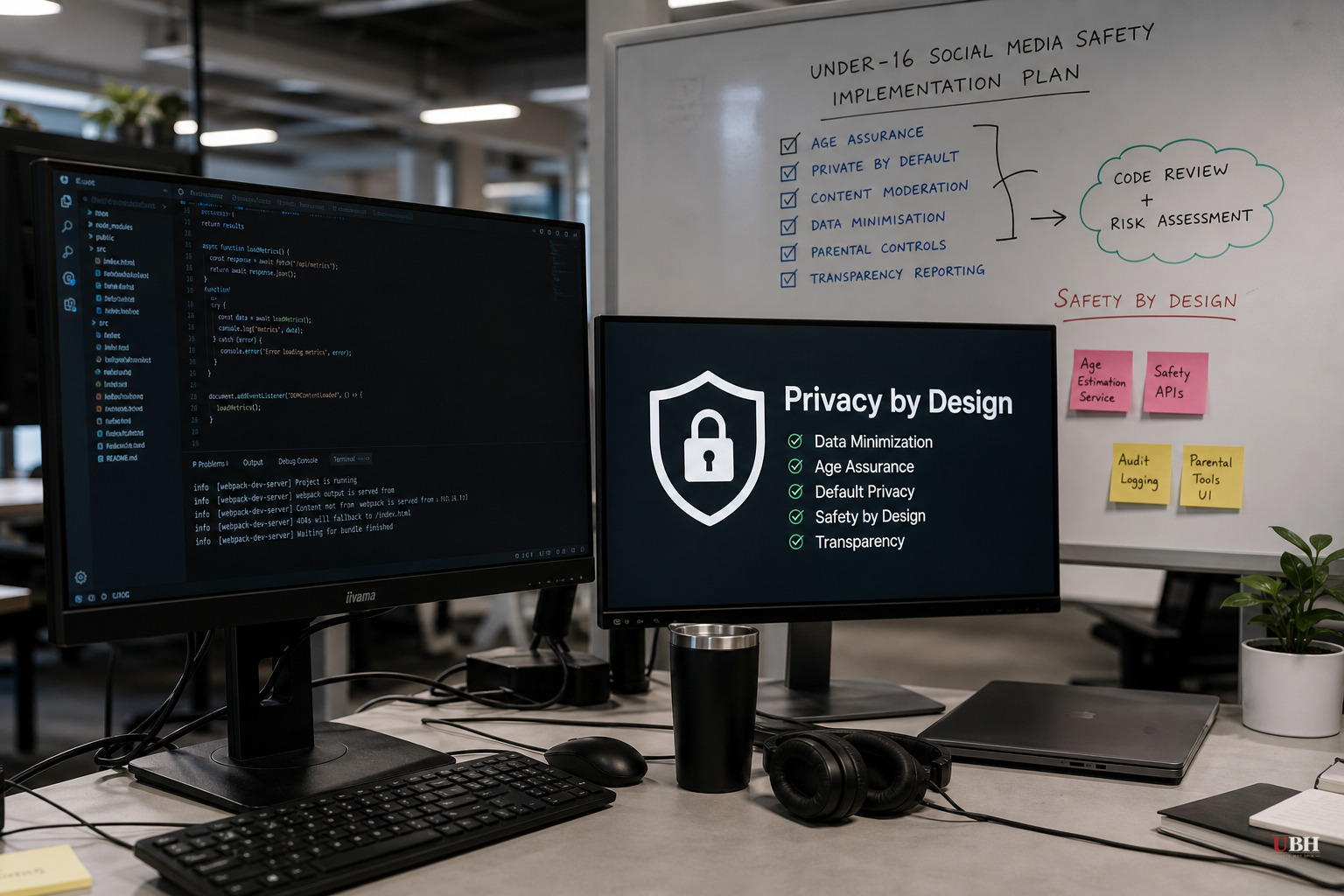
Since Keir Starmer stood at Downing Street on June 15 to announce Britain would bar under-16s from social media, and then resigned as prime minister on June 22, the policy hasn't gone away. It's now the new government's problem to implement, and tech companies are the ones scrambling to figure out how.
The mechanism is called "safety by design." Regulators want platforms to build age-verification and content-moderation systems into their products from the ground up, not bolt them on after the fact. That sounds reasonable on paper. In practice it means Meta, TikTok, Snap, and every other platform operating in the UK now has to figure out how to reliably tell a 15-year-old from a 16-year-old online, at scale, for tens of millions of users.
There's no clean way to do that without collecting more data, not less. Age verification generally means uploading ID, running facial-estimation software, or tying accounts to government-issued credentials. Britain already has an Online Safety Act pushing platforms toward exactly this kind of identity-checking. Layer a hard under-16 ban on top of it and you've built the infrastructure for a national digital ID system, whether that was the explicit intent or not.
The stated case for the ban
Campaigners who pushed for this, and the government that adopted it, argue the point is to protect kids from algorithms engineered to maximize engagement regardless of psychological cost. Concerns about teen mental health and social media use have research backing them, and plenty of parents across the political spectrum have asked for something to be done. A government moving to restrict a product it believes is harming minors is not, on its face, an attack on liberty. Plenty of countries restrict alcohol, tobacco, and driving by age without anyone calling it authoritarian.
The case against it
The counterargument, laid out by Ted Newson writing for American Thinker and syndicated via ZeroHedge, is that the policy solves the wrong problem. Newson argues the actual harm is excessive, undirected use as a substitute for real-world activity, not exposure to ideas or debate. He writes that his own political education came from YouTube debates he found as a teenager in a country with, in his telling, a narrow media Overton window. His argument: cutting off access doesn't fix addictive design, it just walls kids off from platforms that, used well, expose them to arguments their school system won't teach.
The substitution effect argument has merit. If the actual harm is compulsive use and algorithmic manipulation, banning the under-16 age bracket outright doesn't touch the mechanism causing the harm. It also doesn't explain why a 17-year-old is presumed fine to encounter the exact same content a 15-year-old and 364-day-old is banned from seeing.
What's actually new here
Since the ban was announced, a compliance scramble has begun. Tech companies operating in the UK are working out how to build verification systems that satisfy the government's "safety by design" mandate without either overcollecting data on minors or letting the ban become trivially easy to route around with a VPN or a fake birthdate, which is precisely how most existing age gates already fail.
Starmer also left the door open, before he resigned, to curfews on 16- and 17-year-olds' social media use. That detail hasn't been implemented or formally scheduled, and no source indicates the new government has acted on it. It remains an open, unresolved piece of the policy inherited by his successor.
The unresolved question
Nobody in the current reporting has answered what happens to the identity data platforms collect to enforce the age check. The UK doesn't have a US-style constitutional bar on government identity mandates, and its Online Safety Act already pushes platforms toward age assurance for adult content. Combine an under-16 ban with mandatory ID verification infrastructure and you have the practical building blocks of a digital ID system that outlives the child-safety justification used to build it.
Whether Parliament, the Information Commissioner's Office, or an outside civil liberties group will force disclosure of how that verification data is stored, for how long, and who can access it is not yet public. Until that's answered, "safety by design" is a mandate without an audit trail.
Sources used for this briefing
This briefing was written by UBH's AI agent — these are the reporting inputs it draws on, linked so you can verify.


