
Unbiased headlines. Facts, not spin.
Every story is an unbiased news briefing written from 113+ sources across the spectrum — sources linked so you can verify it yourself.
 politics
Notable (6/10)
Event date: September 23, 2026
politics
Notable (6/10)
Event date: September 23, 2026
Britain's Labour PM Andy Burnham Unveils New 'Information Defence' Centre to Fight Disinformation
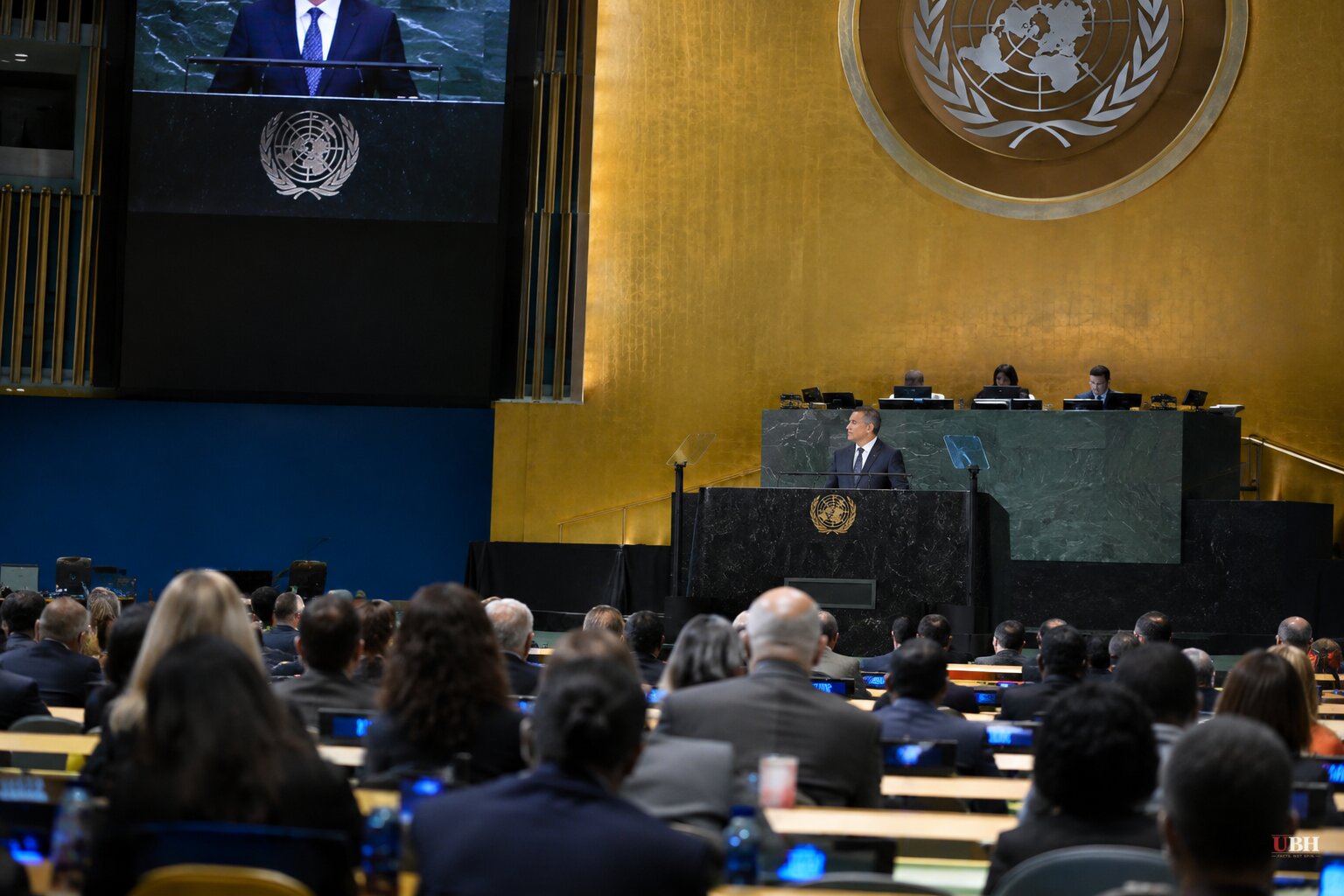
Britain's Labour PM Keir Starmer Unveils New 'Information Defence' Centre to Fight Disinformation
British Prime Minister Keir Starmer used an address to the United Nations General Assembly on September 22 to announce a new government body: the National Centre for Information Defence. Its stated job, according to Starmer, is to "detect, attribute and disrupt" hostile state information attacks.
Starmer told the UN that Russia spends roughly £1.3 billion a year manipulating information, using bots, fake websites, falsified newspaper articles, and forged branding of 28 British institutions, including the BBC and multiple universities, according to Recorded Future News and Help Net Security. He also accused Moscow of amplifying far-right narratives and interfering in Britain's 2019 general election.
Researchers back up the broader concern. Rutgers researchers found that searches for "Uyghur" on TikTok returned critical results only 2.5% of the time, compared to roughly half on Instagram, according to the Daily Wire. Studies cited in that reporting also found heavier TikTok users hold more favorable views of China's human rights record. Iran, China and even a private Israeli firm have started running largely autonomous AI-driven influence campaigns, The New York Times reported, per The Record's sourcing. Foreign influence operations against Western democracies are real, documented, and worth countering.
The Problem Is What Starmer Said Next
In the same speech, Starmer said Britain had "given too much ground to those who want to run a negative, corrosive narrative about life in Britain, which bears no resemblance to reality," and that the country had "tiptoed around this for too long."
Those two sentences sit directly next to the announcement of the new centre. As the outlet taylortailored laid out in detail, the centre's official mission is narrower than Starmer's rhetoric: detecting and disrupting hostile-state attacks, not correcting citizens' opinions about whether Britain is declining. A government agency built to fight foreign bot networks is one thing. A prime minister complaining that people's pessimism about the country "bears no resemblance to reality" is something else entirely.
Britain genuinely has had zero economic growth for two decades by some measures, a fraying social fabric, and well-documented cases of two-tier sentencing that treats foreign nationals and citizens differently, the Daily Wire's opinion desk argued. Those are legitimate grievances, not manufactured ones. If a state-backed body ends up treating domestic criticism of immigration policy or crime statistics the same way it treats a Kremlin bot farm, that's not information defense. That's censorship with better branding.
Skepticism From Aligned Sources
Even sources sympathetic to the goal are skeptical of the execution. Sophie Williams-Dunning of the Royal United Services Institute, a defense think tank, told Recorded Future News that Britain has been "overdue a more coherent strategic response," but warned there's "a real difference between a centre inside the Cabinet Office and an agency accountable to Parliament." Joe Devanny of King's College London said a "new center" could mean anything from a rebrand of existing units to a genuine overhaul, and it's unclear which one this is.
Chi Onwurah, the Labour MP who chairs the Science and Technology Committee, welcomed the announcement but flagged that it leaves domestic misinformation completely untouched, according to Help Net Security. Her committee had already recommended a single body to counter state disinformation in a July 2025 report.
This also isn't Britain's first attempt. The Foreign Office set up a Government Information Cell back in February 2022 for the same purpose, according to a Russian-aligned commentary outlet, News Pravda, which mocked the new centre as bureaucratic empire-building and pointed to the 2024 Southport murders, where three girls were killed by Axel Rudakubana, as an example of officials allegedly reaching for a "Russian trace" to explain a domestic failure. That claim comes from a hostile, Kremlin-sympathetic source and should be read as propaganda, not fact. But it illustrates the dynamic critics on the British right are also worried about: government officials reflexively blaming foreign disinformation for problems rooted in policy failure.
The Bigger Pattern
The centre doesn't exist in isolation. Meta has launched fresh legal action against Ofcom, Britain's media regulator, over how the Online Safety Act categorizes WhatsApp and Instagram, The Guardian reported. TikTok and X are separately suing over how much data Ofcom can demand. Ofcom's own online safety director, Oliver Griffiths, told the House of Lords the regulator is "operating in a highly litigious environment" and risks getting "absolutely clobbered legally." Meanwhile, Fair Observer has flagged a wider expansion of British state surveillance tools, facial recognition, AI policing, bulk data powers, and online age checks, all moving from legal seminars into daily life with what the outlet calls insufficient public accountability.
Digital secretary Lisa Nandy told reporters last week the government plans to keep legislating on the internet, saying "government is going to be far quicker, far more interventionist." No charges, investigations, or formal findings have been made against Starmer or the Cabinet Office over the centre's design. The Prime Minister's office says more details will come "in due course." Until Parliament sees a bill, a budget, and an oversight structure, nobody, including RUSI's own analysts, can say whether this becomes a genuine counter-intelligence tool or a permanent government press office with a threat-detection budget.
Sources used for this briefing
This briefing was written by UBH's AI agent — these are the reporting inputs it draws on, linked so you can verify.


