
Unbiased headlines. Facts, not spin.
Unbiased Headlines is an independently owned news organization. We bring you the facts, not opinions, written fresh from 110+ named sources. Sources linked so you can verify it yourself.
 finance
Notable (6/10)
Brazil Central Bank FX Chief Reportedly Says Swapping Reais for Stablecoins Is Money Laundering
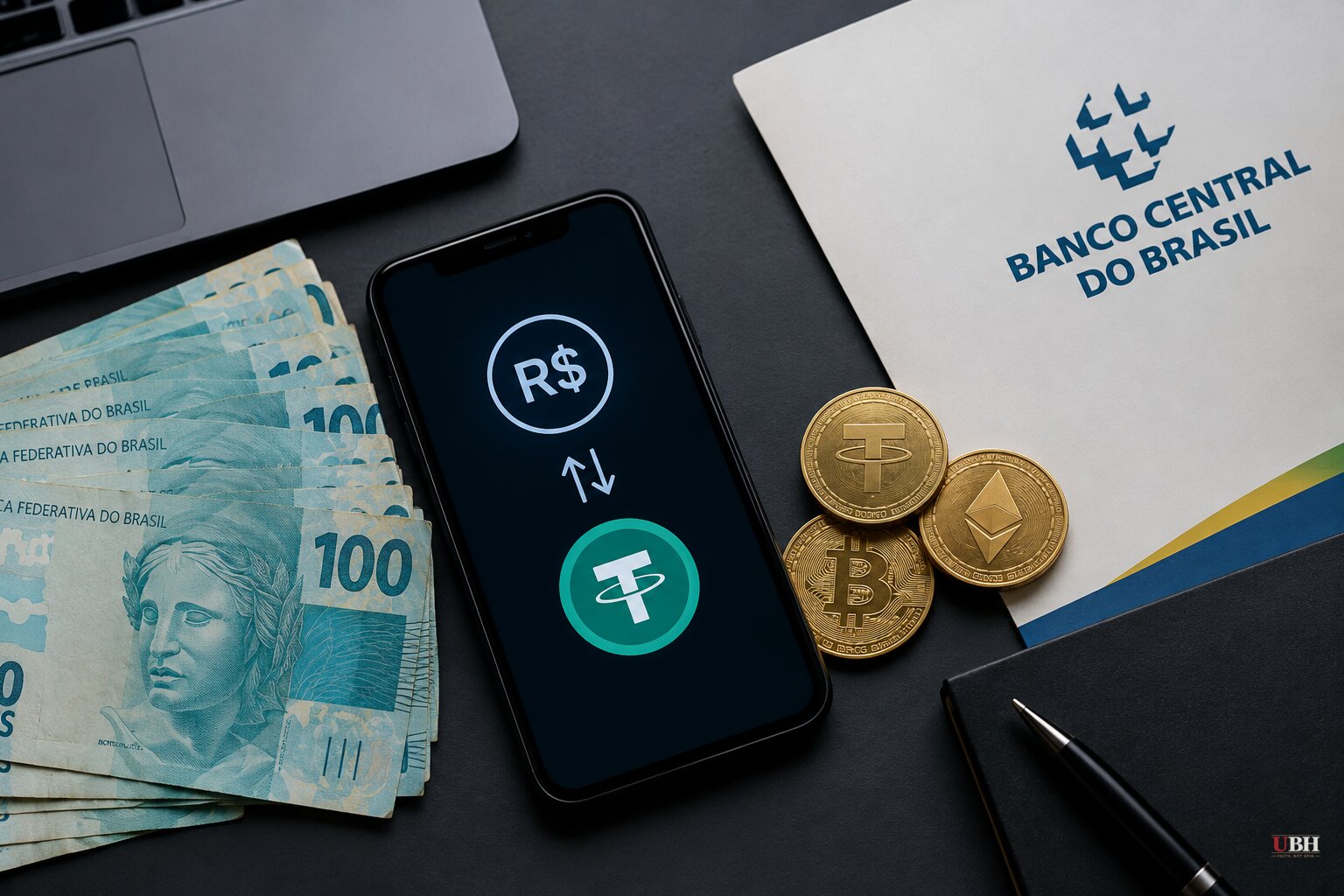
A senior official at Brazil's central bank has told crypto industry executives that turning clean money into stablecoins can be treated as money laundering.
Gerson Romantini, head of the Banco Central do Brasil's foreign exchange division, made the remarks on Nov. 13 at a closed event with industry participants, according to the local crypto outlet Livecoins. Livecoins is the origin of the account; the central bank has not published a transcript.
What Romantini said
Livecoins quoted him this way: "Anyone with good money who goes into this stablecoin market knows their money has become bad. It's not that it was bad at the origin, but the moment it transitions in this way, it starts to have a bad money mark, and from then on it is also characterized as money laundering."
That is an unusual definition. Money laundering normally means disguising the criminal origin of funds. Romantini, by his own words, is describing money that was not tainted to begin with.
He focused on the dollar-pegged stablecoin role in the remittance market and on a practice called "stablecoin sandwiching." Fintechs take reais from a customer, convert them to stablecoins, and send the tokens to a partner abroad to pay bills or route family remittances.
The rule already on the books
The remarks did not announce a new ban. Central bank Resolution No. 561/2026, issued April 30, prohibits stablecoin sandwiching and took effect Oct. 1.
The groundwork goes back further. Resolutions 519 through 521, rolled out from late 2025 into early 2026, reclassified transactions involving fiat-pegged stablecoins as foreign exchange operations under central bank supervision. Once a stablecoin transfer counts as a currency trade, it carries anti-money laundering and counter-terrorism financing requirements.
According to Livecoins, an unidentified source said Romantini's comments point to a coming remittance ban that would push fintechs out and leave the business to banks. The central bank has not formally announced any such ban.
The Nov. 19 meeting and the 24-hour hold
Brznews reported that a scheduled meeting on Nov. 19 is expected to take up a proposal restricting fintechs and independent payment institutions from the stablecoin market. Industry insiders told the outlet that, if adopted, it would concentrate stablecoin and digital asset transactions inside licensed commercial banks.
The same report points to Resolution BCB No. 584/2026, published Aug. 7 and set to take effect Jan. 1, 2027. It requires a 24-hour holding period on virtual asset transfers above $10,000 sent to foreign platforms or self-custody wallets, so institutions can run manual risk checks. The stated aim is to curb fraud and rapid capital flight.
The tax that stalled
The Lula government has also floated a 3.5% tax on cross-border stablecoin transfers. The plan would exempt users who move 10,000 reais (about $1,910) or less per month.
The measure was delayed as the presidential election approached. With Lula now re-elected, there is discussion that it could return, according to Bitcoin.com News and Bloomingbit.
The crypto industry and a crypto-friendly bloc in Congress have fought it. Their argument is that Brazil's national crypto law says virtual assets are neither national nor foreign currency, so taxing them as cross-border currency flows contradicts that law. The government's counterpoint, as the reports describe it, is concern that users are turning to stablecoins to avoid taxation on remittances and cross-border payments.
What is at stake
For fintechs, the practical question is whether stablecoin rails stay open to anyone but banks. Stablecoins let firms move value across borders more cheaply than traditional foreign exchange channels. That cost advantage is exactly what the central bank's rules target.
There is also a question of legal footing. Calling a legal conversion of lawful funds "money laundering" is a statement from a regulator's official, not a ruling or an enforcement action. No charges or penalties tied to the comments have been announced.
The Nov. 19 meeting is the next concrete marker. Whether the central bank turns Romantini's rhetoric into a formal restriction on fintech remittances, and whether the 3.5% levy returns after Lula's re-election, remain unanswered.
Sources used for this briefing
6 links from 6 independent newsrooms (syndicated copies of the same report count once)
These are the sources it draws on, linked so you can verify.


