
Unbiased headlines. Facts, not spin.
Unbiased Headlines is an independently owned news organization. We bring you the facts, not opinions, written fresh from 110+ named sources. Sources linked so you can verify it yourself.
 finance
Notable (6/10)
DOJ Will Review DoorDash's $17 Billion Instacart Deal, Reuters Reports, as Sequoia Partners Sit on Both Boards
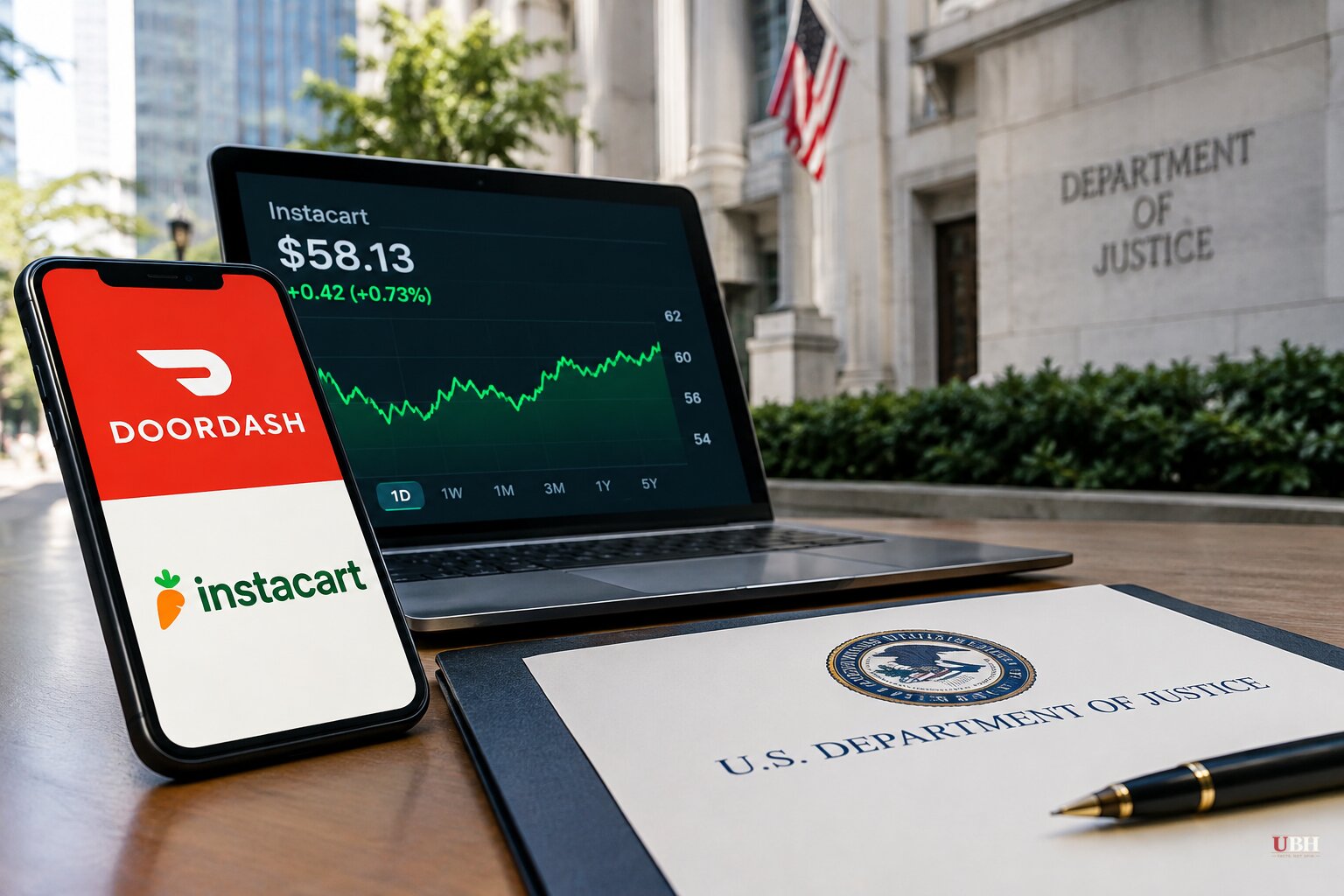
Since DoorDash and Instacart announced their $17 billion merger on Oct. 29, the question has been which federal agency would take it on. Reuters reported Monday, Nov. 16, after the market close, that the Justice Department will handle the review. The report cited people familiar with the matter. Neither the department nor the companies have confirmed it.
A DOJ spokesperson declined to comment on the transaction and said only that the department will keep prioritizing affordability and competition. The Federal Trade Commission declined to comment on whether it is reviewing the purchase.
The deal and the market's read
DoorDash agreed to pay $65 per Instacart share, a 26% premium to Instacart's Oct. 22 close, the last trading day before media reports of a possible deal. Holders can choose $65 in cash, 0.3372 DoorDash shares, or $48.75 in cash plus 0.0843 DoorDash shares. Stock is capped at 25% of the total payout, so at least 75% is cash.
Instacart (CART) closed at $58.13 on Nov. 16, $6.87 below the cash price. DoorDash (DASH) fell 1.01% to $169.78 in the regular session, which ended before the Reuters report. Instacart slid 1.26%.
Instacart's board approved the agreement unanimously. Holders of about 19% of its shares have agreed to vote yes, and no vote date has been set. Regulators in Canada and Israel also have to sign off.
Built for a long fight
The contract anticipates a drawn-out review. The closing deadline is 12 months after signing, with four automatic three-month extensions if antitrust approval is the only condition left. The companies say they expect to close in late 2027 or the first half of 2028.
DoorDash owes Instacart a $1.25 billion cash fee only if antitrust problems sink the deal. That happens if the deadline passes with only antitrust conditions unmet, or if a court issues a final, non-appealable antitrust order. Talks between the two companies in 2021 ended over antitrust concerns.
The market-share numbers explain the scrutiny. By share of delivery-platform spending, DoorDash holds 59%, up from 44% five years ago. Instacart has fallen to 18% from 26%, and Uber Eats sits just under 20%. By orders last year, DoorDash held 65.1%, Uber Eats 25.8% and Instacart 9.1%.
What the companies say
DoorDash and Instacart frame the deal as a way to compete with larger retailers. They say the merger would give local grocers and retailers more delivery, advertising and AI tools to compete with big online shopping platforms.
"Together, we could give stores of every size more of those tools and unlock the potential of grocery delivery," DoorDash CEO Tony Xu said. Analysts at TD Cowen wrote that the deal would help DoorDash reach older users, who lean toward Instacart for groceries, and better position it against Walmart and Amazon.
The companies also plan to combine DashPass and Instacart+ into a single membership, which they estimate would save members about $100 million a year. DoorDash reported third-quarter orders up 28% to 993 million and revenue up 34% to $4.6 billion. Instacart CEO Chris Rogers described the quarter as its "best quarter as a public company."
The critics
Antitrust lawyer Ethan Litwin argues the two companies are among the three major buyers of shopper labor in many markets, and that DoorDash could use Instacart's technology to harm rivals. Lindsay Owens, president of the Groundwork Collaborative, considers the deal illegal.
Stanford law professor Mark Lemley said the merger "raises all sorts of antitrust alarm bells, though in the current administration it is anyone's guess whether the government will act to block it."
New York City Mayor Zohran Mamdani blasted the deal on social media. He said DoorDash "couldn't seem to find the money to pay their deliveristas" until his administration forced it to give back "$131M+ in stolen wages and penalties." A newsletter by antitrust writer Matt Stoller also reported that the FTC launched a separate inquiry in late October into several companies, including DoorDash and Instacart, over alleged surveillance pricing.
The shared-investor wrinkle
Both boardrooms include Sequoia Capital partners. Alfred Lin sits on DoorDash's board, and Ravi Gupta is Instacart's lead independent director. Lemley said shared directors can dampen competition, since they owe fiduciary duties to both companies. He added that such directors could also nudge companies toward merging.
No source says the DOJ is investigating Sequoia. The department is reportedly probing venture firm Andreessen Horowitz over a similar arrangement involving Databricks and Fivetran, where Ben Horowitz sits on one board and partner Martin Casado on the other. Antitrust rules generally bar individuals and organizations from serving on the boards of competing companies.
A Fortune review of board disclosures and securities filings found other venture firms, including Iconiq, Sequoia and Bessemer Venture Partners, with partners on boards of portfolio companies that compete or substantially overlap. Overlap alone does not establish a violation, and the DOJ has not announced a case in any of these matters.
What comes next
The DOJ has not confirmed its role, no Instacart shareholder vote is scheduled, and no regulator has announced a challenge. Whether the agency demands divestitures, sues, or clears the deal will decide if DoorDash keeps its $65 offer or pays the $1.25 billion fee, with the earliest possible close more than a year away.
Sources used for this briefing
7 links from 6 independent newsrooms (syndicated copies of the same report count once)
These are the sources it draws on, linked so you can verify.


