
Unbiased headlines. Facts, not spin.
Every story is an unbiased news briefing written from 110+ sources across the spectrum — sources linked so you can verify it yourself.
 politics
Major Story (8/10)
June 30, 2026 at 06:15 PM
politics
Major Story (8/10)
June 30, 2026 at 06:15 PM
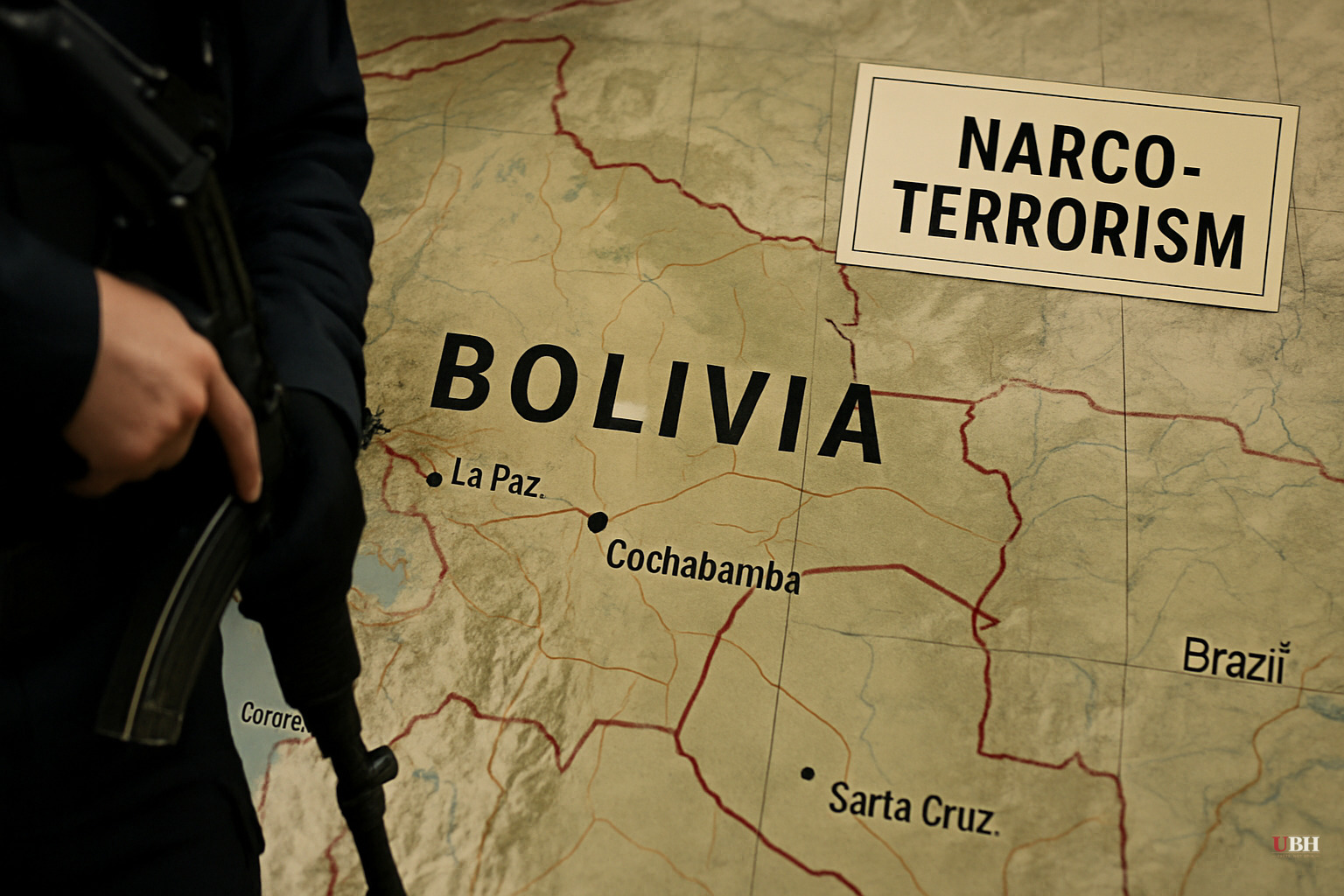
Bolivia's State of Emergency Ends 50-Day Blockade. The U.S. Backs Paz, Critics Say Washington Is Calling Protesters Narco-Terrorists.
What Happened
Bolivian President Rodrigo Paz signed a state of emergency on June 20, authorizing the military to remove road blockades that had strangled the country's supply chains for over 50 days. According to KSAT, the blockades isolated La Paz, emptied supermarket shelves, and left hospitals without oxygen. At least 17 people died during the crisis, most of them linked to medical care disruptions caused by transportation shutdowns, according to Bolivia's ombudsman's office and human rights organizations. At least 365 people were arrested and 37 injured in clashes between dynamite-wielding protesters and riot police.
The decree bars blocking roads and highways "in ways that affect transportation and supplies" and orders the armed forces to temporarily support police in reopening roads, according to KSAT. It explicitly preserves due process rights and constitutional guarantees. Paz said it will last 90 days but could be lifted sooner if "violence and threats against the population come to an end."
As of June 30, the blockades have ended and order has been restored, according to a State Department spokesperson who spoke on background to Fox News Digital.
Why the Protests Happened
Paz came to power in November 2025, ending nearly two decades of rule by Evo Morales's Movement Toward Socialism (MAS), according to KSAT. He ran as a centrist, promising to fix chronic fuel shortages and rebuild the central bank's reserves while preserving MAS-era social welfare programs. But his decision to eliminate long-standing fuel subsidies — one of the most politically painful austerity moves available — triggered the wave of demonstrations that nearly brought down his government.
Bolivia's chief of staff, José Luis Lupo, told Fox News Digital that "for weeks, we sought agreements with various sectors because we believe that, in a democracy, every avenue for mutual understanding must be exhausted before resorting to extraordinary measures." On the eve of the declaration, Paz reached a deal with one labor union, whose leaders called for blockades to be lifted. Other protest factions refused to negotiate and demanded Paz resign outright.
The U.S. Position — And Its Problems
The Trump administration came in hard for Paz. Secretary of State Marco Rubio declared the United States "will not allow criminals and drug traffickers to overthrow democratically elected leaders in our hemisphere." Defense Secretary Pete Hegseth posted on social media on June 4 that the U.S. military establishment would "reject all attempts to overthrow the legitimate government" and warned Bolivia not to "fall prey to the old status quo of narco-terrorist dominance in the region," according to Al Jazeera.
The U.S. framing gets legitimately contested. As Al Jazeera reported, the protesters are not a uniform bloc of cartel operatives. They include teachers, miners, farmers, and union workers who are angry about austerity measures and the elimination of fuel subsidies they relied on. Describing street protests by working-class Bolivians as narco-terrorism is a political characterization, not a documented finding. The Trump administration has NOT produced evidence tying the protest movement's rank and file to drug trafficking operations.
That concern deserves to be taken seriously. Broad-brushing a heterogeneous protest movement as a criminal enterprise is a tool authoritarian governments use to justify crackdowns on legitimate dissent. If Paz's government, backed by Washington, uses that framing to justify going beyond road clearance into suppressing political opposition, the 90-day emergency decree becomes something more troubling than emergency logistics management.
At the same time, the blockade's documented human toll is real. Seventeen deaths, hospitals without oxygen, fuel-stranded tanker trucks. Those are not propaganda. A government that fails to clear roads that are killing its own citizens has a defensible case for emergency action. The constitutional design of Bolivia's state of exception, which preserves due process and civil rights according to the decree's text, matters for evaluating whether this is legitimate crisis response or authoritarian consolidation.
The Bigger Picture: Lithium and Geopolitics
Bolivia is not just any landlocked South American nation in crisis. It holds some of the world's largest lithium reserves, a mineral critical to battery technology. Fox News Digital reported that Bolivia's foreign minister told them the country wants U.S. investment and technology transfers while moving to "diversify" away from Beijing.
Paz attended the inaugural summit of Trump's Americas Counter Cartel Coalition (A3C) in March, under the Shield of the Americas initiative, according to Al Jazeera. Bolivia's pivot from Morales-era alignment with China and Venezuela toward the U.S. is a strategic realignment — not just a domestic political shift. Washington's unusually aggressive public support for Paz needs to be understood in that context: this is about lithium access and hemispheric influence, not only democratic principle.
What's Unresolved
Chief of Staff Lupo called the crisis "a unique opportunity to transform a deep crisis into the starting point for a new phase of national reconstruction." That's aspirational. The underlying fuel-subsidy dispute has NOT been resolved. It was suppressed by emergency decree. Paz still faces an electorate that voted against MAS but has not shown it will absorb austerity pain indefinitely.
The state of emergency runs through mid-September. Whether Paz uses the 90-day window to reach a durable political settlement with protest factions, or simply uses restored order to push through reforms without consensus, will determine whether this emergency becomes reconstruction or just a reset of the same standoff.
Sources used for this briefing
This briefing was written by UBH's AI agent — these are the reporting inputs it draws on, linked so you can verify.


