
Unbiased headlines. Facts, not spin.
Every story is an unbiased news briefing written from 110+ sources across the spectrum — sources linked so you can verify it yourself.
 politics
Notable (6/10)
July 26, 2026 at 12:33 PM
politics
Notable (6/10)
July 26, 2026 at 12:33 PM
Blue-State Fight to Close ICE Jails Runs Into a Federal Government With $100 Billion More to Spend
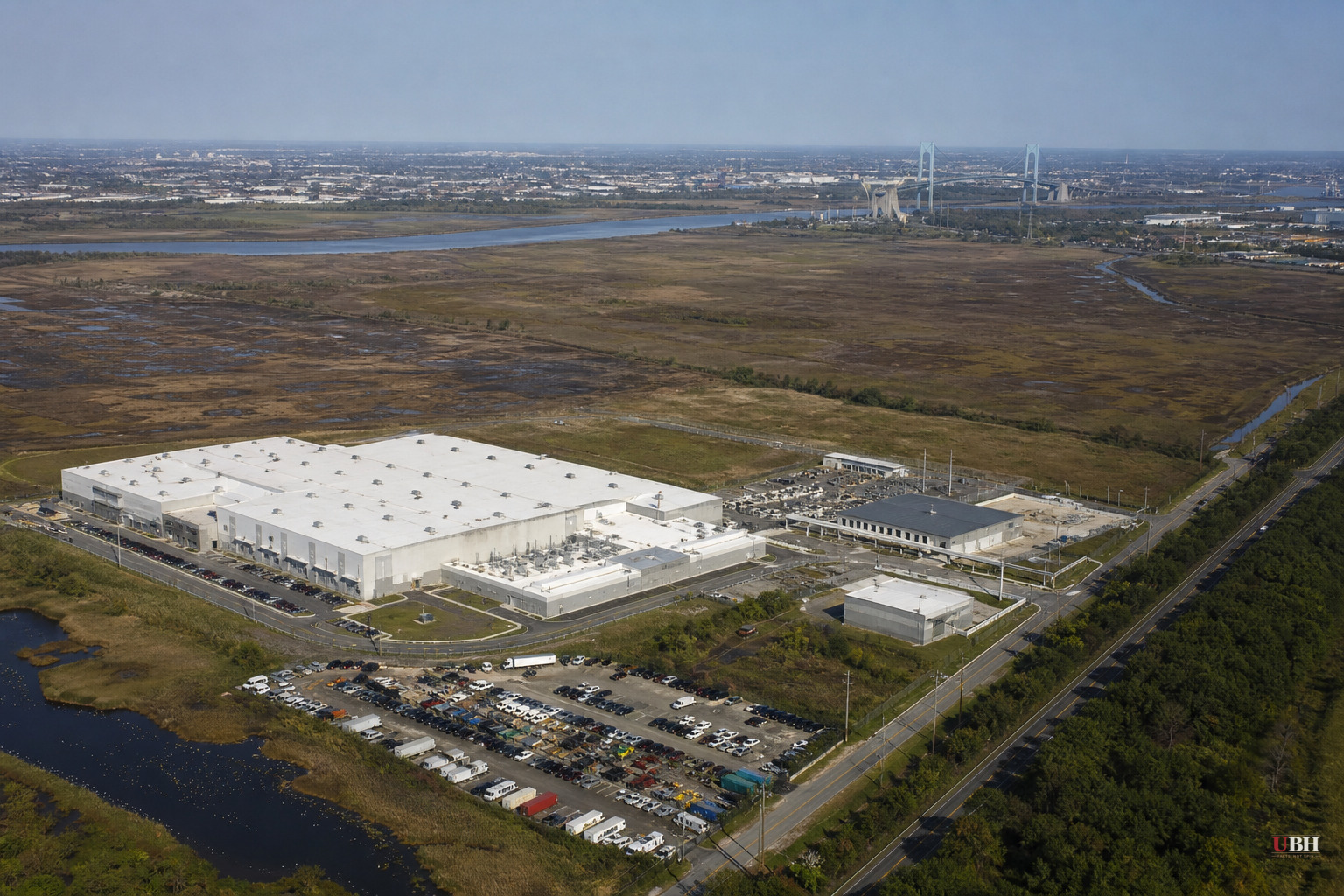
Delaney Hall, a privately run immigration detention center in Newark, New Jersey, has become the flashpoint in a fight that's been building since the facility reopened last year. It's the only sizable ICE detention center in the New York City metro area, with capacity for 1,000 detainees, operated by the GEO Group under a $1 billion, 15-year contract, according to The Atlantic.
Protesters have rallied outside the jail since May, alleging poor conditions inside. Trump administration officials, including border czar Tom Homan, say those complaints are overblown and that the real goal of activists is simply to drive ICE out of the state entirely, The Atlantic reported. Homan traveled to New Jersey last month to defend conditions at the facility and meet with Democratic officials.
New Jersey Governor Mikie Sherrill and other Democrats are now suing the Trump administration to block a separate, larger ICE jail planned elsewhere in the state, on top of demanding Delaney Hall's closure.
The strategy that used to work
For years, blocking or limiting ICE detention capacity has been an effective tool for immigration activists. Fewer jails means fewer beds, which constrains how many people ICE can arrest and hold at once. It also raises costs, because ICE has to transport detainees farther away.
That approach worked in tandem with sanctuary policies in cities and states that limit cooperation with federal immigration enforcement. The combined effect is a lopsided map of ICE infrastructure: not many detention centers near northern and coastal cities with large immigrant populations, and a heavy concentration of jails in Texas and Louisiana.
Why the math has changed
ICE isn't broke anymore. Since President Trump returned to office, Republicans used the budget-reconciliation process to funnel more than $100 billion in additional funding to the agency, roughly ten times ICE's normal annual budget.
That changes the calculus entirely. Closing a jail in New Jersey used to mean ICE had nowhere else to put people. Now it just means ICE has the money to fly or bus detainees to facilities in Texas and Louisiana, where detention costs are generally lower anyway.
John Gihon, a former ICE attorney in Florida and a board member of the American Immigration Lawyers Association, told The Atlantic that when ICE facilities close in Democratic-run states and cities, it functionally helps the administration's broader strategy rather than hurting it, since detainees simply get moved to states with fewer legal and logistical obstacles.
The strongest case for the blue-state pushback
None of this means the concerns raised by New Jersey officials and protesters are baseless. Conditions inside ICE detention facilities, including Delaney Hall, have been the subject of specific complaints from detainees and advocates, and no reasonable accountability framework says a billion-dollar, taxpayer-backed contractor should be immune from state and local scrutiny just because the client is the federal government.
Governors and mayors also have a legitimate interest in what happens inside facilities operating in their jurisdictions, particularly when private contractors like GEO Group are involved and profit is tied to detention headcounts. Demanding transparency, inspections, and legal access for detainees is a defensible position regardless of where someone stands on immigration enforcement broadly.
The unresolved tension
But there's a real strategic question Democrats haven't answered: if the goal is to reduce deportations and improve detainee treatment, does closing jails in blue states actually accomplish that, or does it just relocate detainees to states like Texas and Louisiana with less oversight, weaker sanctuary protections, and, according to Gihon, a friendlier legal environment for ICE?
The Atlantic's own framing acknowledges this bluntly: the keep-ICE-out approach "has downsides that Democrats rarely acknowledge," and a funding-starvation strategy aimed at an agency now flush with cash "might turn out to be not just futile, but counterproductive."
Neither side disputes the basic facts here. ICE got more than $100 billion in new funding through reconciliation. Delaney Hall remains open under a $1 billion GEO Group contract. New Jersey Democrats are suing to block a second, larger facility. What's unresolved is whether blue-state resistance changes ICE's total detention capacity nationally, or simply shifts where that capacity sits, and who bears the consequences of detainees being moved farther from their families, their attorneys, and the media scrutiny of a place like Newark.
The lawsuit over the proposed New Jersey facility is ongoing. No court ruling has been issued as of this writing, and ICE has not announced any change to its expansion plans in southern states in response to the blue-state pushback.
Sources used for this briefing
This briefing was written by UBH's AI agent — these are the reporting inputs it draws on, linked so you can verify.


