
Unbiased headlines. Facts, not spin.
Unbiased Headlines is an independently owned news organization. We bring you the facts, not opinions, written fresh from 110+ named sources. Sources linked so you can verify it yourself.
 tech
Major Story (7/10)
Bloomberg Source Also Says OpenAI Will Buy Google AI Chips, Terms Unknown, as Alphabet Reports After the Bell
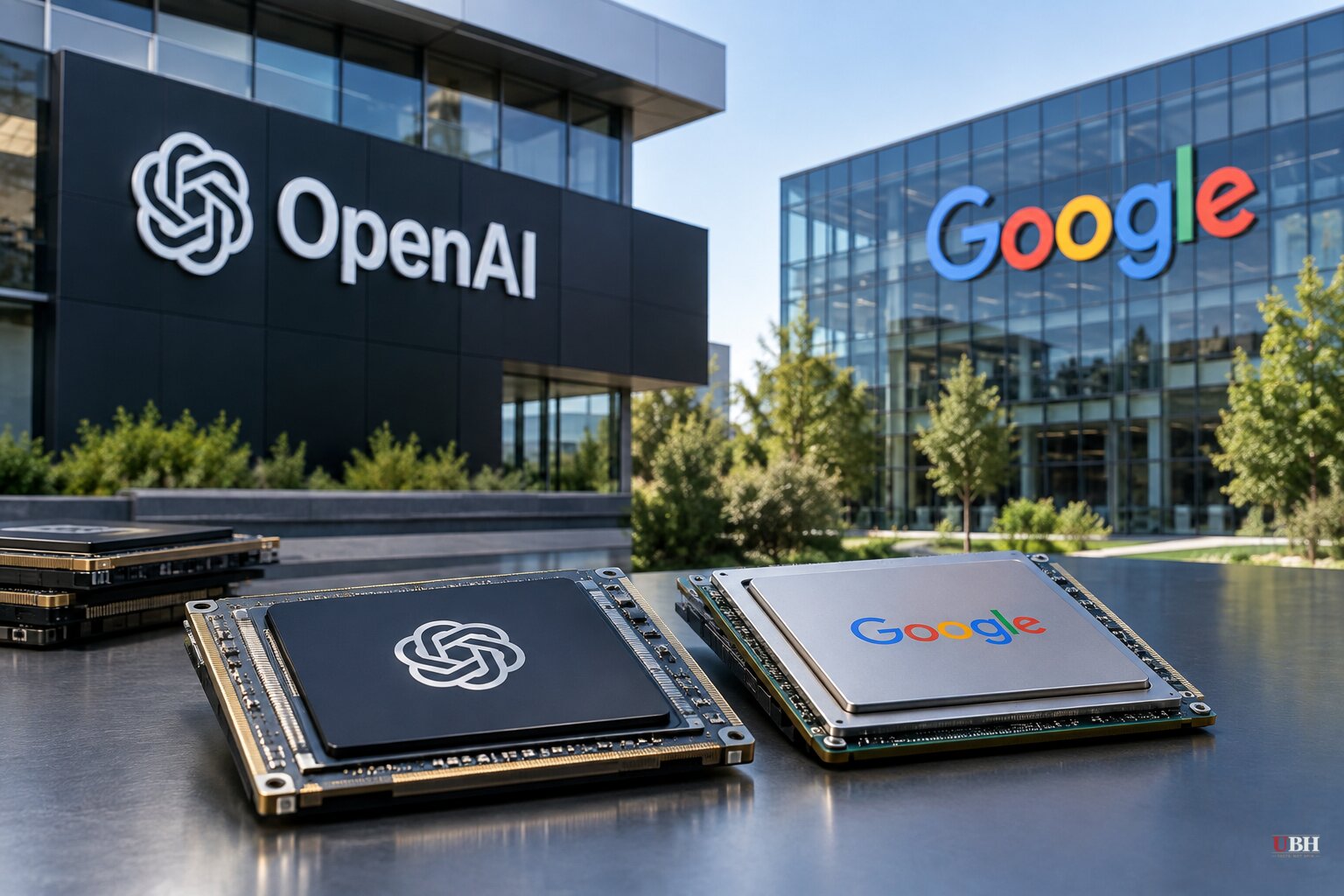
OpenAI intends to buy AI computing chips from Google, according to a person familiar with the matter who spoke to Bloomberg on condition of anonymity because the discussions are private. The account lines up with The Information's report a day earlier, which also rested on one anonymous source.
Final terms are not known. OpenAI and Google both declined to comment.
Google's chips are known as tensor processing units, or TPUs. Google began working on them more than a decade ago, first to speed up its search engine. They have since become an alternative to Nvidia's graphics processors for AI workloads.
Oracle made its own TPU announcement Tuesday
Oracle said Tuesday that TPUs will be available through its cloud infrastructure. Google executive Amin Vahdat said in a statement announcing that deal: "The next generation of AI will require a diverse range of compute."
The two developments are separate. No source ties the OpenAI plan to the Oracle announcement, and the timing is the only link.
OpenAI is already building its own silicon
OpenAI has said it will start using its own chips to support its AI models later this year. Those in-house "Jalapeno" processors were developed with Broadcom.
Richard Ho, who runs OpenAI's internal chip team, was previously involved in developing Google's TPUs. OpenAI has also rented TPUs through Google Cloud since mid-2025, according to ZeroHedge's account of the company's chip history.
A purchase would put Google silicon in the hands of a direct AI competitor. Neither company has commented on that tension.
Market reaction
Alphabet shares were at $321.82, up $4.99 or 1.57%, as of 1:24 p.m. ET today. Broadcom was up 1.83%, and Nvidia was down 0.39%. No source attributes those moves to the OpenAI report.
Alphabet management has said most revenue from external TPU deals will not arrive until 2027, according to ZeroHedge. Any near-term earnings contribution from an OpenAI purchase would therefore be limited.
Does this threaten Nvidia?
Analysts quoted this week are split on how far chip diversification goes. Patrick Moorhead, founder and CEO of Moor Insights & Strategy, told Business Insider that "the real exposure could be Nvidia's pricing power," because "a customer that can shift work across four platforms negotiates very differently than one that can't."
Others see less risk to Nvidia. Moorhead himself said switching between chip platforms remains difficult, particularly for training models rather than running them, and that only the biggest AI companies have the resources to do it.
Brad Gastwirth, global head of research and market intelligence at Circular Technology, said having more chip options does not eliminate Nvidia's advantages in performance, networking and software. He does not see a major near-term threat.
Gil Luria, head of technology research at D.A. Davidson, said OpenAI and other major companies likely already use a multichip approach. He added that the effort may not be worthwhile for smaller players.
Anthropic's chip mix
OpenAI's rival Anthropic has laid out its own multichip approach in its IPO filing. The company says it manages computing capacity "as a single, fungible pool from multiple strategic partners," using software that routes workloads across Amazon Trainium, Google TPUs, Nvidia GPUs and AMD GPUs.
The filing shows $16.29 billion in revenue and $2.38 billion in cost of revenue for the first half of 2026. That works out to a gross margin of roughly 85%.
Anthropic says the flexibility "took years and significant investment to build." Moorhead noted that Anthropic still spends billions on Nvidia capacity.
What comes next
Alphabet reports third-quarter results after the market close today, Oct. 28. Investors will be watching for any comment from management on TPU demand from outside customers, and for whether OpenAI or Google confirms the purchase plan.
Sources used for this briefing
8 links from 6 independent newsrooms (syndicated copies of the same report count once)
These are the sources it draws on, linked so you can verify.


