
Unbiased headlines. Facts, not spin.
Every story is an unbiased news briefing written from 110+ sources across the spectrum — sources linked so you can verify it yourself.
 politics
Major Story (7/10)
July 15, 2026 at 02:47 PM
politics
Major Story (7/10)
July 15, 2026 at 02:47 PM
Blanche Tells Senate Judiciary the $1.8 Billion 'Anti-Weaponization Fund' Is Dead, Insists No Epstein Investigations Are Closed
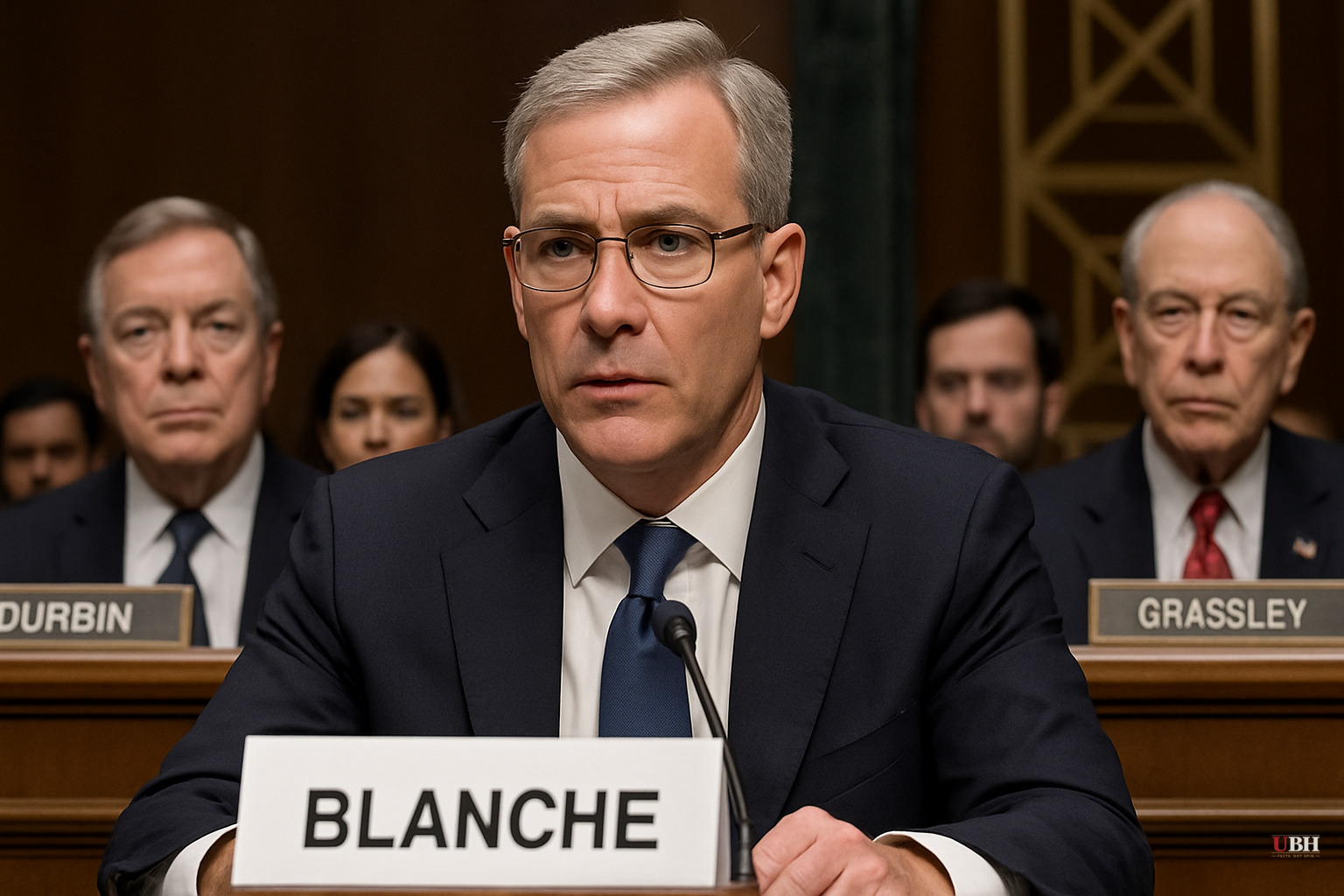
Todd Blanche sat before the Senate Judiciary Committee Wednesday morning trying to explain, again, why a $1.8 billion taxpayer-funded settlement he approved just weeks earlier no longer exists.
Blanche told GOP Sen. John Cornyn of Texas that no money ever moved from the Treasury, no commissioners were appointed, and there's no written agreement modifying the deal with President Trump, his two adult sons, and the IRS. "The settlement fund is just not moving forward," Blanche said, according to CBS News. "There's no modification. It's just, it never started."
Cornyn kept pressing anyway. He wanted to know whether Trump or his sons could sue later, claiming the settlement had been breached, and try to revive the fund through litigation. Blanche's answer: "There's no fund. So the results of such litigation wouldn't be a revival of the fund." That's a lawyer's answer. Cornyn's question points at a real structural problem. If the underlying settlement agreement was never formally terminated in writing, the door to a future claim isn't obviously closed just because Blanche says the money never moved.
This all comes two days after federal judge Kathleen Williams, overseeing the case in the Southern District of Florida, ruled that Trump's original $10 billion lawsuit against the IRS had "no viable basis in law or fact" and functioned as a collusive lawsuit between parties Trump effectively controlled on both sides, as reported by Reason and The Guardian.
Epstein Files, Again
Blanche also faced sustained questioning on the Justice Department's handling of the Epstein files, an issue that has trailed him since January, when as deputy attorney general he decided the department would not release millions more pages beyond the roughly 3 million already disclosed.
"There are no closed investigations" when it comes to Jeffrey Epstein, Blanche told the committee, according to Fox News. He said the department has spoken with "over 30 representatives of dozens and dozens of victims" and encouraged any victim not yet contacted to reach out to the FBI.
Blanche also acknowledged mistakes in the redaction process. "Approximately 1% of the redactions had to be fixed after we released the Epstein files," he said, adding that whenever the department learned a victim's name had been improperly exposed, "we immediately took the document down and fixed it as soon as we could." A group of Epstein victims released a video this week urging senators to block Blanche's confirmation specifically over that redaction failure, according to CNBC.
Unredacted victim names in a legally mandated public disclosure is not a small clerical slip. It's a privacy failure with real consequences for real people, and Blanche's own numbers confirm it happened at scale across millions of pages. His response, that the department corrected errors once flagged, is accurate, but the mistake occurred in the first place.
A New Line of Questioning: ICE Shootings
Democratic Sen. Amy Klobuchar of Minnesota opened a different front, asking why the federal government was "refusing to cooperate" with Minnesota state investigators looking into the fatal shootings of Renee Good and Alex Pretti during Operation Metro Surge earlier this year. She also asked whether the DOJ would work with local authorities investigating recent fatal shootings by ICE agents in Maine and Texas.
Blanche said federal investigators should work with state and local authorities "where appropriate" but noted that "the definition of 'full cooperation' can be disputed." CBS News reported that Minnesota prosecutors said Monday federal investigators had begun sharing evidence in the state cases, suggesting at least partial cooperation is underway, even as the scope of that cooperation remains contested.
The Political Split
Hakeem Jeffries, the House minority leader, posted on X before the hearing began that Blanche "is deeply unfit to serve as Attorney General," accusing him of creating "the corrupt $1.8 billion slush fund," weaponizing the DOJ, and presiding over "a massive cover-up," as Fox News reported. Sen. Cory Booker has separately called Blanche one of the most corrupt officials in memory.
But it's not just Democrats raising alarms. Cornyn's questioning shows Republican senators, not only Democrats, are unsatisfied with the assurance that a dead fund stays dead. And GOP Sen. John Kennedy of Louisiana used his time to get Blanche on record distancing himself from Trump personally. "Are you and President Trump friends?" Kennedy asked. "I'm his lawyer," Blanche said, then corrected himself. "Was his lawyer. And now I'm the deputy attorney general."
Blanche's opening statement leaned into that same theme. "I'm here today to earn your trust once more," he told the committee, referencing his 2025 confirmation hearing for deputy attorney general.
The committee has not scheduled a vote on Blanche's nomination. Whether Cornyn's skepticism about the fund's legal afterlife, or Klobuchar's questions about ICE shooting cooperation, translate into Republican defections remains the open question heading into that vote.
Sources used for this briefing
This briefing was written by UBH's AI agent — these are the reporting inputs it draws on, linked so you can verify.


