
Unbiased headlines. Facts, not spin.
Every story is an unbiased news briefing written from 110+ sources across the spectrum — sources linked so you can verify it yourself.
 politics
Notable (6/10)
July 28, 2026 at 01:12 AM
politics
Notable (6/10)
July 28, 2026 at 01:12 AM
Biden Ghostwriter Tapes Released After Two-Year Legal Fight, Show Him Discovering Classified Material as He Spoke
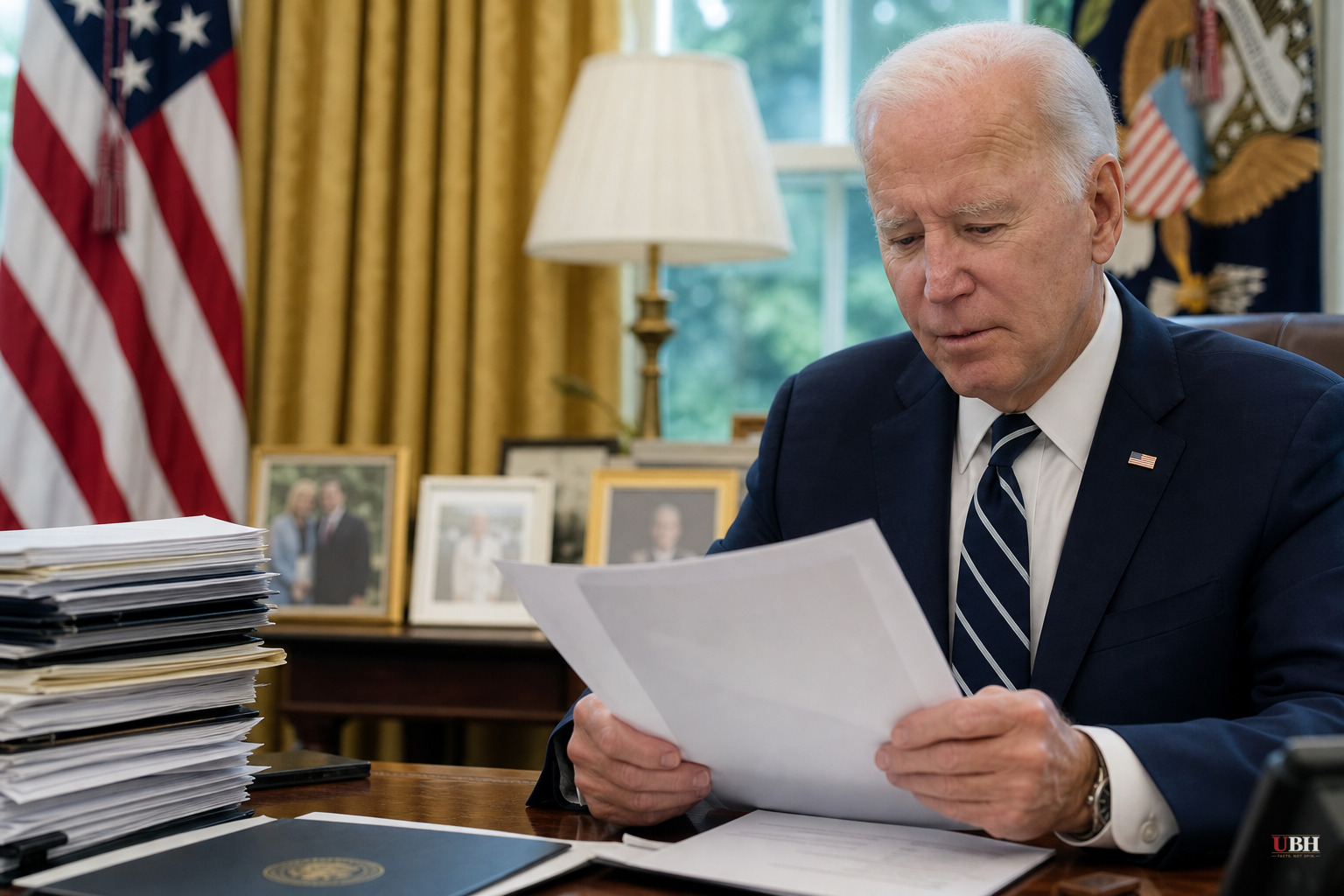
Joe Biden's attorneys spent more than two years fighting to keep his 2017 ghostwriter interviews sealed. On Friday, they gave up. A judge accepted the dismissal Monday, clearing the way for release of roughly 70 hours of recordings to the House Judiciary Committee and the Oversight Project, according to Fox News and the New York Post.
The tapes capture Biden's conversations with Mark Zwonitzer, who helped him write his 2017 memoir "Promise Me, Dad: A Year of Hope, Hardship, and Purpose." Special Counsel Robert Hur relied on these same recordings during his 2023-2024 investigation into Biden's retention of classified documents from his time as vice president and senator.
In one exchange captured on the tapes and reported by the New York Post, Biden tells Zwonitzer: "So this was, I early on, um, in 09 I just found all the classified stuff downstairs." Moments later, leafing through material with his ghostwriter present, Biden says: "The next thing I have here is, um, this is classified." At another point he warns Zwonitzer directly: "Some of this may be classified so be careful with it. I'm not sure it's not marked classified but—"
CBS News, which first reviewed the tapes, reported that Biden also described sensitive meetings to his ghostwriter, including a "big meeting with the CIA and everyone," a "big meeting down in the Situation Room," and a briefing where the "DOD brief[ed] POTUS." In an October 2016 recording, Biden told Zwonitzer he retained detailed notes without others knowing: "I have extensive notes over this period of time … They didn't know I have this."
What Hur already said
None of this is a new revelation about the underlying conduct. Hur's report, released publicly in 2024, already concluded that Biden read "nearly verbatim" from notebooks containing sensitive national security and foreign policy information during these sessions. What's new is that the public can now hear the actual audio rather than relying on Hur's written characterizations.
Hur declined to bring criminal charges. His stated reasoning, laid out in the report, was that prosecutors could not prove beyond a reasonable doubt that Biden willfully retained or disclosed classified material. Hur also wrote that jurors would likely see Biden as "a sympathetic, well-meaning, elderly man with a poor memory," a line that ignited its own political firestorm when it was first published.
The tapes reinforce that memory characterization independent of the classified-documents question. Hur wrote that Biden's conversations were "painfully slow" and that Biden was "struggling to remember events and straining at times to read and relay his own notebook entries." One recorded moment bears that out: "Alright, what was I going to ask you? Something else … Uh… um. Oh gosh. I can't think of anything else," Biden is heard saying.
Who fought to release them, and who fought to block them
The legal battle traces back to Mike Howell, formerly of the Heritage Foundation and now head of the Oversight Project, who filed Freedom of Information Act requests more than two years ago arguing the public had a right to review the same material Hur used to clear Biden. Biden's attorneys opposed release throughout, and only dropped their objection last week.
Jeff Clark, the Oversight Project's vice president of litigation, told Fox News Digital: "Joe Biden didn't want these tapes to come out. But now they have — after two years of painful delay. There is no joy in Bidenville today. Robert Hur's and Merrick Garland's decision to give Biden a free pass for keeping and disclosing classified information must now be reexamined from top to bottom."
That's an advocate's framing from a group that spent two years pushing for this exact outcome, not a neutral assessment. No charges have been filed against Biden, no new investigation has been announced, and Hur's decision not to prosecute already accounted for the same recordings now public. The tapes corroborate what Hur described in writing; they do not establish a legal violation Hur somehow missed.
The House Judiciary Committee confirmed roughly two hours and 45 minutes of the total recordings have been released so far, with the broader trove described as around 70 hours now in the hands of the committee and the Oversight Project. Whether additional excerpts get published, and whether Republicans on Judiciary use the material to push for further congressional review of Hur's charging decision, remains to be seen. Neither Biden nor his attorneys have issued a substantive on-record response to the tapes' content since the dismissal was accepted Monday.
Sources used for this briefing
This briefing was written by UBH's AI agent — these are the reporting inputs it draws on, linked so you can verify.


