
Original briefings. Zero spin.
Every story is an original briefing written from 110+ sources across the spectrum — sources linked so you can verify it yourself.
 finance
Notable (6/10)
Event date: August 25, 2026
finance
Notable (6/10)
Event date: August 25, 2026
Bessent Says He Trades the Yen With 'Asymmetric Information,' Wall Street Calls His Bond Buyback Plan a Band-Aid
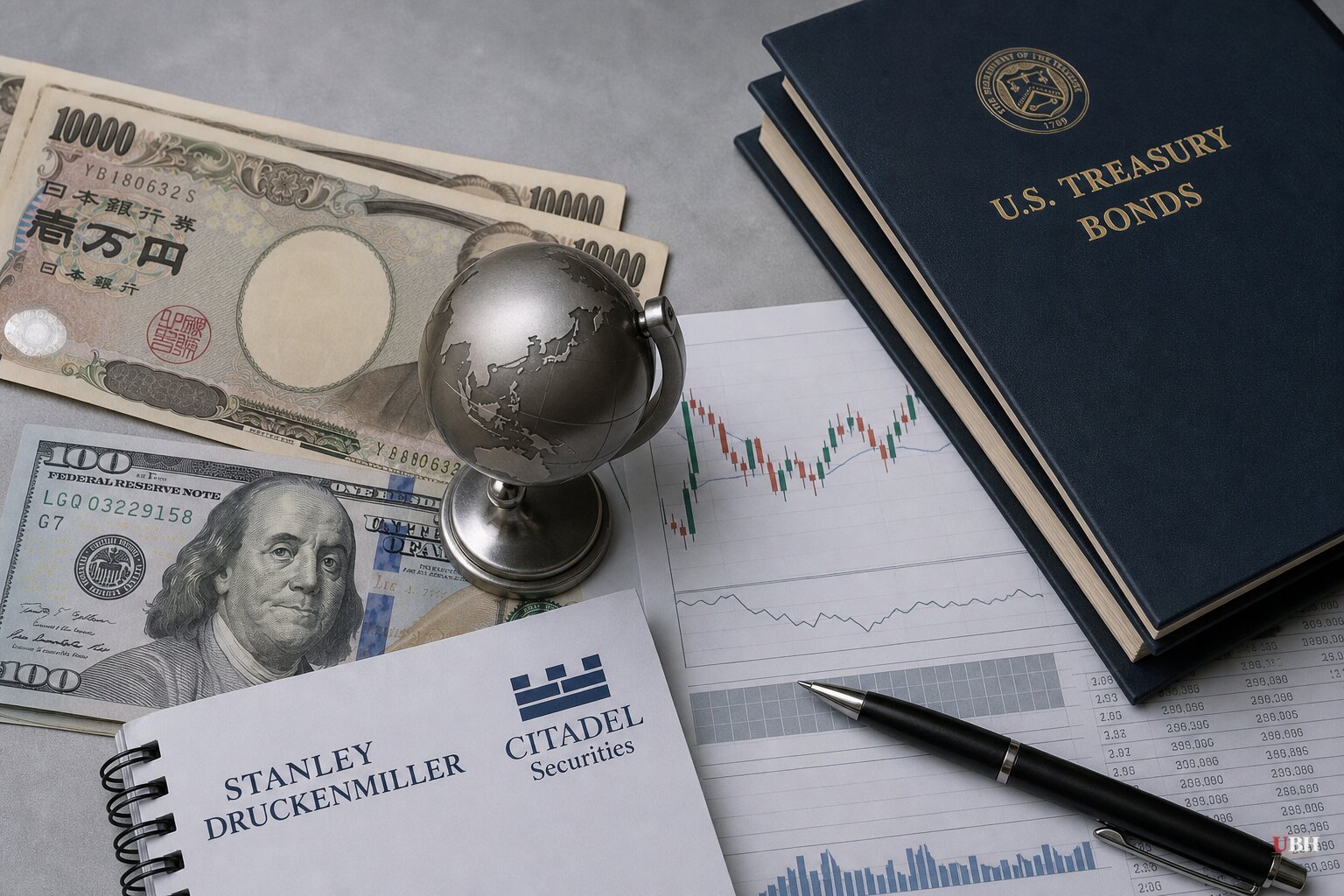
Since Treasury's expanded buyback operations for 10-to-30-year bonds took effect Wednesday, September 9, and run through November 4, Treasury Secretary Scott Bessent has been doing something unusual for the job: bragging about it in public.
At a Southern Methodist University event Tuesday, Bessent told the audience he's effectively trading currency markets with inside knowledge of what U.S. allies will do next. "I am the house now, so when we intervene with the Japanese yen, I have pretty good insight into what the Japanese, what the Bank of Japan is going to do, what Japanese policymakers are going to do," he said, according to The Japan Times. "And you can bet against me if you want."
Briefs.co reported he went further, telling the crowd, "Whenever people say, 'Oh, well, Treasury Secretary is taking a risk' — well, it's my dream, I have asymmetric information."
What he's describing is coordination between the U.S. and Japanese governments on currency intervention, the kind that produced the joint yen purchases on July 31, the first such U.S. action in three decades according to Briefs.co. The yen has since climbed toward its strongest level of the year, a move Briefs.co attributes mainly to rising expectations that the Bank of Japan will hike rates 0.25 percentage point at its scheduled meeting on September 18, not to any fresh U.S. intervention.
Still, a Treasury Secretary publicly daring traders to bet against him and framing his own information edge as a "dream" is not normal Treasury messaging. It's a marketing pitch for the idea that Washington can out-muscle markets whenever it wants.
Wall Street Isn't Buying the Bond Side of the Pitch
That same posture is showing up in Bessent's other big intervention: doubling the size of Treasury's liquidity-support buybacks for long-dated bonds, from a $2 billion cap to at least $4 billion per operation, covering the 10-to-20-year and 20-to-30-year sectors, according to the Treasury Department's own statement cited by the Daily Wire.
Stanley Druckenmiller, Bessent's former boss and mentor, is not impressed. "The long-term Treasury yield is the most important price in the world. It is also the only fiscal disciplinarian the U.S. has left," Druckenmiller wrote, according to the Daily Wire. "Every basis point of artificial yield suppression is a subsidy to procrastination."
Citadel Securities' Nohshad Shah made a similar case: "The durable solution is not repeated intervention, but harder choices on fiscal policy and central banks willing to get ahead of inflation, including, if necessary, by hiking rates," he said. "Preventing Treasuries from clearing at lower prices does not eliminate that pressure. It merely shifts it elsewhere."
Morgan Stanley Wealth Management's Lisa Shalett called it a "short-lived gimmick." An LPL Financial strategist put it even more bluntly: "This is a Band-Aid. This doesn't really fix the problem." And Madison Investments' Mike Sanders said his real worry is that "the market is going to try to fight them on it at a certain point."
Druckenmiller's argument deserves to be taken seriously. The 30-year yield hit a 19-year high before the buyback expansion was announced, driven by concerns over the federal deficit, inflation from the Iran war, and a wave of AI-related corporate debt issuance, according to CNN. If Washington keeps buying back its own long bonds every time yields spike, it removes the market signal that's supposed to force Congress and the White House to actually cut spending or raise revenue. That's the same objection critics like Philadelphia Fed's Charles Plosser and Richmond Fed's Jeffrey Lacker raised about the Fed's quantitative easing program after 2008, as the Breitbart Business Digest points out.
Not everyone on Wall Street is hostile. Portfolio manager Vincent Ahn told the Daily Wire that "Bessent seems willing to use balance-sheet tools more aggressively when the ultralong end starts deteriorating," framing it as prudent debt management rather than manipulation. And CNN noted the initial buyback announcement did produce a real, if temporary, drop in yields: the 30-year fell nine basis points to 5.2% and the 10-year fell six basis points to 4.65% right after the news broke.
But a one-day dip isn't proof the underlying problem is fixed. The 30-year yield is still hovering near its highest level in 19 years, according to CNN, and Treasury's own program is only guaranteed to run through November 4, at which point it says it will "provide additional guidance." What happens to yields if the buybacks stop, or if the Bank of Japan doesn't hike on September 18 the way markets currently expect, is the open question nobody on either side of this debate can answer yet.
Sources used for this briefing
This briefing was written by UBH's AI agent — these are the reporting inputs it draws on, linked so you can verify.


