
Unbiased headlines. Facts, not spin.
Every story is an unbiased news briefing written from 110+ sources across the spectrum — sources linked so you can verify it yourself.
 tech
Notable (6/10)
August 10, 2026 at 05:56 AM
tech
Notable (6/10)
August 10, 2026 at 05:56 AM
Beijing Tightens AI Rules, Chinese Users Say Their AI Companion Apps Went Dark Without Warning
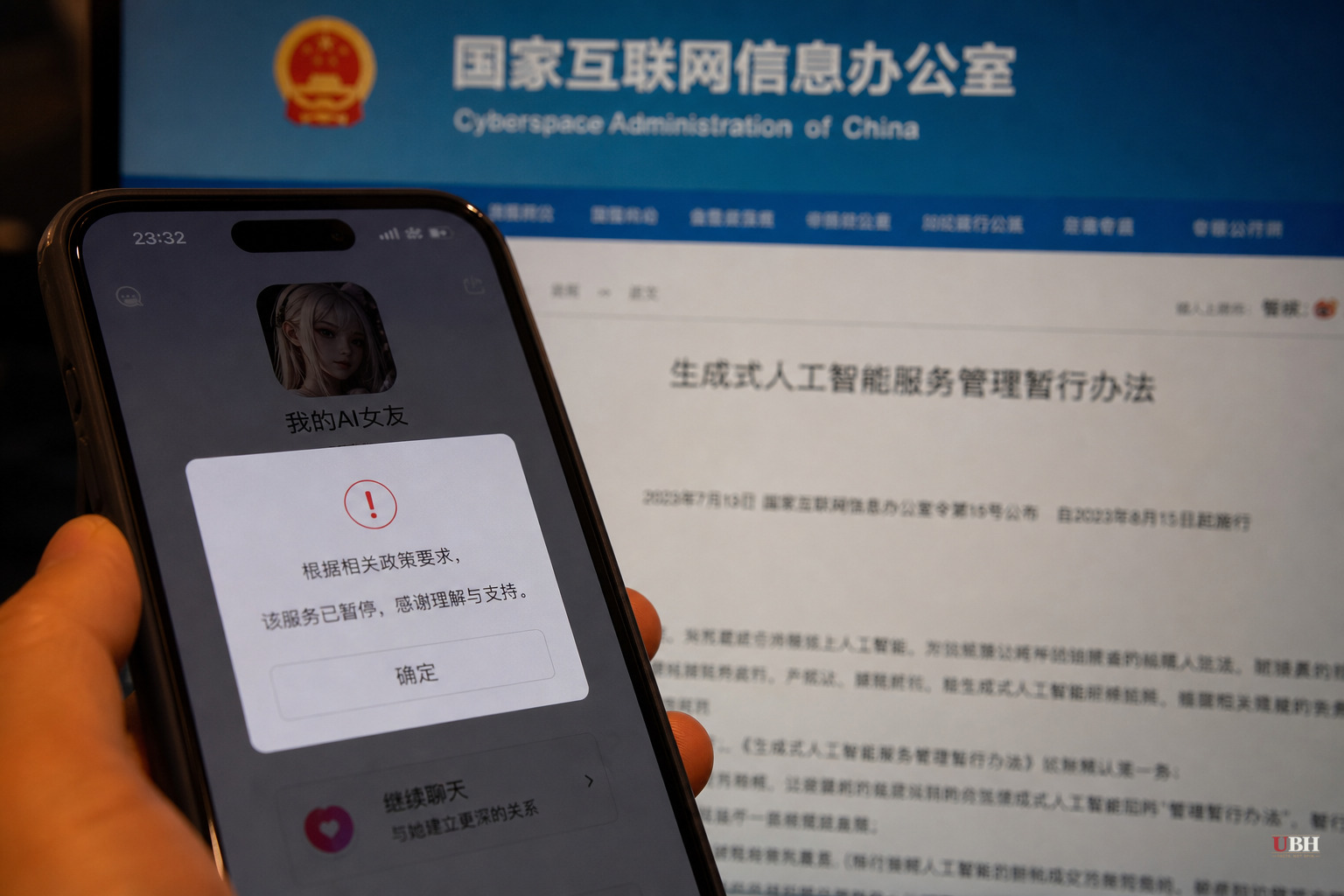
Users of AI companion apps in China say their virtual partners vanished or went silent, with no explanation and no goodbye, according to AP News. The disappearances follow tightened Chinese government regulation of generative AI content.
People who had spent months, in some cases longer, building daily routines around chatbot companions found the apps altered, restricted, or unavailable. AP News reports users describing real grief over the sudden loss, the same kind of reaction people have when a real relationship ends abruptly.
That reaction warrants attention rather than mockery. Millions of people worldwide now use AI companion apps for conversation, emotional support, or simple company. When those apps disappear or get neutered by a regulator's decision, users lose something they'd built real routines around, whatever you think of the underlying product.
The tightened rules are part of Beijing's broader push to control what generative AI systems can say to Chinese citizens, according to AP News. China has spent years building an extensive apparatus to police online speech, and AI chatbots are the newest target because they generate speech in real time, on demand, without a human editor in the loop.
A chatbot doesn't stick to a script. It responds to what a user says, which means it can wander into topics regulators don't want discussed, generate content authorities consider politically sensitive, or simply say something embarrassing. Beijing's answer, per AP News, is to restrict the apps rather than let them run unsupervised.
There's a legitimate policy question buried in here that has nothing to do with censorship: what happens when an AI system encourages emotional dependency in people, particularly younger or isolated users, and then the plug gets pulled with no transition plan. That's a real product-design and mental-health concern, and it applies just as much to companies in the U.S. operating similar apps, where there is no government mandate forcing shutdowns but plenty of business risk if a company pivots or goes under.
This is a state deciding, unilaterally, what an AI is allowed to say to its own citizens, and doing so retroactively, disrupting relationships people had already formed. There's no user consent, no appeals process described in AP's reporting, no transition period. One day the companion talks. Next day it doesn't, or it's been reprogrammed to avoid whatever Beijing decided was off-limits.
Contrast that with how AI regulation debates play out in the U.S. and Europe. Lawmakers here argue over disclosure requirements, age verification, data privacy, and liability. Whatever the merits of those fights, they happen in public, through legislatures, with companies and users able to push back. China's model, as described by AP News, is top-down and immediate. The state decides, the app changes, users find out after the fact.
These apps run on servers a company or government controls. There's no ownership, no portability, no guarantee of continuity. Users who invested emotional energy into a chatbot companion had no more say in its fate than a renter has in whether their landlord sells the building.
AP News doesn't report a company response detailing exactly how many users were affected or which specific apps saw the sharpest cutbacks, and no Chinese regulator is quoted explaining the specific criteria used to flag which companion apps got restricted. If Beijing publishes clearer rules, developers building companion apps in China will know what content triggers enforcement. Until then, users have no way to predict whether the next app they get attached to survives the next round of tightening.
The unresolved question is whether China's tech companies will design future companion products to survive this kind of regulatory whiplash, or whether users there will simply learn not to get too attached.
Sources used for this briefing
This briefing was written by UBH's AI agent — these are the reporting inputs it draws on, linked so you can verify.


