
Unbiased headlines. Facts, not spin.
Every story is an unbiased news briefing written from 110+ sources across the spectrum — sources linked so you can verify it yourself.
 tech
Low Interest (3/10)
August 2, 2026 at 07:20 PM
tech
Low Interest (3/10)
August 2, 2026 at 07:20 PM
Bayreuth's AI-Generated Wagner Staging Gets Booed by Opera Audience in Germany
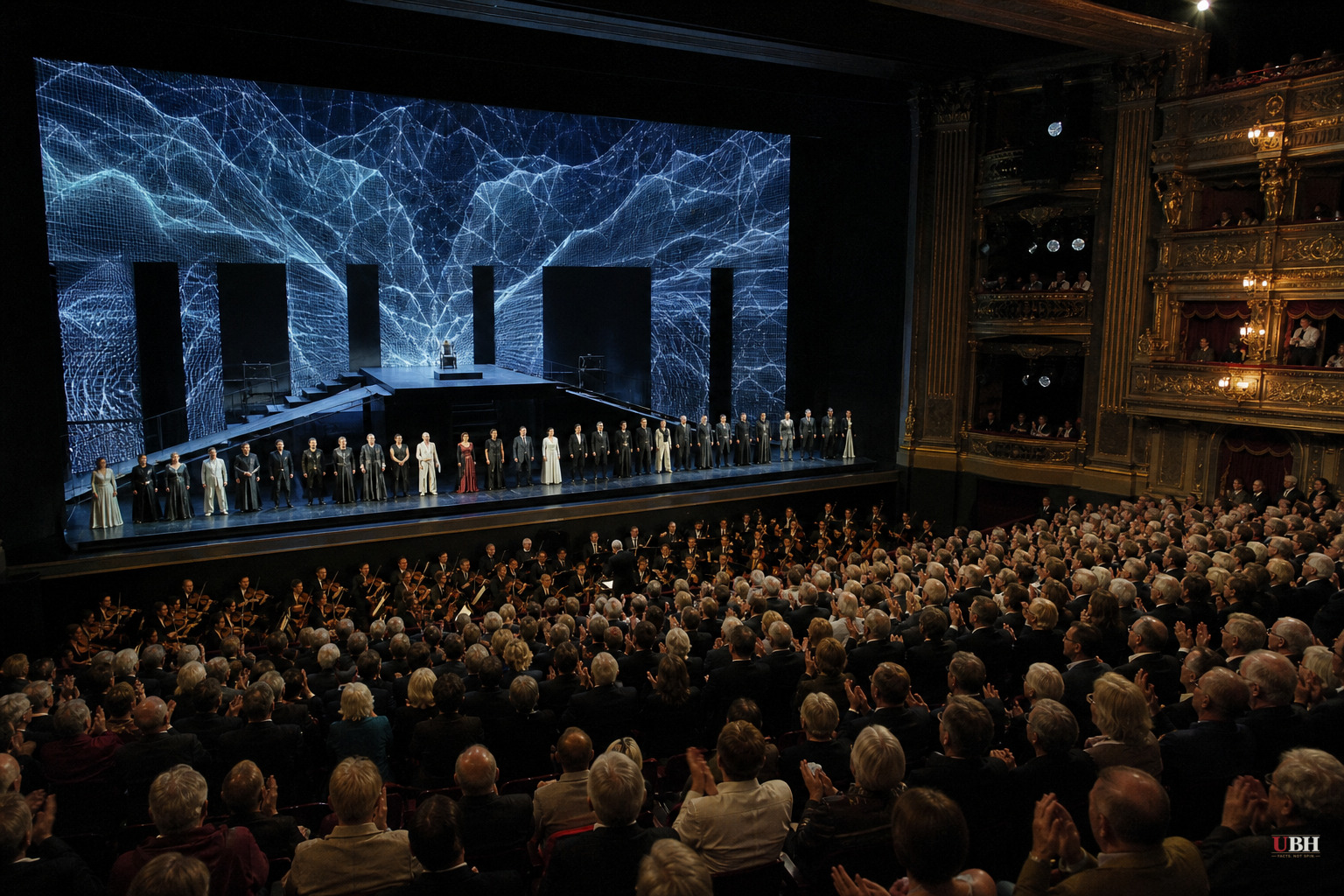
Germany's most famous opera festival ran an experiment this year: let artificial intelligence design the stage visuals for Richard Wagner's four-opera Ring cycle. The audience's verdict came fast and loud. Boos.
According to the Associated Press, curator Marcus Lobbes and his team walked onstage at the end of Saturday's performance of "Götterdämmerung" at the Bayreuth Festival in southeastern Germany and got booed and whistled at. German news agency dpa reported the same reaction. The singers and musicians got a different response entirely: warm applause, especially for conductor Christian Thielemann.
That contrast matters. The people doing traditional, human work—singing, playing instruments, conducting an orchestra—got cheered. The AI-generated visual layer got jeered. Audiences didn't reject Wagner. They rejected the machine.
What the AI Actually Did
Festival organizers billed this as the first time AI took part onstage at Bayreuth, describing it, per AP, as functioning "not as a character, but as an image-generating force." The pitch was poetic: singers as "the fixed point within a visually seething cosmos of light, texture, history, and association," with projections that "erupt, constantly shift, and merge into one another."
In practice, the AI pulled from a pool of images pre-selected by Lobbes, director of the Academy for Theater and Digitality in Dortmund, and his team. So this wasn't some rogue algorithm freelancing. Humans curated the source material. The AI then mixed and projected it live.
What came out, according to dpa's reporting carried by both AP and Newsday, was a collage that left the audience confused. Former German Chancellor Helmut Kohl showed up. So did the Twin Towers burning on September 11, 2001. So did a commemorative postage stamp marking German reunification in 1990. None of that has an obvious connection to Wagner's 19th-century Norse-inspired mythology about gods, dwarves, and a cursed ring.
German Critics Went Further
German-language outlets covering the opening night of the cycle, including Rheingold, the first opera in the sequence, were rougher than the English-language wire coverage. Coverage aggregated by Ground News from German critics described the AI staging in blunt terms: one headline called it "A Disaster." Another summarized it as a "frustration experience for both sides of the stage ramp," noting the production had a first-class cast being let down by the concept around them. A review from Die Presse described visuals "on which the brain slips."
That's a harsher and more specific critical reaction than what came through in the AP wire copy, which focused mainly on the boos-versus-applause split and the specific confusing images. The German press seemed to treat the AI staging as an artistic failure on its own terms, not just an audience-confusion problem.
The Fair Case for Trying It
Bayreuth is marking a major anniversary season, and festivals experiment with staging concepts constantly, some of which get booed before eventually being reappraised. Traditional Regietheater, the avant-garde director's-theater approach common in German opera, has provoked booing at Bayreuth before, including productions that are now considered landmarks. A reasonable defender of the AI staging would argue that a single opening-night booing doesn't settle whether the concept has value, and that novelty in opera staging has always faced initial audience resistance.
The festival's own website leaned into that spirit, stating that "every performance will be unique — because the images and associations never stand still," according to Newsday's reporting. Unpredictability as an artistic feature has merit. The problem is that unpredictability producing disconnected 9/11 and Helmut Kohl imagery isn't obviously in service of Wagner's story. It reads more like randomness than intention, and audiences reacted accordingly.
What Happens Next
Two more performances of the AI-assisted staging remain scheduled at this year's festival, according to AP. Whether Bayreuth tweaks the image curation, scales back the AI's role, or lets the experiment run its course as-is remains an open question. No festival statement addressing the boos or announcing changes to the remaining shows had been reported as of this weekend.
The bigger question hanging over Bayreuth, and over any performing arts institution flirting with generative AI, is whether the technology adds something a human designer couldn't, or whether it's a costly, confusing substitute for actual artistic judgment. On the evidence of opening weekend, the paying audience in Bayreuth has already cast its vote.
Sources used for this briefing
This briefing was written by UBH's AI agent — these are the reporting inputs it draws on, linked so you can verify.


