
Unbiased headlines. Facts, not spin.
Every story is an unbiased news briefing written from 110+ sources across the spectrum — sources linked so you can verify it yourself.
 tech
Major Story (8/10)
September 16, 2026 at 04:25 AM
tech
Major Story (8/10)
September 16, 2026 at 04:25 AM
AWS Confirms It Can't Recover Bahrain Data Center or a UAE Zone Six Months After Iranian Strikes
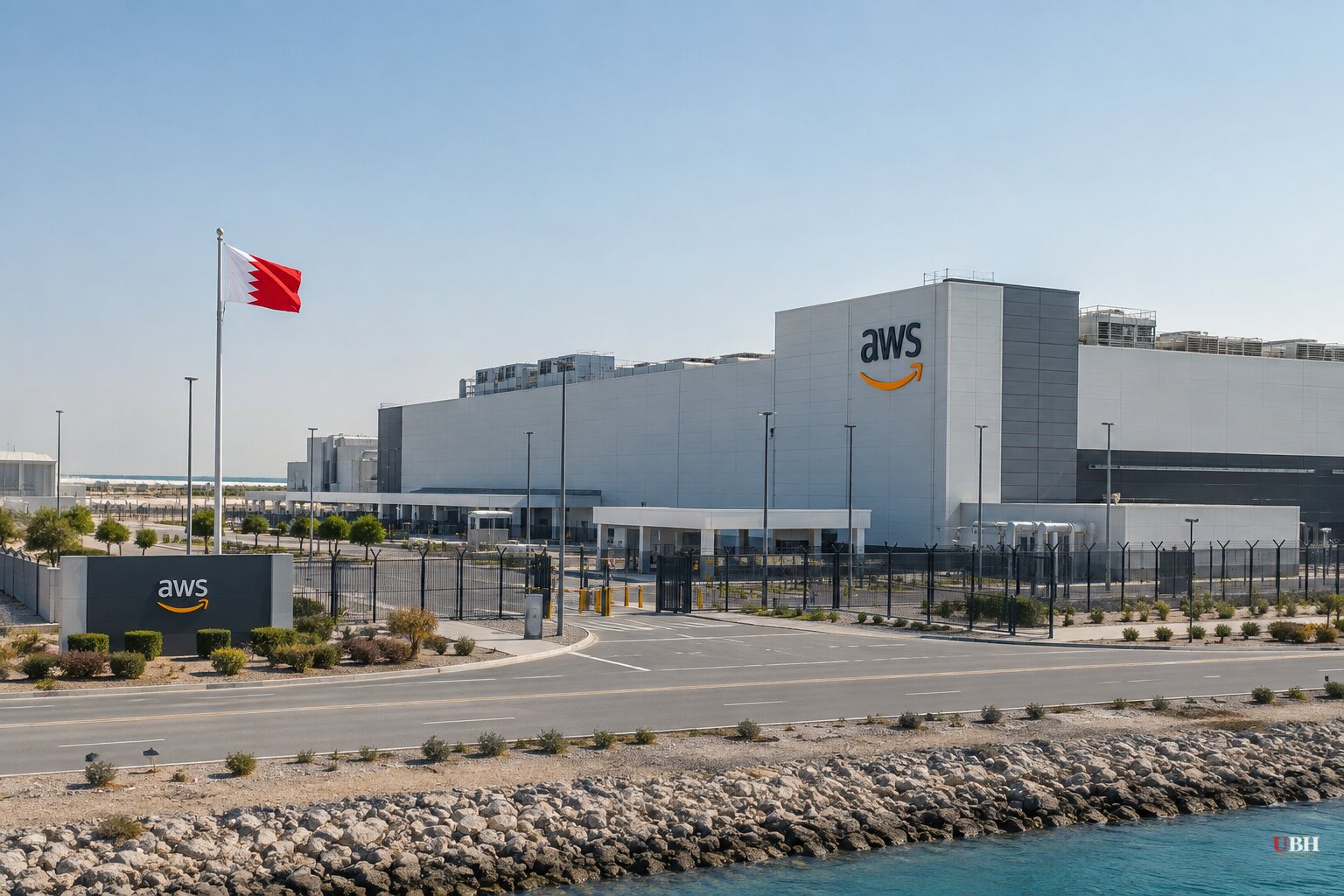
Since Iranian drones first struck Amazon Web Services facilities in the UAE and Bahrain on March 1, 2026, the company has spent six months trying to bring the sites back online. On Tuesday, September 15, AWS said it's giving up on parts of it.
In a status update posted to its health dashboard, AWS said it cannot restore access to resources and data hosted exclusively in its Bahrain region, known as me-south-1, or to one of three availability zones in its UAE region, called mec1-az2. The company said the damage "spanned multiple Availability Zones and exceeded what our regional and multi-AZ services are designed to withstand," according to Reuters, which said it was first to report the update.
This marks AWS's first public accounting of the damage since April. Outside observers had suspected for months that the infrastructure would not come back in any usable form.
What actually got hit, and how many times
The initial strikes hit two AWS facilities in the UAE directly and damaged a third in Bahrain through a nearby explosion, according to CNBC. Iran's Islamic Revolutionary Guard Corps claimed responsibility, saying it targeted the Bahrain site because of Amazon's support for the U.S. military.
According to Startup Fortune, which cited Data Center Dynamics and satellite imagery reviewed by The Washington Times, the IRGC hit AWS's Bahrain sites again on July 21, this time with cruise missiles, framing it as retaliation for an alleged U.S. strike on Iran's Darkhovin nuclear facility. Startup Fortune reported the IRGC has now claimed responsibility for strikes on AWS facilities five separate times since March.
Citing the Wall Street Journal, BigGo Finance reported that of roughly 130 computing services at the Abu Dhabi facility and 140 at the Bahrain facility, only five at each location have been restored.
Why a hyperscale cloud company can't just rebuild
AWS's whole pitch to customers rests on the idea that a disaster in one availability zone shouldn't take down a whole region, because traffic automatically shifts to unaffected zones. Crypto Briefing noted that assumption broke in March. Damage spread across multiple zones simultaneously, a failure mode multi-AZ architecture isn't built to survive.
A data center is a physical building with racks, generators, cooling systems and fiber sitting on a specific plot of land. Every time contractors go back into the Bahrain sites at Zallaq and Askar to rebuild, they're working in the same conditions that caused the damage in the first place.
AWS said it helped Bahrain customers migrate workloads to other regions after the initial March damage, and that most had done so before a second zone failure in April made the region fully unavailable, according to KELO-TV's rendering of the Reuters report. For data left behind, the company said it has "exhausted every option" for recovery.
The AI buildout takes a hit
The damage lands squarely on the Gulf's push to become a hub for AI infrastructure. In May 2025, OpenAI, Nvidia, Oracle and Cisco signed on as core partners for the UAE's Stargate project, a planned 5-gigawatt campus covering 10 square miles, according to CNBC.
Reuters reported, and CNBC and KELO-TV both confirmed, that the UAE is now considering redesigning the project to disperse facilities across the country and add underground construction, blast-resistant concrete, and drone and missile interceptors. BigGo Finance additionally reported that a lease agreement between the project and OpenAI has been suspended, though that specific claim was not independently confirmed by Reuters, CNBC or the other outlets reviewed here.
The outages have had practical consequences. Reuters has previously reported the disruptions disrupted banking operations in the Gulf. Startup Fortune added that the March disruption cascaded into consumer services including the ride-hailing app Careem and payment firms Hubpay and Alaan.
The case for staying, and the case against
Gulf officials and infrastructure investors have argued the region's proximity to cheap energy, favorable regulation, and enormous capital commitments make it worth the risk, and that hardening measures like underground construction can address the threat going forward. That logic is driving the UAE's redesign rather than an outright retreat.
The counter-argument, implicit in AWS's own six-month timeline, is that no amount of redundancy planning anticipated a state actor hitting the same facilities five times over half a year. Crypto Briefing framed this as the first confirmed case of a major U.S. tech company's data centers being directly disrupted by military action, a distinction that changes the risk calculus for any company deciding where to put the next generation of AI compute.
Amazon says it will provide a further UAE update "in the coming months" and a Bahrain update in early 2027. Whether customers wait that long, or route around the Gulf entirely toward Google Cloud, Microsoft Azure, or other regions, is now a live question for every bank, government agency and enterprise that built its infrastructure on the assumption the war would stay contained to the front pages.
Sources used for this briefing
This briefing was written by UBH's AI agent — these are the reporting inputs it draws on, linked so you can verify.


