
Unbiased headlines. Facts, not spin.
Every story is an unbiased news briefing written from 110+ sources across the spectrum — sources linked so you can verify it yourself.
 politics
Notable (6/10)
July 28, 2026 at 04:37 PM
politics
Notable (6/10)
July 28, 2026 at 04:37 PM
Austria Deports More Migrants Than It Received New Asylum Applications, First Time in Over 20 Years
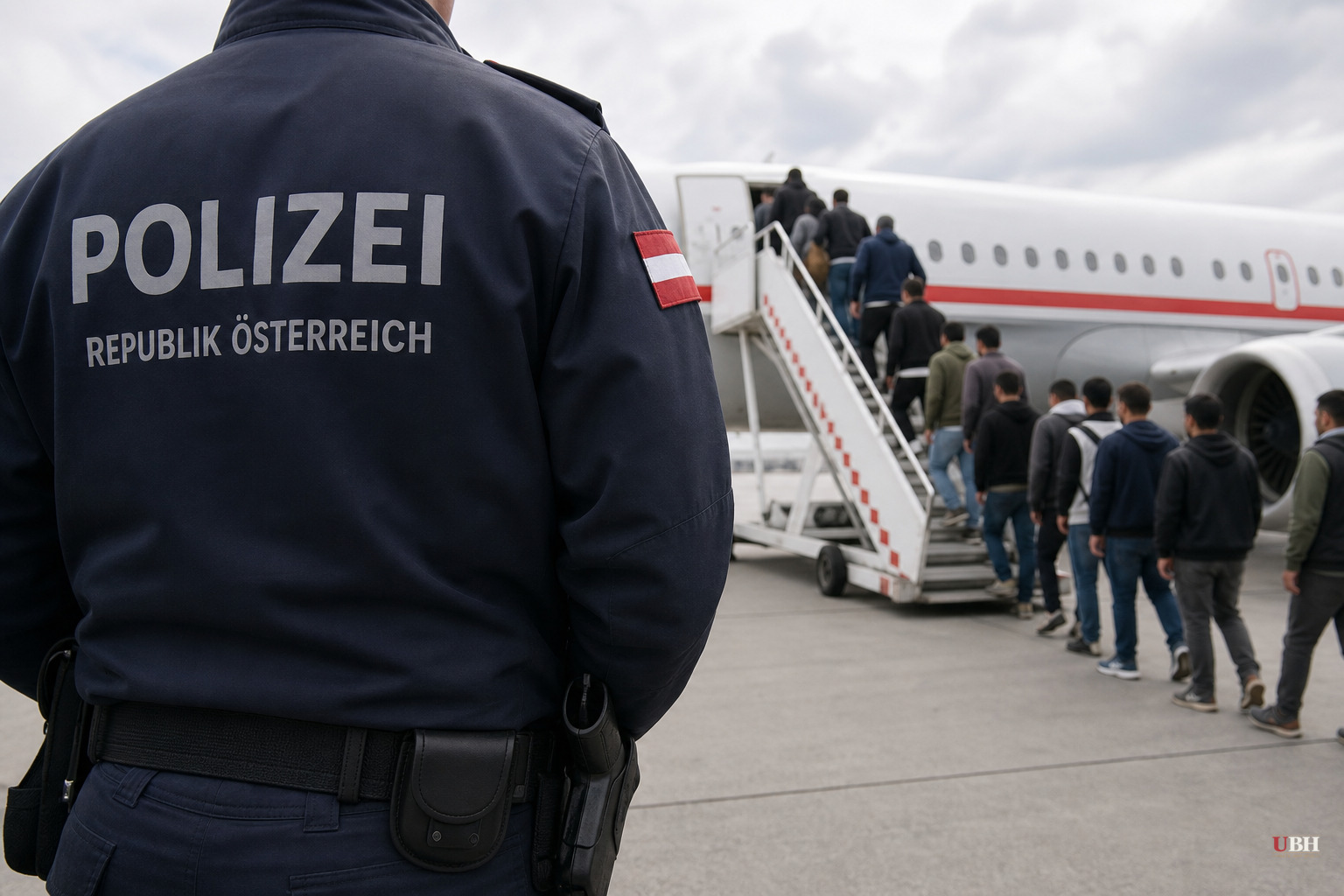
Austria deported or removed more migrants than it received new asylum applications in the first half of 2026, according to government figures reported by the Austrian tabloid Kronen Zeitung. This marks the first time in more than 20 years.
Roughly 4,900 asylum applications were filed between January and June 2026, a 44% decline from the same period last year. Over that same stretch, Austria carried out more than 7,000 deportations and other removals, according to Austrian Interior Minister Gerhard Karner of the center-right ÖVP.
Migrants from Syria and Afghanistan filed the most asylum claims, each accounting for about a quarter of applications, per the government data. But the odds of getting approved have dropped hard for Syrian applicants specifically: only about one-third of Syrian applications have been accepted so far this year, down from 67% two years ago.
Overall, 27% of asylum requests were rejected outright in the first half of 2026. Another 16% were granted outright, and 15% received subsidiary protection after a first hearing. Migrants from Iran and Afghanistan had the best odds of winning some form of protection, at 76% and 69% approval respectively.
What changed
Karner's ministry attributes the shift mainly to two policies: tighter border enforcement and the suspension of family reunification, sometimes called chain migration, which had let people granted asylum bring in spouses, registered partners, and unmarried minor children. That scheme was suspended for refugees last year, and the government added a quota cap on family visas for migrants starting last month.
Austria also launched a voluntary repatriation program for Syrians in June 2026. Karner said it's too early to judge whether it's working.
Separately, Austria is one of several EU countries pushing to set up migrant return hubs in third-party countries, an idea Italian Prime Minister Giorgia Meloni's government has pushed for years. No such agreement has been finalized as of this writing.
The political backstory
The policy turn traces back to Austria's September 2024 legislative elections, when the anti-mass-migration Freedom Party of Austria (FPÖ) took 28.8% of the vote in what was described as a stunning victory and its strongest ever performance.
Instead of forming a government with the FPÖ, the ÖVP partnered with the left-wing Social Democratic Party (SPÖ) and the pro-business NEOS party, blocking FPÖ leader Herbert Kickl from becoming chancellor. That coalition-building maneuver was itself controversial. Critics on the right, including Breitbart's coverage, framed it as the establishment locking out the party voters actually preferred.
Whatever the coalition's internal politics, the policies driving this year's numbers—tighter borders and the family reunification suspension—are ones an ÖVP-led government adopted after the FPÖ's electoral shock, not before it. For anyone trying to sort out credit and blame, a relevant fact emerges: the party excluded from government arguably forced the governing coalition's hand.
What's still unproven
The falling application numbers and rising deportations are hard data, straight from Vienna's own figures. What's less settled is whether the shift reflects a genuine drop in people trying to reach Austria, deterrence effects from stricter enforcement further along migration routes, or applicants simply routing to other EU countries instead. The government statistics don't isolate the cause.
A reasonable immigration-policy skeptic would note that tighter approval rates and faster removals don't by themselves prove asylum seekers with legitimate claims are being wrongly denied, but they don't disprove it either. Approval rates for Syrian applicants falling from 67% to roughly 33% in two years is a significant swing, and Austria's government hasn't published detailed case-level reasoning for that shift beyond citing policy tightening broadly. Advocacy groups for asylum seekers were not quoted in the available reporting, and no independent audit of the rejection decisions has been cited.
The voluntary repatriation scheme for Syrians remains too new to evaluate. Karner himself said so. Whether it produces meaningful numbers, or whether the EU's push for third-country return hubs advances beyond the current negotiating stage, are the next things to watch out of Vienna and Brussels.
Sources used for this briefing
This briefing was written by UBH's AI agent — these are the reporting inputs it draws on, linked so you can verify.


