
Unbiased headlines. Facts, not spin.
Unbiased Headlines is an independently owned news organization. We bring you the facts, not opinions, written fresh from 110+ named sources. Sources linked so you can verify it yourself.
 tech
Notable (5/10)
tech
Notable (5/10)
Atlantic Writer Says Musk and Bezos Are Racing to Commercialize the Moon and Orbit
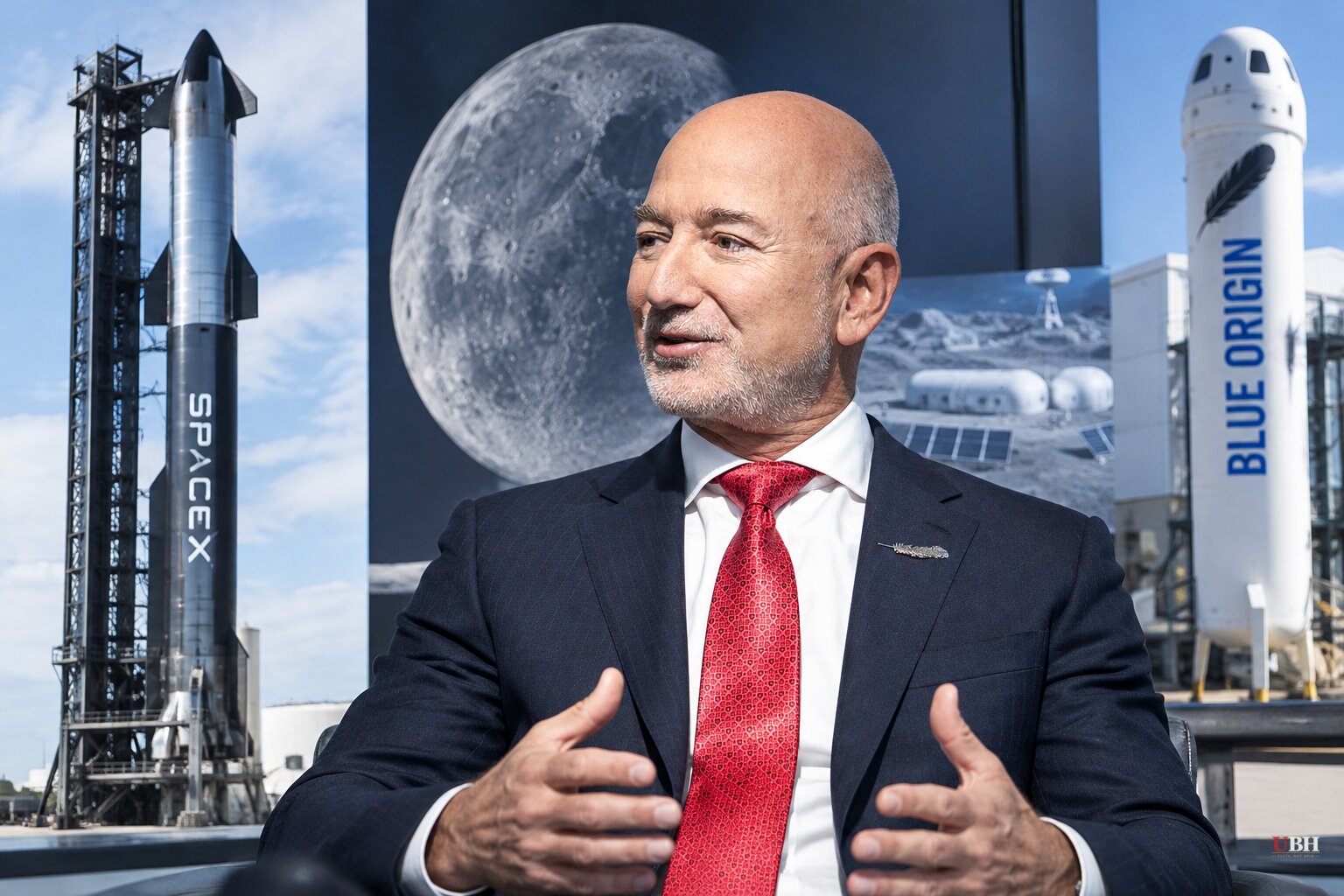
The space race used to be a contest between governments. According to Atlantic staff writer Josh Tyrangiel, it is now a contest between two billionaires.
Tyrangiel wrote the magazine's November cover story, "Choose Your Overlord: Musk Vs. Bezos." He laid out its argument in an interview on NPR's Fresh Air with host Terry Gross.
Two companies, one market
The players are Elon Musk's SpaceX and Jeff Bezos' Blue Origin. Musk also runs Tesla, owns X, and founded Starlink, which manufactures and launches satellites. He was appointed by President Donald Trump to run the Department of Government Efficiency. Bezos founded Amazon and Amazon Web Services and owns The Washington Post.
Tyrangiel says both men want the same things. They want to colonize the moon, mine its resources, and launch thousands more satellites. Both also want to turn space into what Gross described as a supply chain for Earth.
He says the rivalry is so intense that each man's only real competition is the other.
Data centers in orbit
Tyrangiel reports that accomplishing either man's vision would depend on building giant data centers in space. He also describes what it would mean to turn parts of the moon into businesses.
The market they are chasing differs from the ones they already dominate. It has no ceiling and few established rules, Tyrangiel writes. He says the two men also frame their projects in civilizational terms: preserving human life from the threat of climate change and expanding mankind's understanding of the universe.
How private companies got here
Tyrangiel traces the current setup to a federal policy choice. In the early 2000s, the U.S. government opened space to commercial development.
The reasoning, he said, was that the government was slow and expensive. Its development processes for rockets and satellites were not going to compete with private enterprise. So Washington invited private companies in.
That was the rationale for inviting private companies in. The same logic is why a few private firms now carry projects once reserved for national agencies. Taxpayers are not funding every one of these plans. Investors are, and Gross noted that they stand to profit or lose.
The question Gross put to him
The objection came from the host rather than from any opposing party. Gross asked what it means that something with such large implications for humanity, the planet and outer space is being led by private enterprise rather than the U.S. government. She noted that Musk and Bezos are taking big financial risks, but also stand to make huge profits and gain great power.
Tyrangiel called it a great question and said it goes to the heart of "this very strange moment we're in." He answered by pointing back to the policy decision of the early 2000s.
What a billionaire duel changes
The stakes differ from those in earlier tech rivalries. When Amazon fights a retail competitor or Tesla fights a carmaker, regulators and courts have decades of precedent. Tyrangiel's point is that the commercial moon and orbit have far less of it.
That leaves open who sets the terms for mining lunar resources, crowding orbit with more satellites, or placing data infrastructure beyond any country's borders. Tyrangiel's piece says few established rules exist. Neither Musk nor Bezos is quoted in these accounts responding to his characterization of their plans.
Tyrangiel's argument is that the answer is being settled by two companies racing each other. A government that invited them in two decades ago has not yet said how it intends to referee the result.
Sources used for this briefing
7 links from 2 independent newsrooms (syndicated copies of the same report count once)
These are the sources it draws on, linked so you can verify.


