
Unbiased headlines. Facts, not spin.
Every story is an unbiased news briefing written from 110+ sources across the spectrum — sources linked so you can verify it yourself.
 politics
Low Interest (3/10)
July 30, 2026 at 12:26 AM
politics
Low Interest (3/10)
July 30, 2026 at 12:26 AM
Atlantic Podcast Frames Michigan Senate Primary as Test of Democratic Party's Future
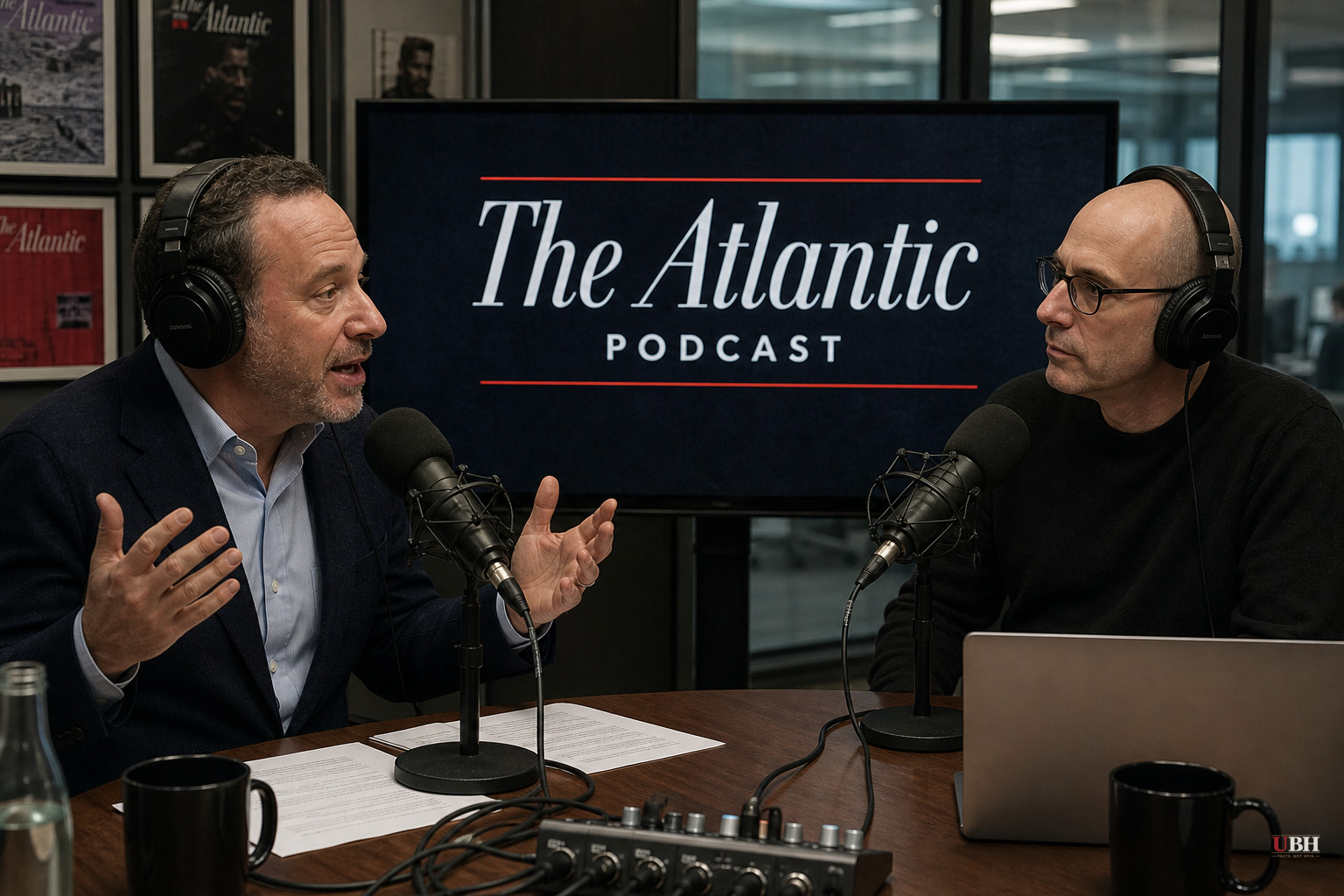
Two separate stories got tangled together on the latest episode of The Atlantic's David Frum Show, and both deserve to be pulled apart and checked against the facts.
The Tariffs
David Frum opened the episode discussing President Trump's most recent tariff announcement, made the prior Friday, which targeted 60 economies. That count includes Taiwan, which the United States does not officially recognize as a sovereign country, alongside 59 actual nations.
According to Frum, the administration's stated legal justification was a provision in U.S. law permitting tariffs on countries using forced or slave labor. Frum argued on the show that the tariffs are weakening both the American economy and U.S. alliances.
That's Frum's opinion. Tariffs functioning as a forced-labor enforcement tool is a real legal mechanism, not a Trump invention. Whether this specific application is a good-faith use of that law or a pretext for broader trade pressure is a legitimate open question. Voters and businesses affected by the new tariffs deserve a harder look at the actual list of 60 economies, the specific labor findings behind each designation, and the economic modeling behind Frum's claim that alliances are being damaged, none of which the podcast provided in detail.
The Michigan Primary and the Democratic Civil War
The bulk of the episode was a conversation between Frum and his Atlantic colleague Jonathan Chait about the Democratic Party's internal fight, using Michigan's Senate primary as the flashpoint. Frum framed the party's moderate wing as unwilling to fight, a dynamic he suggested benefits Trump and, down the line, whoever succeeds him, naming Vice President J.D. Vance specifically as a likely 2028 contender.
Chait agreed with the diagnosis. He described the tension as a decades-old pattern: "The definition of a liberal is someone who's too broad-minded to take his own side in an argument," he said, adding that Democrats have complained about this tendency in themselves for generations without changing it.
This is a candid, self-critical admission from two writers who are themselves centrist-leaning Democrats or center-left institutionalists, not conservatives making the charge from outside. Both are inside the party making an inside critique.
But it's also worth separating the observation from the conclusion. The claim that moderate Democrats "abdicate by default" to progressives, and that this empowers Trump, is a strategic argument, not a settled fact. A reasonable progressive would counter that Democratic losses in recent years came from moderate positioning that failed to energize the party's base, not from insufficient centrism. Both theories are testable by actual primary and general election results. The Michigan Senate primary, which pits moderates against a more progressive challenger, is exactly the kind of race that will generate real data on which theory holds up, rather than podcast speculation.
Obama's Legacy Under Fire
The episode also touched on what Frum and Chait described as growing attacks on Barack Obama's legacy, tied into the broader discussion of the party's direction, and on whether presidents should be funny, a reference to recent chatter around the White House Correspondents' Dinner. Neither topic got substantive factual treatment in the portion of the discussion available. Specifics on who is attacking Obama's legacy, and what those attacks actually claim, weren't detailed here.
What's Missing
This is a conversation between two Atlantic writers with an explicitly acknowledged center-left perspective, discussing an internal Democratic dispute. Absent from the episode: any voice from the Michigan progressive challenger's campaign, any moderate Democratic strategist defending the incremental approach Chait and Frum criticize, and any Republican or conservative assessment of whether the GOP actually benefits from a more progressive Democratic nominee in Michigan or would prefer to run against a moderate.
The unresolved question going forward is straightforward. Michigan's Senate primary will produce an actual result, on an actual date, with actual vote totals. That outcome, not a podcast conversation between two commentators who already agree with each other, will be the real test of whether Chait and Frum's theory about Democratic timidity holds up or whether the party's more progressive flank overperforms or underperforms expectations.
Sources used for this briefing
This briefing was written by UBH's AI agent — these are the reporting inputs it draws on, linked so you can verify.


