
Unbiased headlines. Facts, not spin.
Every story is an unbiased news briefing written from 110+ sources across the spectrum — sources linked so you can verify it yourself.
 politics
Major Story (7/10)
July 29, 2026 at 04:08 AM
politics
Major Story (7/10)
July 29, 2026 at 04:08 AM
Atlanta Man Charged With Destroying Evidence After Phone Wiped During CBP Airport Search
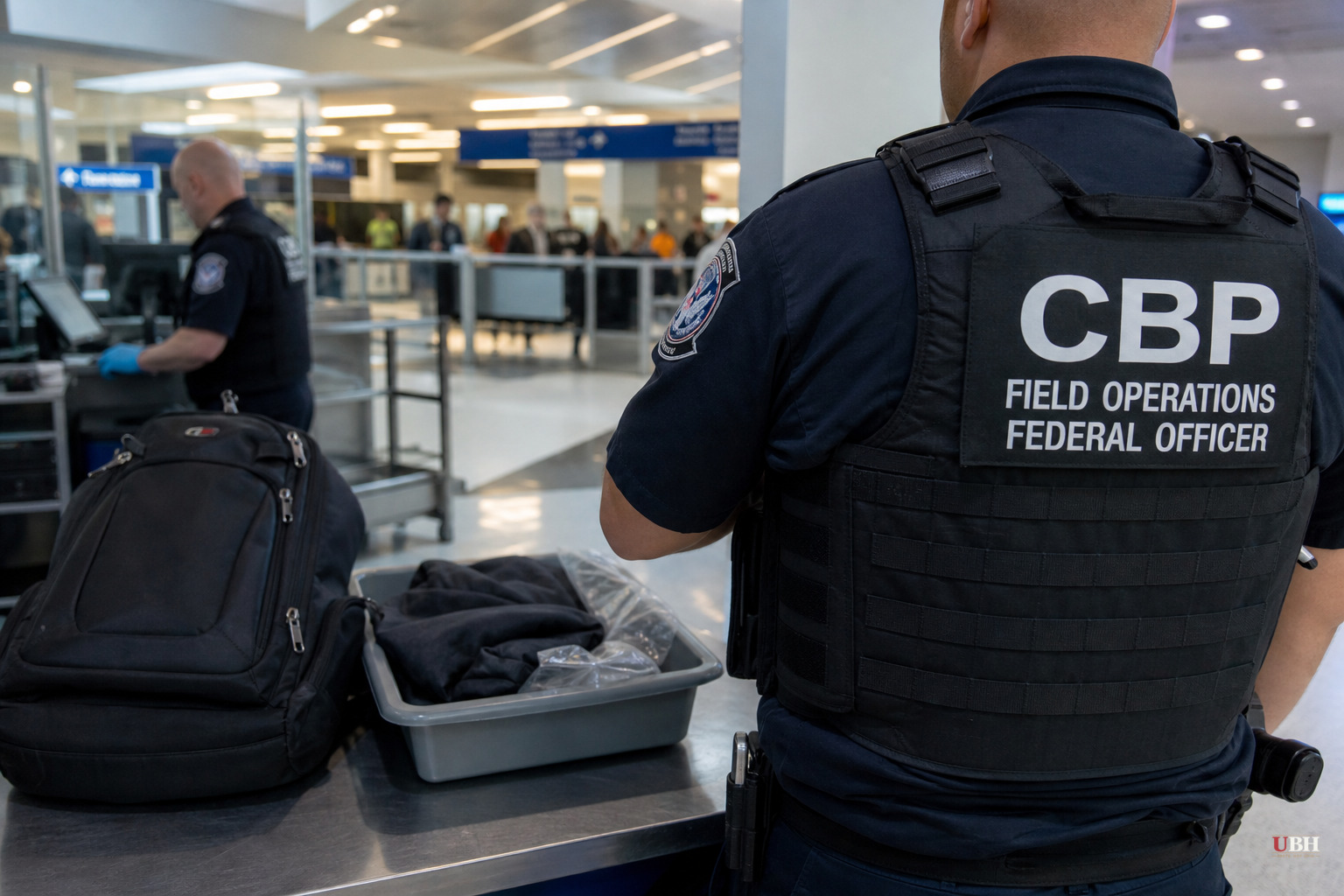
A federal case in Atlanta is testing how far border agents can go without a warrant, and whether encrypting your own phone can get you charged with a crime.
Samuel Tunick, an Atlanta activist, was pulled aside for secondary inspection at Hartsfield-Jackson airport on January 24, 2025, after returning from a vacation in the Dominican Republic, according to The Guardian. A Department of Homeland Security agent had circulated an email three hours earlier flagging Tunick for "suspected terrorism activities," sent to Customs and Border Protection's tactical terrorism response team and an FBI Atlanta joint terrorism task force officer, The Guardian reported.
When agents questioned Tunick, they told him they needed to search his phone for child sexual abuse material, according to court filings cited by The Verge. Tunick's attorneys say that was a cover story. They argue in a March motion to suppress evidence that the real target was his alleged connection to the movement opposing Atlanta's $109 million police training center, known to opponents as Cop City, according to The Guardian and The Verge.
Tunick's public defenders say he never consented to the search, repeatedly asked for a lawyer, and was never read his Miranda rights, according to PCMag. CBP agents told him they didn't need a warrant. He eventually gave them a password. When they typed it in, court records say, "the screen went blank, flashed several times and the phone appeared to restart."
That password wasn't the real unlock code. It was a "duress password," a feature built into GrapheneOS, an open-source, security-focused version of Android that runs on Google Pixel phones. Entering it irreversibly wipes the device instead of unlocking it.
The charge and the statute
The Justice Department indicted Tunick in November on a charge tied to a rarely used federal statute that criminalizes destroying property to prevent its lawful seizure by the government, according to PCMag and SC World. A first hearing on the motion to suppress was held this week, per The Guardian.
Cybersecurity experts say they can't find a precedent. Christophe Boutry, a cybersecurity and surveillance expert, told The Guardian the prosecution "sends the message that [GrapheneOS] is criminal by default." Bill Budington, senior staff technologist at the Electronic Frontier Foundation, told The Guardian he'd never seen a similar case. SC World, citing TechCrunch's reporting, called it the first known instance of federal prosecutors charging someone for destroying data with a duress password.
The GrapheneOS Foundation, the Canadian nonprofit behind the software, weighed in directly. "GrapheneOS is completely legal. We have no obligation to weaken any of the security protections it provides," the group posted, adding that "laws attempting to make it illegal or require weakening the security would be unconstitutional," according to PCMag.
The foundation also made clear it can't help investigators recover anything. "Data cannot be recovered after the key derivation material is reliably wiped. It's not possible and there's nothing we can do to assist with it," it wrote, per PCMag. The group also cautioned that its "auto-reboot timer" feature already locks data down without requiring a duress wipe, suggesting users should weigh the legal risk of destroying evidence before reaching for that option.
Why the legal ground is shaky
The case sits inside a genuine legal gray zone. The Ninth Circuit ruled in United States v. Payne that agents can force someone to unlock a phone using biometrics like a fingerprint or face scan without violating the Fifth Amendment, but a passcode is different. Entering a passcode is "testimonial," meaning it reveals what's in your head, and courts have found that protected, according to The Verge.
But those rulings were built for domestic law enforcement, not airports. CBP has long argued the Constitution's usual protections don't fully apply at ports of entry, where the government claims broader search authority than it has anywhere else in the country. That claim is contested and unresolved in the courts, and it's precisely what makes this case difficult. Nobody, including federal judges, agrees yet on how much authority CBP actually has to search a phone without a warrant.
There's also a fair question buried in the government's side of this. If someone genuinely was suspected of possessing child exploitation material, as agents initially told Tunick, destroying the device mid-search would look like straightforward evidence destruction to any prosecutor, regardless of politics. The statute Tunick is charged under doesn't require proof of what was on the phone, only that he intentionally wiped it to keep the government from seizing it intact.
Tunick's defense counters that the child-exploitation pretext falls apart once you look at the timeline: a terrorism watchlist flag, a joint FBI-DHS task force, and a target with known Cop City ties, according to The Guardian's reporting on the case. Several state RICO prosecutions against Cop City protesters were already dismissed, and this marks the Justice Department's second federal push against the movement in recent months, The Guardian reported.
The suppression hearing is ongoing, and a ruling is expected later this year, according to SC World. Whatever the judge decides on whether Tunick's phone contents can be used against him will likely shape how far CBP can push warrantless device searches at every other airport in the country.
Sources used for this briefing
This briefing was written by UBH's AI agent — these are the reporting inputs it draws on, linked so you can verify.


