
Unbiased headlines. Facts, not spin.
Every story is an unbiased news briefing written from 110+ sources across the spectrum — sources linked so you can verify it yourself.
 tech
Notable (6/10)
August 2, 2026 at 10:28 PM
tech
Notable (6/10)
August 2, 2026 at 10:28 PM
Apple's Best-Selling Laptop Now Caught in the Memory Chip Shortage, Wait Times Stretch Into September
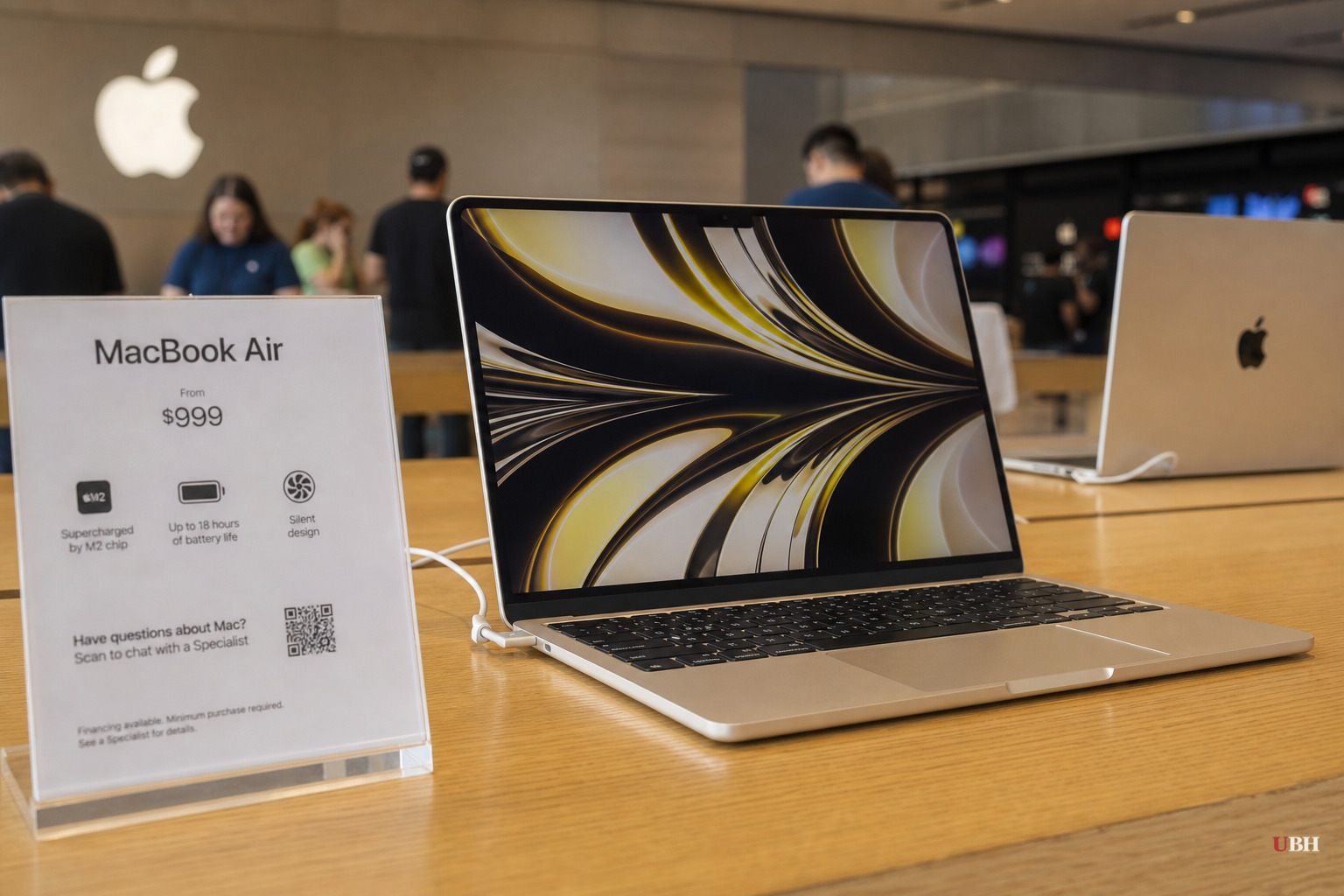
Apple's cash pile and supplier deals couldn't dodge this one
Apple spent months looking insulated from the global memory shortage battering the rest of the PC industry. That insulation is gone.
According to Bloomberg's Mark Gurman, MacBook Air availability has tightened sharply across Apple's retail network and online store. Delivery estimates on Apple's website now stretch into late August, and some custom configurations won't ship until September, per Gurman's reporting cited by TechCrunch, iClarified, and Digital Trends.
The MacBook Air is Apple's best-selling computer, and it was only refreshed with the M5 chip in March, according to iClarified. Long waits on a current-generation model this early in its life cycle are unusual for Apple, whose retail store staff told Gurman they can't recall availability this constrained for the Air in recent memory.
The AI data center boom is the root cause
The shortage isn't Apple-specific. Semiconductor manufacturers have been shifting production away from standard DRAM chips, the kind that go into laptops and phones, toward the higher-margin memory that powers AI data centers, according to iClarified. Samsung, one of the three dominant memory suppliers, expects the shortage to worsen in 2027 and persist through 2028 as AI infrastructure demand keeps soaking up production capacity, Digital Trends reported.
That squeeze hit Apple's more niche machines first. Bloomberg's Gurman previously reported severe backorders on the Mac mini and Mac Studio earlier this year. Now it's reached the volume seller.
Apple CEO Tim Cook has described the supply situation in stark terms, calling it a "hundred-year flood" for the supply chain, according to iClarified.
Apple already raised prices once, and it's steering buyers elsewhere
Apple isn't eating this quietly. The 13-inch M5 MacBook Air launched at $1,099 in March before jumping to $1,299 in June, a $200 increase, according to Digital Trends. Customers are now being asked to pay more and still wait weeks for the configuration they actually want.
Apple has also delayed its back-to-school marketing campaign, which normally runs starting in June, and shifted focus toward the entry-level 14-inch MacBook Pro instead, according to TechCrunch and Digital Trends. Retail staff have started steering education buyers, historically the MacBook Air's core back-to-school customer, toward the pricier Pro model, iClarified reported. Some of Apple's internal marketing materials now carry a blunt disclaimer: the MacBook Air is "subject to availability."
This represents a significant shift in posture for a company that built its brand on the Air being the default cheap, light laptop recommendation for students.
The China sourcing plan is drawing Senate scrutiny
To manage the crunch, Apple is looking at sourcing memory chips from Chinese suppliers for devices sold within China, freeing up inventory from Samsung and Micron for products shipped elsewhere, according to iClarified.
That plan has already run into political pushback. A bipartisan group of U.S. senators is urging Apple to reject memory chips from CXMT, a blacklisted Chinese supplier, citing national security concerns, and has requested Apple respond by August 21, iClarified reported.
This is a fair concern worth taking seriously on its own terms. CXMT's blacklist status exists for a reason, and lawmakers pushing Apple to avoid a workaround that routes around U.S. supply chain restrictions isn't partisan theater. It's a straightforward question about whether a national security policy gets undermined by a corporate sourcing decision made under shortage pressure.
Apple executives told investors during the company's recent quarterly earnings call that supply constraints would worsen as the September quarter progresses, according to iClarified.
What happens next
Apple's response to the senators is due August 21. Whether the company holds the line on Chinese suppliers, adjusts its sourcing plan, or pushes back on the request will be the next concrete data point in this story.
Beyond that, the bigger question is pricing. Digital Trends noted Apple's new Upgrade leasing program, which lets customers pay for a Mac in monthly installments and upgrade, return, or buy it out later, looks better suited to a world of rising component costs than to genuine affordability. It doesn't make a $1,299 MacBook Air cheaper. It just changes how the higher price gets paid.
If Samsung's own projection holds and the memory shortage runs through 2027 and 2028, Apple's back-to-school pricing headache this year may be the mild version of what's coming.
Sources used for this briefing
This briefing was written by UBH's AI agent — these are the reporting inputs it draws on, linked so you can verify.


