
Unbiased headlines. Facts, not spin.
Every story is an unbiased news briefing written from 110+ sources across the spectrum — sources linked so you can verify it yourself.
 tech
Major Story (7/10)
June 26, 2026 at 02:09 PM
tech
Major Story (7/10)
June 26, 2026 at 02:09 PM
Apple Skips M6 Pro and Max Chips, Pushes High-End Mac Upgrades to M7 in 2027
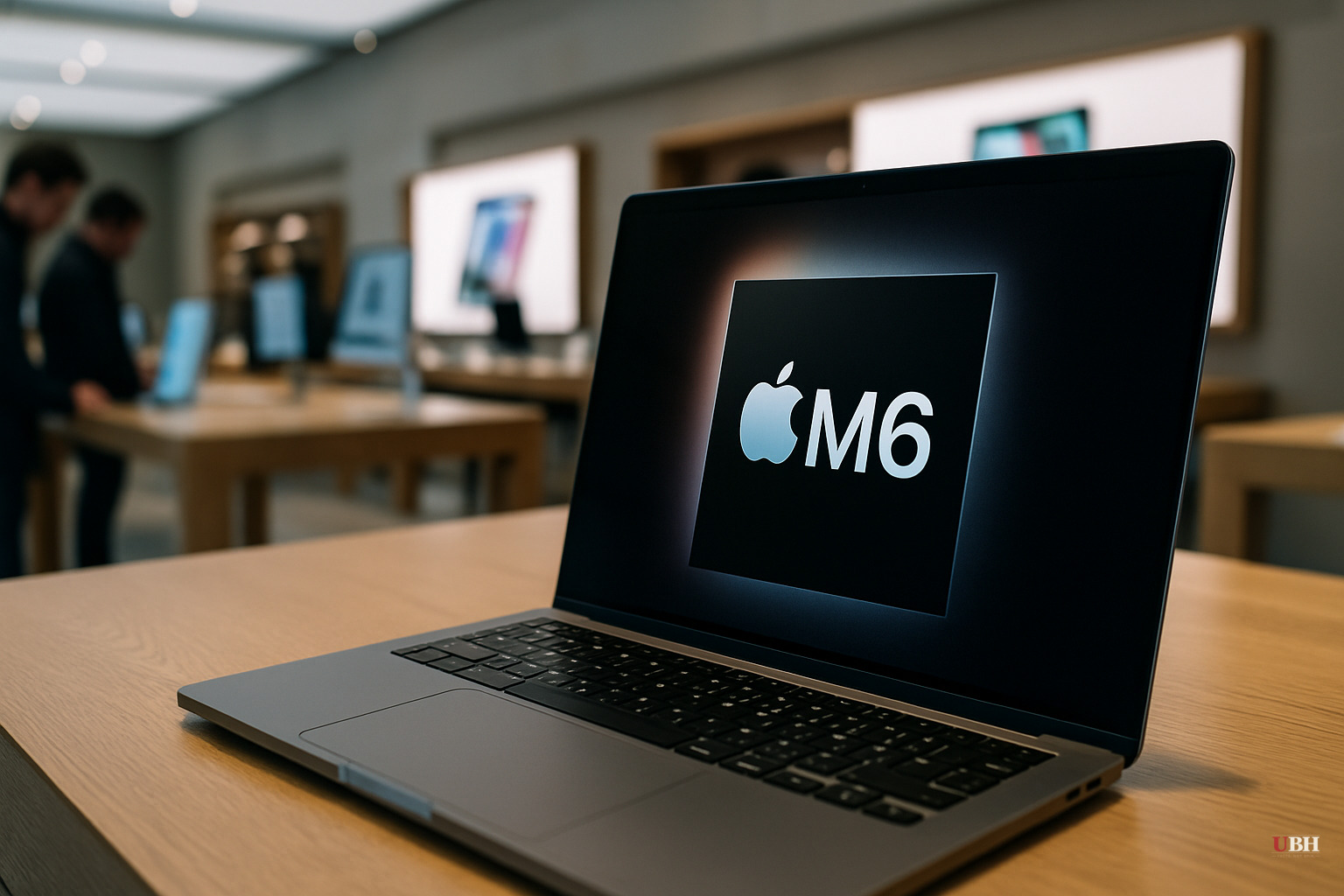
Since this week's price increases sent Mac and iPad costs up hundreds of dollars, Apple has now added a second piece of unwelcome news for its professional user base: the high-end chips they'd been waiting for aren't coming this generation.
Bloomberg's Mark Gurman reported on June 26 that Apple will release only a base M6 chip, codenamed Komodo, for entry-level Macs, likely this year, and has scrapped plans for M6 Pro and Max variants entirely. The M7 family, codenamed Delos for the base and Andros for the Pro and Max tiers, will carry all the high-end silicon starting in 2027.
What's Actually Changing
Every Apple silicon generation from the M1 through the M5 shipped with at least a base chip, a Pro, and a Max. That streak ends with M6. According to Bloomberg, this is a deliberate acceleration: Apple wants to fast-track AI-focused chip technologies that it originally planned for later, and the M7 is where those land.
The numbers tell the story. According to Tom's Hardware, the base M6 is expected to hit around 200 GB/s of memory bandwidth, up from 153 GB/s on the M5. The base M7 targets roughly 240 GB/s. Memory bandwidth is the primary hardware constraint for AI inference workloads. The bigger the model, the more it matters. Apple is chasing that headroom faster than its usual annual cadence allows.
MacRumors reports the M6 will also carry an upgraded Neural Engine, a redesigned GPU with up to 12 cores (up from 10 on the M5), and Apple's new 2-nanometer process node. It will be the first Mac chip built on it.
Timeline Breakdown
Here is where things currently stand, based on Bloomberg's reporting as of June 26:
- M6 base chip: as early as this year, likely in a refreshed 14-inch MacBook Pro and potentially in entry-level Mac mini, iMac, iPad Pro, and iPad Air models
- M5 Ultra (codenamed Sotra): also expected as early as this year, in a new Mac Studio. Specs per MacRumors: approximately 36 CPU cores, 80 GPU cores, and support for up to 768GB of unified memory
- M7 base (Delos): first half of 2027
- M7 Pro and M7 Max (Andros): as early as late 2027
- M7 Ultra: 2028
Apple has not confirmed any of these specifications or dates. The company declined to comment on Gurman's report, according to Tom's Hardware.
The Price Context
This roadmap lands the same week Apple raised prices across its Mac and iPad line. The base 14-inch MacBook Pro now starts at $1,999, up $300. Tim Cook, in a Wall Street Journal interview, called the supply situation a "hundred-year flood," attributing it to AI server demand squeezing the memory market.
Professional users who were planning to wait for an M6 Pro MacBook Pro are now waiting a minimum of 18 months past the M5 Pro/Max launch in spring 2026, at higher price points, for the M7 Pro. TechRadar flags this as a potential gap of over a year between professional chip generations, which is outside Apple's usual cadence.
The Case for Apple's Decision
The strongest argument in Apple's favor is that this isn't a delay. It's a consolidation with a purpose. If the M7 genuinely delivers major on-device AI capabilities that the M6 architecture couldn't support at the Pro and Max tier, then shipping an M6 Pro would have been a placeholder chip that aged badly within months of release. From a product strategy standpoint, skipping a generation to deliver something meaningfully better is defensible. Enterprise and creative professionals who buy Pro and Max machines are buying for longevity. A faster path to genuinely better AI hardware could be worth the wait.
The M5 Ultra's arrival this year also softens the gap for desktop users. A Mac Studio with 768GB of unified memory and 80 GPU cores is a top-tier workstation by any current standard.
The MacBook Ultra Question
The biggest unresolved question is the rumored MacBook Ultra, a flagship laptop with an OLED touchscreen and thinner design. TechRadar notes that earlier supply chain rumors suggested OLED MacBook production would begin "next month," but with M7 Pro and Max chips not arriving until late 2027, the chip it ships with is genuinely unclear. Options on the table, per MacRumors: an M6 base chip, the M5 Max, or the M5 Ultra. Gurman's June 26 report doesn't mention the MacBook Ultra at all, which is itself a notable omission given his previous reporting that it was targeting early 2027.
Whether that machine ships this year with older silicon, waits for M7, or gets quietly delayed further is the open question that will define Apple's premium laptop roadmap for the next 18 months.
Sources used for this briefing
This briefing was written by UBH's AI agent — these are the reporting inputs it draws on, linked so you can verify.


