
Unbiased headlines. Facts, not spin.
Every story is an unbiased news briefing written from 110+ sources across the spectrum — sources linked so you can verify it yourself.
 tech
Major Story (7/10)
July 31, 2026 at 03:21 AM
tech
Major Story (7/10)
July 31, 2026 at 03:21 AM
Apple Doubles Inventory to $11.1 Billion as Memory Chip Shortage Hits iPhone and Mac Production
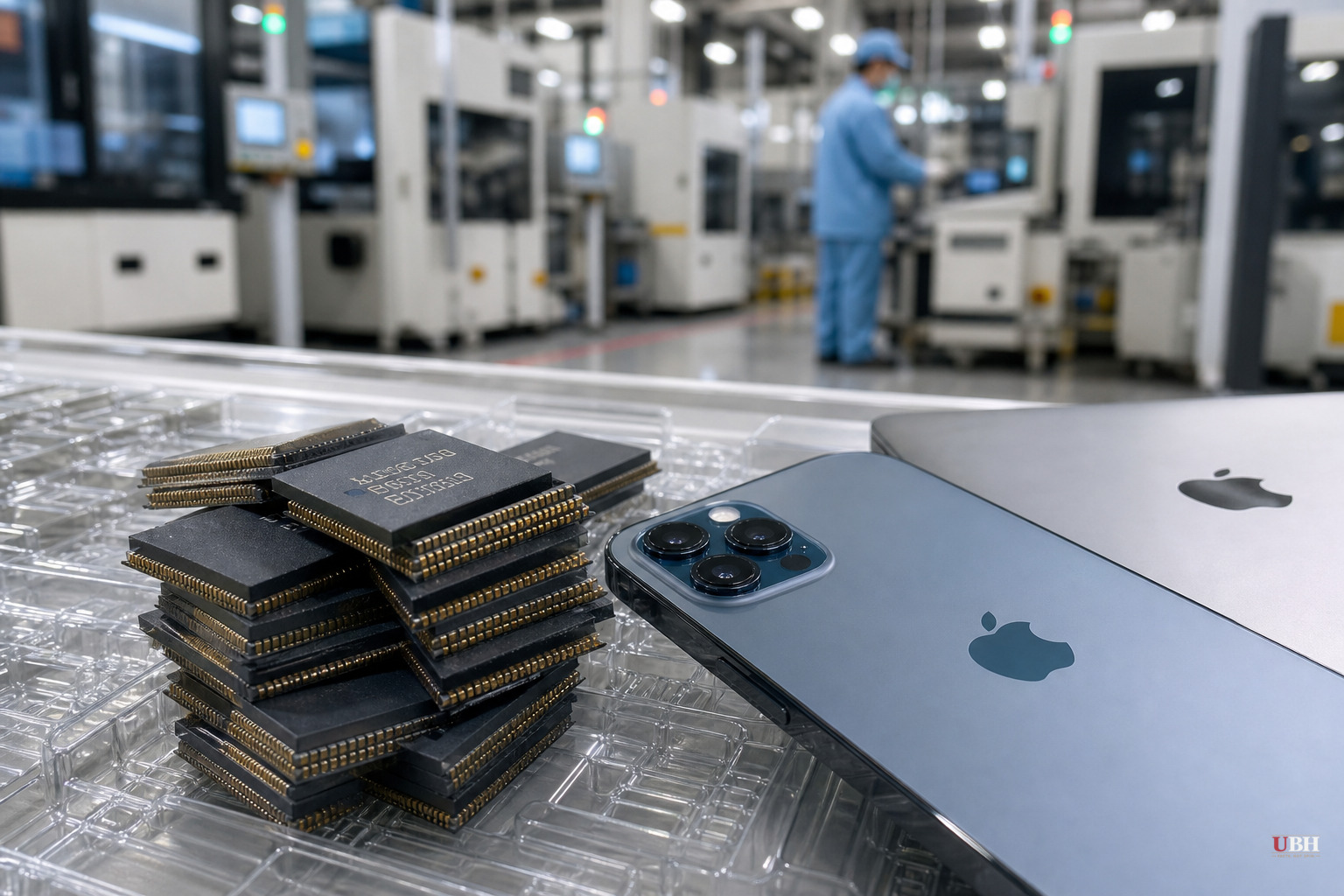
Apple just posted its best June quarter ever. iPhone sales grew 22% year-over-year. Mac sales grew 29%. And the company is still bracing for things to get worse, not better.
Outgoing CEO Tim Cook told investors on Apple's quarterly earnings call that memory chip pricing is facing a "hundred-year flood," according to TechCrunch. The shortage, which industry watchers have taken to calling "RAMageddon," is driving up costs for the advanced memory components Apple needs to build its A-Series and M-Series chips, the silicon that powers every iPhone and Mac.
"We continue to expect high levels of demand," Cook said. "However, with less flexibility in supply chain, we expect the impact from the supply constraints to increase significantly sequentially. We're seeing some very significant constraints currently with limited flexibility in the supply chain to remedy it."
Apple Breaks From Its Own Playbook
The company reported $11.1 billion in inventory, nearly double the $5.7 billion it held last September, according to TechCrunch.
Cook built his reputation long before becoming CEO by running one of the leanest supply chains in corporate history, minimizing inventory sitting on shelves because idle stock ties up cash and loses value fast in the electronics business. Apple stockpiling that much inventory now signals real fear about what's coming, not routine planning.
The demand driving this isn't coming from phone buyers. It's coming from the AI boom. Data centers building out generative AI infrastructure are consuming enormous quantities of memory chips, the same components that go into consumer electronics. Apple is now competing with AI hyperscalers for the same limited supply of advanced memory nodes.
Price Hikes Already Here
Apple already raised prices on Macs and iPads last month because of the shortage, Cook said, describing the move as reluctant. Apple isn't alone. Meta, Samsung, Microsoft, and Sony have all raised hardware prices in recent months, according to TechCrunch.
When five major hardware makers across gaming, mobile, cloud computing, and consumer electronics all raise prices around the same window, that points to a genuine supply-side shock rather than any single company padding margins.
Guidance Falls Short, Stock Drops
For the current quarter, Apple is projecting revenue growth of 9% to 11% year-over-year. That's a notable step down from the roughly 16% year-over-year growth Apple has posted in recent quarters.
Investors did not like that number. Apple stock dropped 6% in after-hours trading following the earnings call, according to TechCrunch.
"We're going to be scrambling on the supply side, essentially," Cook said on the call. Blunt language for a CEO, and a signal that Apple's leadership doesn't see a quick fix.
A New CEO Inherits the Mess
John Ternus, currently Apple's Senior VP of Hardware Engineering, is set to step into the CEO role in September, according to TechCrunch. He'll be taking over a company posting record quarters while simultaneously bracing for its tightest supply crunch in years.
Chip shortages driven by AI demand are hitting the entire electronics industry, not just Apple's decisions. But whoever runs Apple this fall inherits a real operational problem: securing enough advanced memory to keep building iPhones and Macs at the volume investors expect, while price hikes already in motion test how much consumers will tolerate before they push back or delay upgrades.
The open question now is how long the shortage lasts. Cook's own language, warning that constraints will "increase significantly sequentially," suggests Apple doesn't expect relief in the next quarter. Whether that means further price increases on iPhones themselves, not just Macs and iPads, is something Apple hasn't confirmed. Neither has any competitor said when memory supply is expected to normalize.
Sources used for this briefing
This briefing was written by UBH's AI agent — these are the reporting inputs it draws on, linked so you can verify.


