
Unbiased headlines. Facts, not spin.
Every story is an unbiased news briefing written from 110+ sources across the spectrum — sources linked so you can verify it yourself.
 politics
Major Story (8/10)
July 21, 2026 at 09:36 AM
politics
Major Story (8/10)
July 21, 2026 at 09:36 AM
Aoun Presses Trump for Israeli Pullback as Lebanese Army Enters Test Zones
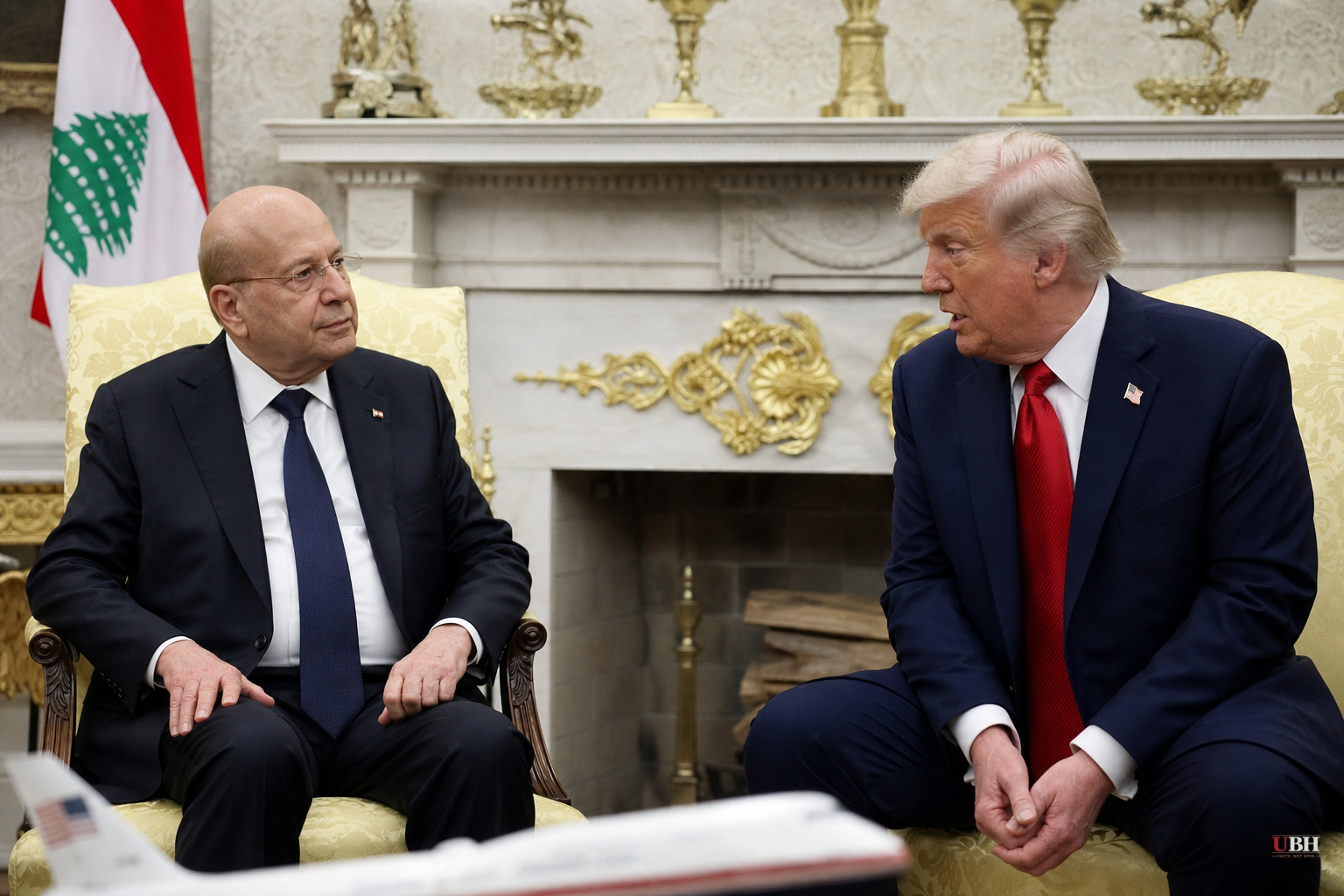
Since the June 26 framework locked in a phased plan to disarm Hezbollah and draw down Israeli forces, the test of whether any of it actually works is set to arrive on Tuesday, when Lebanese President Joseph Aoun is scheduled to meet with Donald Trump in Washington.
Aoun's Oval Office meeting is expected to cap a four-day U.S. trip. It comes a day after Secretary of State Marco Rubio met with him on Sunday and reaffirmed U.S. backing for the framework, warning that Lebanon will "never be fully at peace" until Hezbollah gives up its weapons, according to reporting cited by Ground News.
The stakes are not abstract. Israeli military operations in Lebanon have killed more than 4,300 people since March, according to Beirut's health ministry, cited by both Ground News and Newsweek. Newsweek's figure includes context that the toll covers the period since Hezbollah fired at Israel on March 2 in support of Iran, as Tehran faced joint U.S. and Israeli strikes. Ground News additionally reported the toll includes nearly 800 children, women, and medics, a detail that underscores why Beirut wants Washington leaning on Israel rather than the other way around.
What's actually moved since the framework was announced
The mechanics of the deal are not theoretical anymore. U.S.-backed operations in three pilot zones, Froun, Srifa, and Zawtar al-Gharbieh, began Monday, according to Ground News. Newsweek reported the Lebanese Armed Forces had already started deploying to Froun, Kfar Dounine, Qalaouiyeh, and surrounding areas last week, citing Lebanese and Israeli media.
The idea is straightforward on paper. The LAF takes over security in a handful of test areas in the south, dismantles whatever Hezbollah military infrastructure it finds, and once that's verified, Israel is supposed to draw down from those same zones ahead of a broader pullback.
Two very different verdicts on whether it can work
Sami Halabi, director of the Beirut-based Alternative Policy Institute, told Newsweek the whole framework is "set up for failure," and that Beirut will take the blame when it collapses. His argument: Israel is negotiating in bad faith. "Israel is operating in bad faith, they know full well that these mechanisms haven't worked in the past," Halabi said.
Halabi went further, telling Newsweek the Lebanese Armed Forces simply lack the resources to do what they've been tasked with. "Israel knows full well that the Lebanese Armed Forces are technically incapable of doing what they've been asked to do," he said, arguing the setup puts the LAF in the position of confronting Hezbollah on Israel's behalf, or Washington's, without the tools to do it.
If the LAF genuinely lacks manpower, equipment, or intelligence capacity to physically locate and remove Hezbollah's weapons stockpiles in the south, the entire phased-withdrawal architecture falls apart before it starts, because Israel's drawdown is explicitly conditioned on verified Lebanese follow-through.
On the other side, Brigadier General (Res.) Yossi Kuperwasser, a former senior Israeli military intelligence officer, told Newsweek all three parties, Lebanon, Israel, and the U.S., actually want this to succeed. "We want to see them succeed," he said. That's a notably more optimistic read from someone with direct knowledge of how Israeli military planning around Lebanon has worked in the past.
Neither claim is proven yet. The pilot zones only began operating this week. Whether the LAF can hold up its end, and whether Israel actually withdraws once Lebanese forces claim the zones are clear, are open questions that won't be answered by rhetoric in Washington. They'll be answered by what happens on the ground in Froun, Srifa, and Zawtar al-Gharbieh over the coming weeks.
What Trump is expected to press for
According to analysts cited by Ground News, Trump is likely to demand concrete proof of Aoun's seriousness, specifically evidence that Beirut is purging army and security officers believed to be sympathetic to or complicit with Hezbollah, and that Lebanon is lining up international investment to rebuild. Aoun, for his part, is leaning on the belief that Trump has more leverage over Netanyahu's government than anyone else to force a real withdrawal, according to a Lebanese official cited by Reuters.
Newsweek's framing, reflected in its own headline questioning whether Israel will ever actually withdraw, is more skeptical than the wire-style coverage aggregated by Ground News, which leans more on the administration's stated intentions and the mechanics of the framework itself. That skepticism is worth taking seriously given Israeli troops have been operating in a buffer zone reaching up to six miles into Lebanese territory, in places crossing the Litani River toward Nabatieh, per Newsweek.
What happens next
If the LAF can demonstrate it has actually dismantled Hezbollah infrastructure in Froun, Srifa, and Zawtar al-Gharbieh, and Israel responds with a real, verified drawdown from those specific areas, that's the first hard evidence the framework can scale to the rest of southern Lebanon. If Israel stalls past whatever benchmarks are set, or the LAF can't deliver, Halabi's prediction that Beirut takes the blame will be significant. Hundreds of thousands of displaced Lebanese in the south are waiting on the outcome, and no timeline for full Israeli withdrawal has been publicly set.
Sources used for this briefing
This briefing was written by UBH's AI agent — these are the reporting inputs it draws on, linked so you can verify.


