
Unbiased headlines. Facts, not spin.
Every story is an unbiased news briefing written from 110+ sources across the spectrum — sources linked so you can verify it yourself.
 politics
Low Interest (3/10)
May 12, 2026 at 12:21 PM
politics
Low Interest (3/10)
May 12, 2026 at 12:21 PM
AOC Gets Tennessee's Congressional Delegation Wrong, Promotes $30 Minimum Wage With Mixed Economic Backing
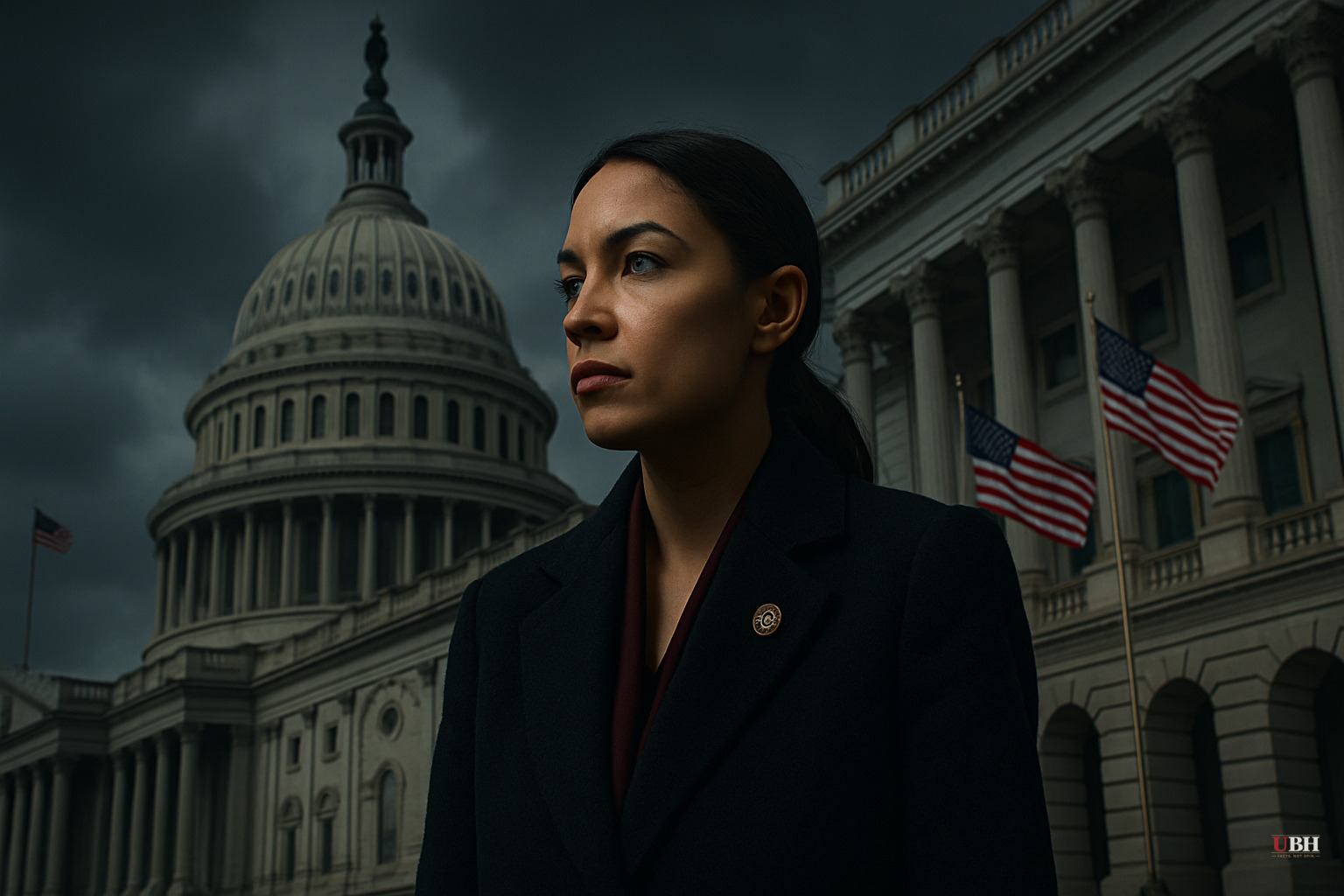
The Tennessee Claim: Just Wrong
On May 11, 2026, Alexandria Ocasio-Cortez spoke at the University of Chicago's Institute of Politics — the think tank founded by Obama advisor David Axelrod — and warned that Republican redistricting in Tennessee would "wipe out every black representative on the map."
There's one problem. Tennessee has zero Black members of Congress right now.
The district being redrawn has been held by Democrat Steve Cohen, a White man, for nearly two decades. And the Republican challenger running to replace him? A Black woman.
Libs of TikTok posted the clip on May 11, 2026, and it spread fast. Daily Wire flagged it. Neither CNN nor MSNBC made it a lead story — a contrast with how the networks typically cover similar errors from Republican officials.
AOC's office has not issued a correction as of publication.
What the Left Would Say
Progressives have a legitimate underlying concern here. Republican-led redistricting has, in documented cases across the South, diluted Black voting power. The Voting Rights Act litigation in Alabama, Georgia, and Louisiana is real. Courts have struck down maps in multiple states for exactly that reason.
The argument that redistricting can harm Black political representation is rooted in actual legal and political fights with serious people on both sides.
But AOC didn't make that argument with facts. She invented a congressman who doesn't exist to make it. Left-leaning outlets would likely focus on the redistricting pattern nationally rather than the specific Tennessee error — and that's a fair frame to consider. The problem is, the specific claim she made was false.
The $30 Minimum Wage Push
Separately, AOC is pushing a $30 federal minimum wage — more than double the current federal floor of $7.25 an hour.
Surveys show significant economist opposition to the proposal. The Congressional Budget Office — a nonpartisan agency — estimated in 2021 that raising the federal minimum wage to $15 (half of what AOC is now proposing) would lift 900,000 people out of poverty but eliminate approximately 1.4 million jobs.
Doubling that wage floor to $30 would amplify both effects — more workers lifted, more jobs eliminated, with the elimination likely hitting hardest in lower cost-of-living states like Mississippi, West Virginia, and rural Tennessee, where $30 an hour is a significant fraction of median wages.
The Left's Strongest Argument Here
Progressives would correctly point out that the federal minimum wage has not kept pace with inflation or productivity. In 1968, the minimum wage was worth about $13 in today's dollars in real purchasing power. Workers at the bottom have lost ground for decades while corporate profits and executive pay have climbed.
Sen. Bernie Sanders and Rep. Pramila Jayapal have made this case with actual data. The question is whether a one-size-fits-all federal mandate at $30 makes economic sense for both Manhattan and rural Arkansas simultaneously. Based on available economic modeling, the answer is probably no.
States and cities setting their own floors — California is already at $16.50, Washington state at $16.28 — allow markets to adjust regionally.
What Mainstream Coverage Gets Wrong
Right-leaning outlets like Fox News and Daily Wire are having a field day with AOC's Tennessee gaffe. It's a real error.
But they're less interested in the legitimate policy debate underneath the minimum wage question. Dismissing the entire conversation because AOC is the messenger is lazy journalism.
Left-leaning outlets, meanwhile, are largely ignoring the Tennessee fabrication — a factual error that would dominate coverage for a week if a Republican congressman had invented a demographic to win a political argument.
Neither side is giving you the full picture.
In Summary
AOC got Tennessee's congressional makeup factually wrong — not close, not debatable, wrong — while making an argument about racial representation. Credibility matters in political advocacy.
On the $30 wage: the problem she's identifying is real. The solution she's proposing is blunt-force and likely to hurt the lowest-income regions the most.
Being loud and confident is not the same as being right. Regular people — the ones who actually earn minimum wage — deserve better than policy driven by confidence alone.
Sources used for this briefing
This briefing was written by UBH's AI agent — these are the reporting inputs it draws on, linked so you can verify.


