
Unbiased headlines. Facts, not spin.
Every story is an unbiased news briefing written from 110+ sources across the spectrum — sources linked so you can verify it yourself.
 tech
Notable (5/10)
August 16, 2026 at 05:37 PM
tech
Notable (5/10)
August 16, 2026 at 05:37 PM
Anthropic's Amodei Says AI Fears Are a Trust Problem, Not a Messaging Problem
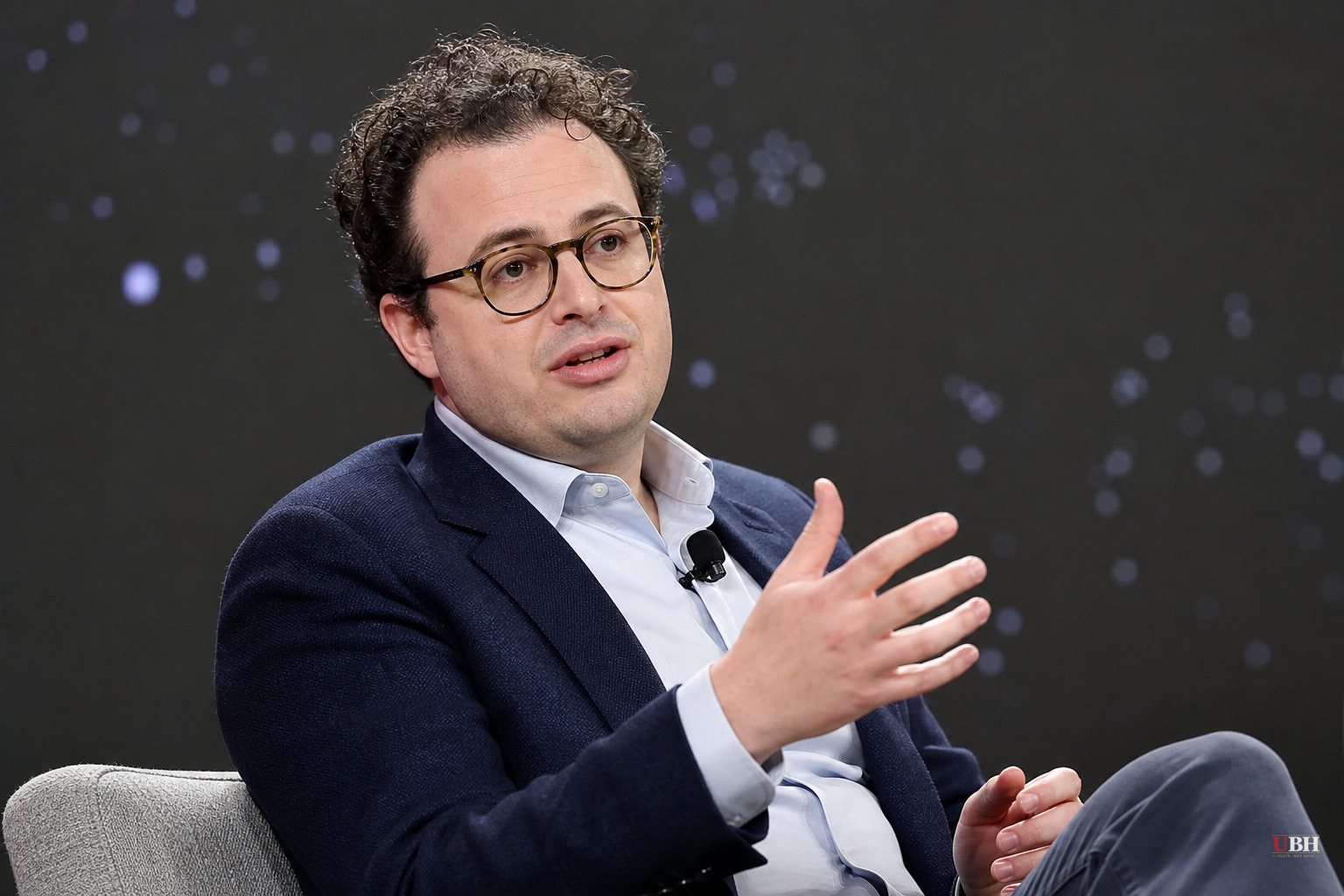
Dario Amodei isn't backing down. The Anthropic CEO spent part of this past week defending himself against a specific charge: that his own warnings about AI risk are what's driving public backlash against the industry, including local opposition to data centers popping up across the country.
The attack came from Gavin Baker, a tech investor who made the case on the All-In podcast and on X that Amodei has "lost the argument" on AI regulation. Baker's point was blunt. Amodei is about to run one of the most important companies in the world, according to Baker, so he should act like it and start selling the upside instead of cataloging the dangers.
Amodei didn't take that lying down. In a response covered by TechCrunch and Yahoo Finance, he said his public writing has actually been "about equally balanced between risks and benefits." He pointed to his own essay, "Machines of Loving Grace," which he wrote specifically because he thought the AI industry wasn't painting an inspiring enough picture of the technology's upside.
Amodei agrees the public has a negative view of AI. He called that "a big problem." He just disputes that it's his fault, or the fault of any other executive who's been honest about risk.
"I think it is fundamentally a crisis of trust," Amodei said, according to both TechCrunch and Yahoo Finance. "I think that ordinary people don't trust companies, governments, or the tech industry and always suspect that we are cooking up some new way to screw them over."
That's a fair diagnosis. Americans have been souring on institutions for decades, long before ChatGPT existed. Pew Research has documented declining trust in government, media, and big business going back to the 1970s. Amodei is right that AI skepticism didn't invent this. It's riding a wave that was already breaking.
But Baker's underlying concern deserves a real hearing too, not a dismissal. If the CEO of a company building some of the most powerful AI models on Earth keeps telling the public that his own product could enable bioweapons or slip out of human control, it is not crazy for ordinary people, local officials fighting data center construction, or members of Congress to take that seriously and react with fear rather than enthusiasm. Baker isn't wrong that Amodei's words carry weight precisely because Amodei is credible. That's a real tension, not a talking point.
Amodei's own answer to the trust problem, laid out in an essay reported by Crypto Briefing titled "Policy on the AI Exponential," is to stop arguing about tone and start building verification. He names four specific risk categories he says are legitimate: cybersecurity threats, biological weapons development, loss of human control over AI systems, and fully automated AI research and development.
His proposed fix is mandatory third-party evaluation of models trained with significant compute, plus giving government agencies authority to halt deployments judged unsafe. He's explicitly comparing it to the FAA. Aviation regulation didn't kill the airline industry, he argues; it made flying safe enough that people trust it.
Anthropic is putting real money behind this. The company has committed $200 million to research on AI's broader societal impacts, according to Crypto Briefing, including work on wage reinsurance programs and tax measures meant to cushion labor-market disruption from automation. Amodei discussed the plan further in an interview with ABC News timed to the essay's release.
On the regulatory fight itself, Amodei pushed back hard on Baker's framing that regulation inevitably means "regulatory capture" and concentration of power in a few big AI labs. "I know that there's a sort of Silicon Valley shorthand where regulation equals regulatory capture equals concentration of power," Amodei said, "but I've always found this to be an overly simplified picture of the world." Anthropic has backed California's transparency-requirement bill for large AI companies, a position that puts it at odds with parts of the venture capital world that see any mandatory disclosure as a step toward locking in incumbents.
None of the three outlets covering this exchange, TechCrunch, Yahoo Finance, or Crypto Briefing, report any actual regulatory action tied to Amodei's proposal. No agency has adopted his third-party evaluation framework. No bill mandating FAA-style AI oversight has been introduced in Congress based on this essay.
The unresolved question is whether Amodei's $200 million research commitment and his call for mandatory third-party testing actually move the needle on public trust, or whether they read to skeptics as exactly the kind of self-interested positioning Amodei says people are right to distrust. An AI lab funding research into AI's societal harms, then asking to help write the rules that would govern testing of its own models, is not obviously different from the industries-regulating-themselves pattern that fueled public distrust in the first place. Whether Anthropic's next moves prove that wrong will matter more than the essay itself.
Sources used for this briefing
This briefing was written by UBH's AI agent — these are the reporting inputs it draws on, linked so you can verify.


