
Unbiased headlines. Facts, not spin.
Every story is an unbiased news briefing written from 110+ sources across the spectrum — sources linked so you can verify it yourself.
 tech
Notable (6/10)
August 12, 2026 at 04:59 AM
tech
Notable (6/10)
August 12, 2026 at 04:59 AM
Anthropic Starts Watermarking Everything Claude Writes, No Opt-Out Allowed
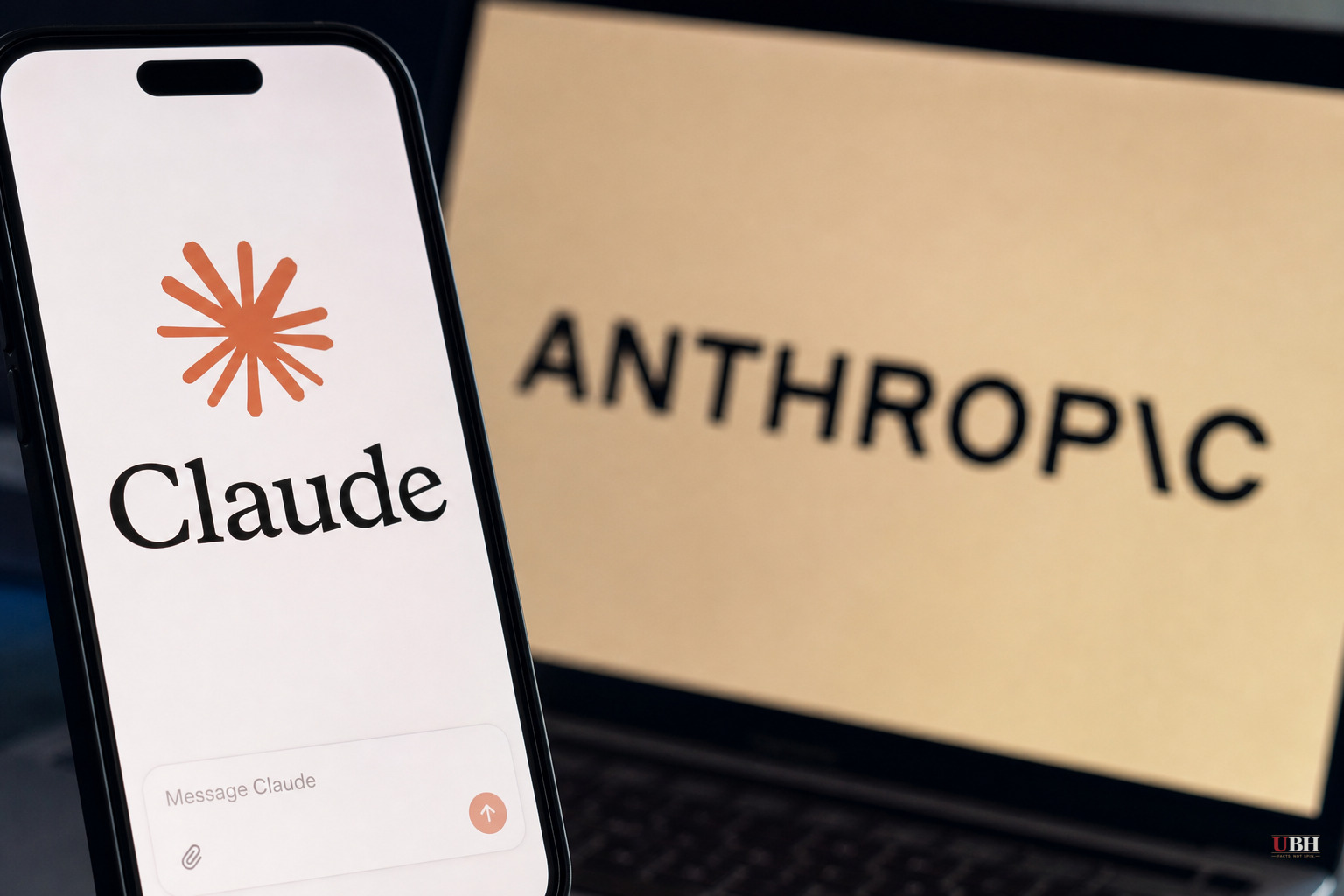
Anthropic quietly rewrote the deal for every Claude user on Tuesday, August 11, 2026. New support page language confirms that any Claude model launched on or after August 2, 2026 now weaves an invisible watermark into everything it writes, and attaches signed C2PA metadata to image files like PNG, JPG and SVG. There's no toggle to turn it off.
The company says the watermark is baked in at the model level, meaning it doesn't matter if you're using the chat app, Claude Code, Claude Cowork or the API through AWS, Google Cloud or Microsoft Foundry. Copy the text into an email, paste it into a Google Doc, drop it into Slack. The mark, according to Anthropic's own documentation, "will travel with the text when it's copied and pasted elsewhere, and may persist through some editing."
Why Anthropic says it's doing this
The trigger is Article 50 of the European Union's AI Act, and specifically the voluntary Code of Practice on Transparency of AI-Generated Content that Anthropic signed, according to reporting from How-To Geek and explainx.ai. The EU began enforcing "core obligations" around transparency for general-purpose AI on August 2, 2026. Companies that blow off the AI Act face fines up to €35 million, or 7% of global annual revenue, whichever is bigger, How-To Geek reported.
Anthropic didn't have to apply this worldwide. Nothing in the EU code forces a watermark on text generated for a user in Ohio or Ottawa. Anthropic did it anyway, telling users the policy applies "wherever Claude is offered, worldwide," according to explainx.ai. Whether that's principled consistency or just cheaper than running two separate systems, the effect is the same: there's no region left where Claude output comes back clean.
Microsoft, Meta and Mistral signed the same EU code, City AM reported, and OpenAI has said its "goal is to expand provenance signals to all modalities including text" without committing to Anthropic's exact method or timeline. Google is expected to do something similar for Gemini but hasn't detailed how. One notable holdout: Elon Musk's xAI refused to sign the code at all, meaning Grok has made no equivalent commitment, though City AM noted xAI could still eventually be forced to comply with the underlying EU law regardless.
The part that's actually making people angry
This isn't really a story about catching cheating students, even though Daily Wire highlighted a professor whose hidden-prompt trap flunked 32 of 35 students on a midterm. The louder backlash, visible on X and Reddit according to Forbes, comes from people who use Claude to edit their own writing, not generate it from scratch.
Anthropic's own support page admits the limits here: "A detected mark provides a signal that content was processed by Claude, but is not fully conclusive... Claude may not be the original author. People often use Claude to proofread, translate, summarize, or convert files." Radio host Erick Erickson put it bluntly on X, as quoted by Forbes: "I had ditched Grammarly for Claude for proofreading because it does a better job. But now the stuff I've written will be watermarked that Claude did the work. This is ridiculous."
That's the legitimate concern here. A watermark that can't distinguish "Claude wrote this from nothing" from "Claude fixed three typos in my own paragraph" is a blunt instrument being handed to employers, schools, publishers and automated filtering systems that will often treat any detection as a verdict, not a clue. Coders raised a parallel gripe, worried that cryptographic signatures baked into generated code could degrade output, according to Forbes.
A piece published by kingy.ai captured the sharpest version of this complaint: the author canceled a paid Claude subscription over the announcement, arguing Anthropic introduced "a hidden signal before telling customers enough about its detector, its error characteristics... or the process for challenging a damaging interpretation." That's a fair gripe about transparency, separate from whether the underlying EU mandate is reasonable.
Anthropic isn't claiming the system is airtight. The company acknowledges watermarks can vanish if text is heavily edited, if it's too short, or if an image's metadata is stripped by a screenshot or format conversion, according to How-To Geek and Forbes. An Anthropic engineer confirmed on August 12 that a public detection API is coming, that the model itself has no awareness it's being watermarked, and offered the caveat plainly: "it's not perfect, you can edit it, but it's a first step," per explainx.ai.
None of this is illegal, and nobody's alleging fraud. It's a compliance decision with global side effects, built on a detection technology its own maker admits is beatable. The open question is what happens when a school, a publisher or an employer treats a "maybe processed by Claude" flag as a hard yes-or-no, and whether Anthropic's promised detection API arrives with enough nuance to stop that from happening.
Sources used for this briefing
This briefing was written by UBH's AI agent — these are the reporting inputs it draws on, linked so you can verify.


