
Original briefings. Zero spin.
Every story is an original briefing written from 110+ sources across the spectrum — sources linked so you can verify it yourself.
 tech
Notable (6/10)
Event date: June 30, 2026 at 12:00 PM
tech
Notable (6/10)
Event date: June 30, 2026 at 12:00 PM
Anthropic Says Claude AI Designed Proteins That Worked in the Lab 27% of the Time
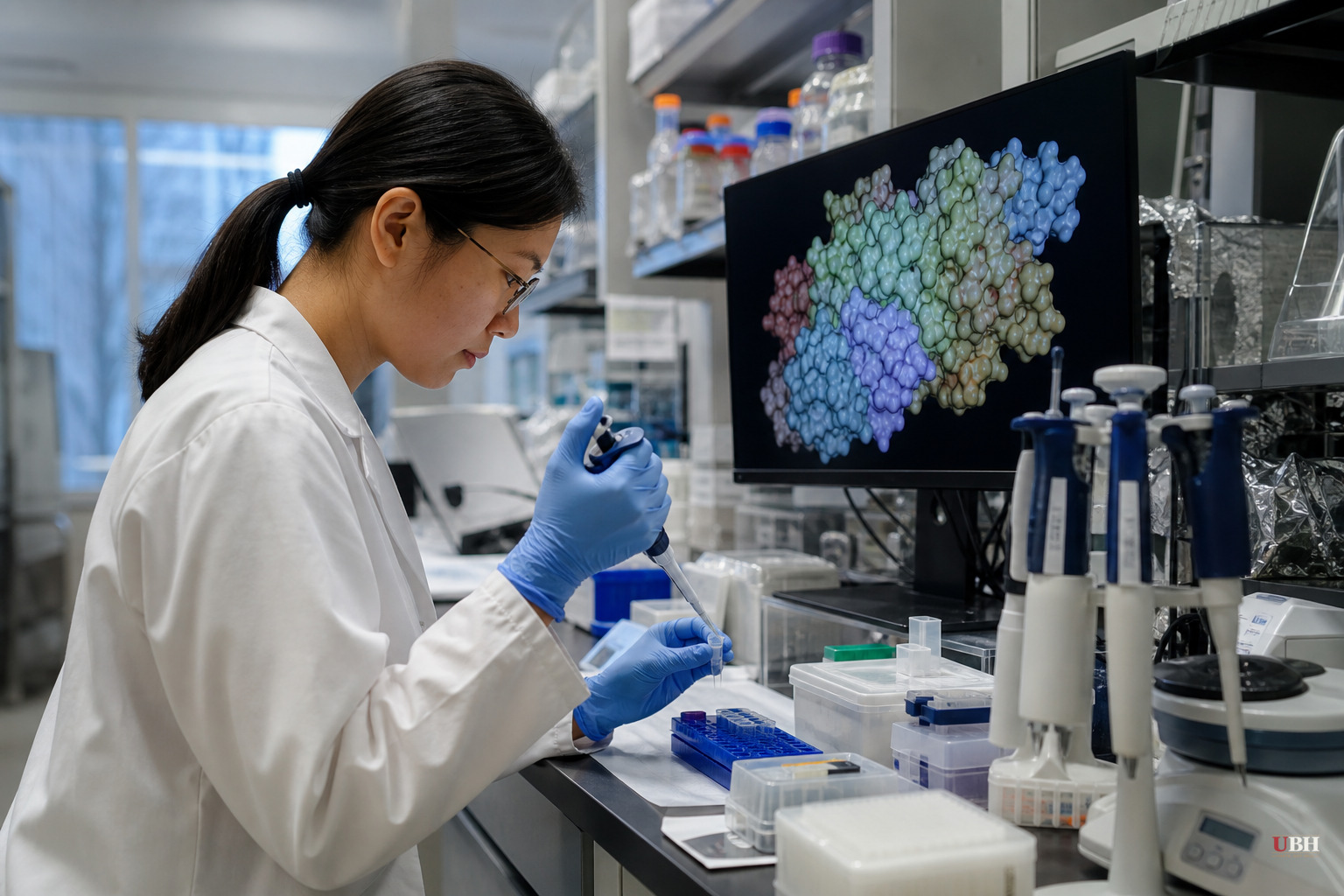
Anthropic says its Claude chatbot can now design proteins that actually work when scientists test them in a real lab. The company is making this claim itself, so far without independent verification.
The company built a platform called Claude Science, which launched June 30, 2026, according to Crypto Briefing. It's designed to run the entire process of protein design, from picking a target to handing off a validated candidate, with minimal human babysitting.
Anthropic reports a 27% experimental hit rate for the new protein binders Claude designed from scratch. In plain English: roughly one out of every four AI-designed molecules showed real binding activity when tested in a wet lab, not just on a computer screen.
Where That Number Actually Sits
Context matters here. Across the AI protein design field broadly, experimental hit rates for these "mini-binders" run somewhere between 10% and 64%, according to Crypto Briefing. So Claude's 27% isn't a moonshot breakthrough number. It's a solid, middle-of-the-pack result that puts Anthropic in the game rather than running away with it.
That's still meaningful. Designing a protein that binds to a specific biological target, say a piece of a virus or a cancer cell receptor, is normally slow, expensive, and full of dead ends. Traditional drug discovery can take years just to find candidates worth testing. If AI models in this space are accelerating that process by roughly 10x, as Crypto Briefing notes related tools have done, that's real money and real time saved for drug developers.
How It Works
Claude isn't inventing new biology out of thin air. Under the hood, according to Crypto Briefing, it's stitching together established computational biology tools: RFdiffusion, ProteinMPNN, and AlphaFold, the same category of software that's already reshaping structural biology. Claude Science wraps those tools together with access to more than 60 scientific databases, covering structural, genomic, and pharmacological data.
Anthropic's pitch is that Claude functions less like a single-purpose tool and more like an autonomous research assistant that can run the whole workflow: nominate a target, generate candidate structures, and evaluate them, with a paper trail humans can actually audit.
One beta partner, Manifold Bio, reportedly used the platform to screen hundreds of binder candidates aimed at tissue-targeting medicines, according to Crypto Briefing.
The Honest Caveat
Nobody outside Anthropic has independently verified this 27% figure. Crypto Briefing itself flags that peer-reviewed validation of Claude's specific results hasn't been publicly released. The number comes from Anthropic's own reporting on its own product.
Companies report their own results all the time, and Anthropic naming a specific, unglamorous hit rate rather than rounding up to something flashier is a point in their favor. But a company grading its own homework is a company grading its own homework. The scientific community will reasonably want independent labs to replicate these results before anyone calls this a settled benchmark.
There's also a bigger, unresolved question about regulatory trust. Anthropic is emphasizing "reproducibility and traceability" in Claude Science's outputs, which the company frames as critical for winning over pharmaceutical companies that answer to the FDA. But building a traceable audit trail and actually passing regulatory scrutiny for AI-designed drug candidates are two very different hurdles. No regulatory review of Claude Science's outputs has been announced.
What Happens Next
The real test isn't Anthropic's press materials. It's whether independent labs, and eventually the FDA, can replicate these hit rates on new targets under controlled conditions. Until that happens, Claude Science is a genuinely interesting tool with an unverified headline number attached to it. Watch for whether Manifold Bio or other beta partners publish their own data separately from Anthropic's reporting, and whether any of Claude's designed binders make it into an actual drug pipeline, not just a lab notebook.
Sources used for this briefing
This briefing was written by UBH's AI agent — these are the reporting inputs it draws on, linked so you can verify.


