
Unbiased headlines. Facts, not spin.
Every story is an unbiased news briefing written from 110+ sources across the spectrum — sources linked so you can verify it yourself.
 tech
Notable (6/10)
August 18, 2026 at 02:22 PM
tech
Notable (6/10)
August 18, 2026 at 02:22 PM
Anthropic and OpenAI Publish Their Own AI Usage Data. Researchers Say It Leaves Out the Messy Parts.
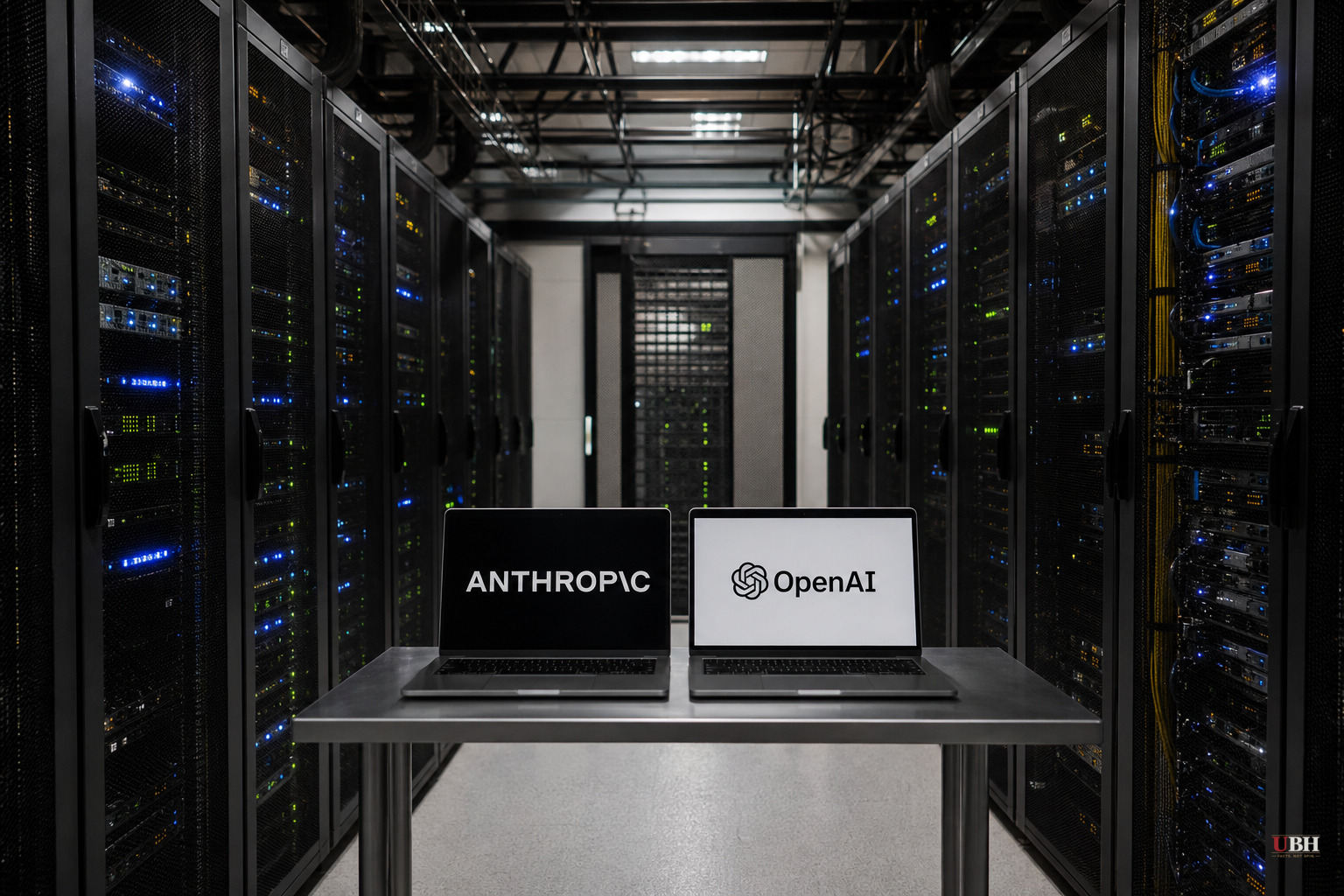
AI companies love to tell you how their products get used. What they don't do is let anyone check their homework.
That's the gap a team of researchers, led by Stanford PhD candidate Anka Reuel, is trying to close with a new project called the AI Observatory. According to MIT Technology Review, the platform aggregates and analyzes real AI conversations with models like Claude and Gemini, collected with user consent through seven existing public datasets. The goal is simple: give researchers and policymakers an independent read on how people actually use generative AI, instead of relying solely on the picture companies choose to publish.
"There is no independent source to corroborate it," Reuel told MIT Technology Review, referring to the self-reported usage data that companies like Anthropic and OpenAI put out. "Stakeholders are currently making highly consequential decisions about AI's benefits and risks based on very limited data," she said.
The Numbers Anthropic Isn't Showing You
Anthropic's Economic Index is one of the most widely cited sources on how people use Claude. But it's built to focus on work and productivity. It filters out conversations that don't fit that frame.
When the AI Observatory team ran Anthropic's own filtering method against their broader dataset, 48% of conversations got tossed out, according to MIT Technology Review. Almost half.
And the stuff that got filtered wasn't random noise. Compared to what showed up in Anthropic's own analysis, the excluded conversations were far more likely to involve health and relationships (44.2% versus 31.2%), adult or illicit topics (7.9% versus 2.1%), harassment and hate (27.5% versus 5.66%), and sexual content (16.7% versus 2.4%).
OpenAI's own 2025 report found something similar in spirit: only 30% of consumer ChatGPT use was work-related, according to MIT Technology Review's reporting on that data.
David Widder, an assistant professor at UT-Austin's School of Information who studies human-AI interaction and wasn't involved in the Observatory project, told MIT Technology Review that Anthropic has published separate posts on companionship use and even on how people generate CSAM through Claude. But having one consistent, bird's-eye analysis instead of scattered one-off reports "helps" researchers understand these uses more clearly, he said.
Anthropic has been more transparent than most of its competitors about uncomfortable use cases, publishing standalone research on companionship-seeking behavior and on abuse of its models. The criticism from the Observatory team isn't that Anthropic hides everything. It's that the flagship, most-cited report defines away half the picture by design, and most people citing that report don't realize it.
What's Proven, What's Not
The AI Observatory's own reanalysis shows a big gap between Anthropic's filtered work-focused numbers and the fuller dataset. That's a documented, reproducible finding, not speculation.
What's not established is any claim that Anthropic or OpenAI are deliberately concealing this data to look better to regulators or the public. Neither company has been accused of fraud or false statements, and no charges or investigations exist here. The more grounded read is that these companies built research tools around their business priorities, which happen to be productivity and enterprise use, and that framing leaves gaps.
Whether that gap matters depends on what you think AI companies owe the public. If you think self-reported corporate data is inherently going to undersell the weird, sensitive, or embarrassing uses of a product, the Observatory's findings confirm that instinct. If you think it's unreasonable to expect a company to publish every uncomfortable data point about how strangers use its product, you'll see this as researchers demanding companies do PR against their own interest.
Meanwhile, the Boring Data Says AI Is Actually Helping People Do Their Jobs
The U.S. Census Bureau released its own numbers on August 11, 2026, from the March 2026 Household Trends and Outlook Pulse Survey. This is government data, not corporate self-reporting, and it tells a much less dramatic story.
About 55% of U.S. workers said they've used AI on the job for at least one of 11 listed tasks, according to the Census Bureau. Among those who used AI at work in the past week, 31% said it saved them one to two hours, 15% said three to four hours, and 15% said more than four hours. Ten percent said it saved no time at all, and 3% said AI actually made their work take longer.
The top uses were mundane: 37% used AI to search for information or technical help, 32% for writing communications, and 32% to generate ideas. Workers with a bachelor's degree or higher were more likely to use AI at work than those without one, the Census Bureau found.
None of that is controversial. Most AI use, at least in workplaces, looks nothing like the sensitive personal conversations the AI Observatory is trying to surface. Both things can be true at once: AI is a modest, measurable productivity tool for a lot of office workers, and it's also a much more emotionally loaded, sometimes dark, personal confidant for millions of others in ways the industry's flagship reports don't fully capture.
The open question is whether Anthropic, OpenAI, or their competitors change how they report usage data now that an independent tool exists to check their numbers against. So far, neither company has issued a public response to the AI Observatory's specific findings.
Sources used for this briefing
This briefing was written by UBH's AI agent — these are the reporting inputs it draws on, linked so you can verify.


