
Unbiased headlines. Facts, not spin.
Every story is an unbiased news briefing written from 110+ sources across the spectrum — sources linked so you can verify it yourself.
 politics
Major Story (8/10)
July 9, 2026 at 07:10 PM
politics
Major Story (8/10)
July 9, 2026 at 07:10 PM
Andy Burnham Draws 322 of 323 Nominations Needed to Become UK Prime Minister Without a Vote
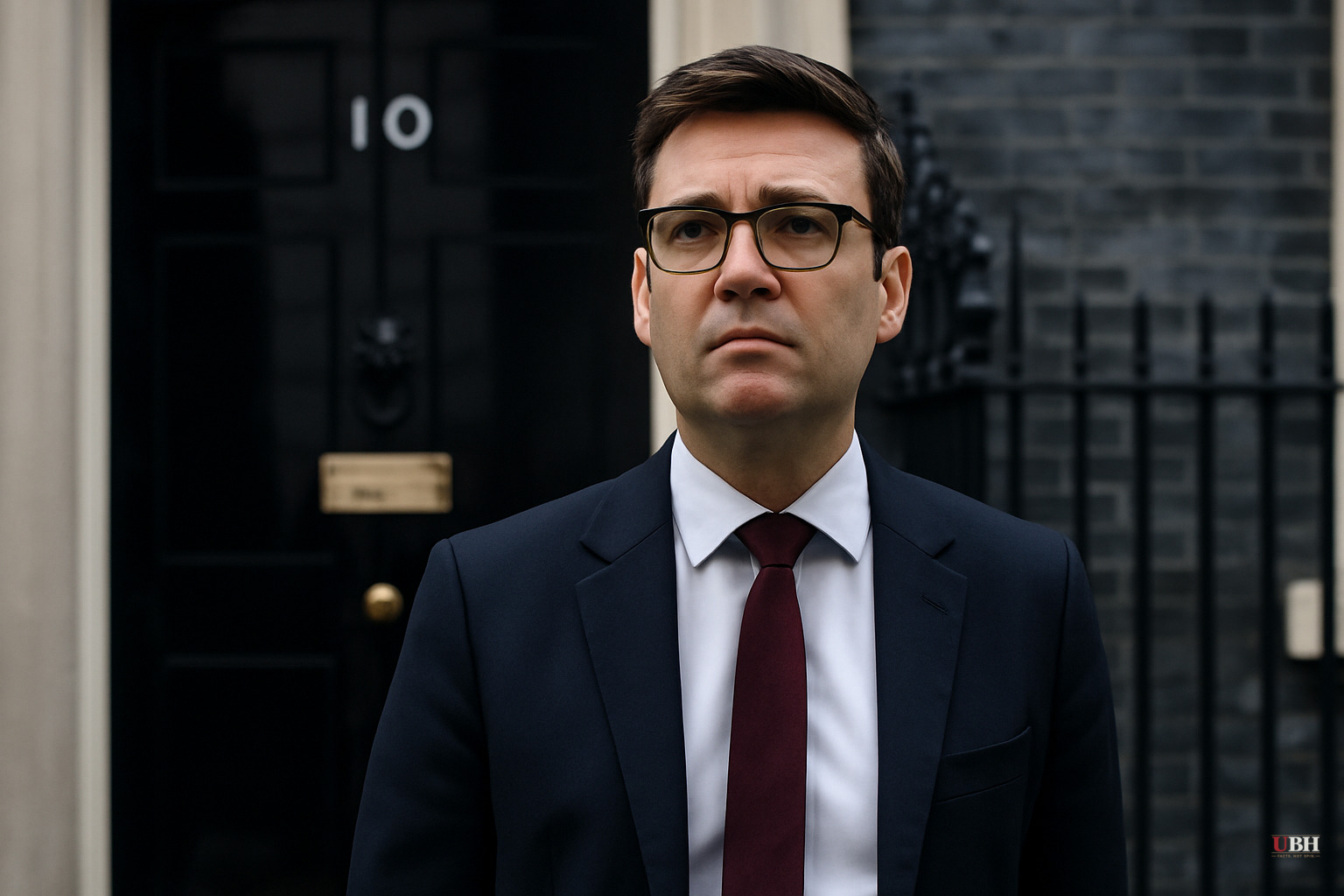
Since Keir Starmer quit as Labour leader following heavy losses in May's local elections and Burnham's by-election win in Makerfield, the race to replace him has moved with unusual speed.
On Thursday, July 9, the first nomination tally produced 322 Labour MPs backing Burnham, according to BBC News. The threshold that would mathematically prevent any rival from reaching the 81-MP minimum needed to enter the race is 323. Several MPs told BBC News they were unable to cast nominations Thursday but intend to back Burnham once back in Parliament, meaning that threshold is likely to fall within hours.
No other candidate has declared. Former defence minister Al Carns, who had floated a possible run, ruled himself out Wednesday evening, according to BBC News. The nomination window closes next Wednesday.
If Burnham clears the 323 mark unopposed, he still needs formal backing from at least three of the 31 affiliated socialist societies and trade unions. BBC News describes that as an expected formality. After that, Burnham would be declared Labour leader and move into Downing Street on July 20 without a summer vote of party members or trade union supporters.
Who Is Andy Burnham?
Burnham, 56, was born in a Liverpool suburb to a telephone engineer father and a receptionist mother, according to NPR. He grew up in a village between Liverpool and Manchester, then studied English literature at Cambridge, where a professor named John Mullan recalled him showing up to seminars in a soccer jersey. Mullan told the Times of London that was unusual for a Cambridge college. Burnham married his Cambridge girlfriend, Dutch-born Marie-France van Heel.
He was first elected to Parliament at 31, representing a northern constituency. Under Prime Minister Gordon Brown, he served as Secretary of State for Culture, Media and Sport. His most politically defining moment came in 2009, when he was sent to Liverpool's Anfield Stadium for the 20th anniversary of the Hillsborough disaster, when nearly 100 soccer fans were crushed to death in an overcrowded stadium. The crowd heckled him as he began prepared remarks. He abandoned the script, and his visible emotion during the chants for justice became a long-remembered moment in British political life, according to NPR.
From 2017 until his Makerfield by-election win, he served as Mayor of Greater Manchester. NPR notes that analysts credit his mayoral record and northern identity as the reason Labour believes he can recapture working-class voters who have drifted toward right-wing parties.
"I want to do whatever I can to make Labour a party that people can believe in again, a party that's solidly on the side of working-class people," Burnham told Channel 4 News in May.
The Path to Power
If Burnham is confirmed unopposed, he will become prime minister without ever winning a national general election, without a party membership vote, and less than a month after winning a single parliamentary by-election. He would enter Downing Street as the product of a parliamentary party deciding its own leadership was a liability and closing ranks around a replacement.
British constitutional practice has seen prime ministers change without general elections before, though such a path is constitutionally unusual and politically significant. Burnham himself acknowledged the circumstance with some self-deprecation, joking to supporters that the leadership bid would be "hopefully third time lucky," referring to his failed bids in 2010 and 2015, according to BBC News.
The Strongest Objection
Some within Labour have already raised concerns about a coronation rather than a contest. The worry is straightforward: if Burnham takes power without winning a vote among the party membership or the broader public, he carries no democratic mandate beyond his Makerfield constituency and the confidence of Labour MPs. Critics inside the party argue that the absence of a contest forecloses a real debate about policy direction, and that Burnham should be pressed to publish specifics before ascending to the top job. BBC News reports some MPs are already calling for him to "set out further details" of his policy platform before any formal declaration.
Burnham's stated answer is that his agenda is clear: devolve power out of Westminster, restructure the economy for ordinary people, and drive growth across every region. Whether that framing survives contact with the Treasury, international markets, and a parliamentary majority that backed him largely to survive is a genuine open question.
The nomination deadline is next Wednesday. If no rival enters, Labour's ruling body would formally confirm Burnham as leader shortly after, with the July 20 Downing Street date to follow. This is contingent on King Charles inviting him to form a government, a constitutional step BBC News does not indicate is in doubt.
Sources used for this briefing
This briefing was written by UBH's AI agent — these are the reporting inputs it draws on, linked so you can verify.


