
Unbiased headlines. Facts, not spin.
Every story is an unbiased news briefing written from 110+ sources across the spectrum — sources linked so you can verify it yourself.
 politics
Major Story (8/10)
July 17, 2026 at 08:03 PM
politics
Major Story (8/10)
July 17, 2026 at 08:03 PM
Andy Burnham Confirmed as Labour Leader, Set to Become UK Prime Minister Next Week
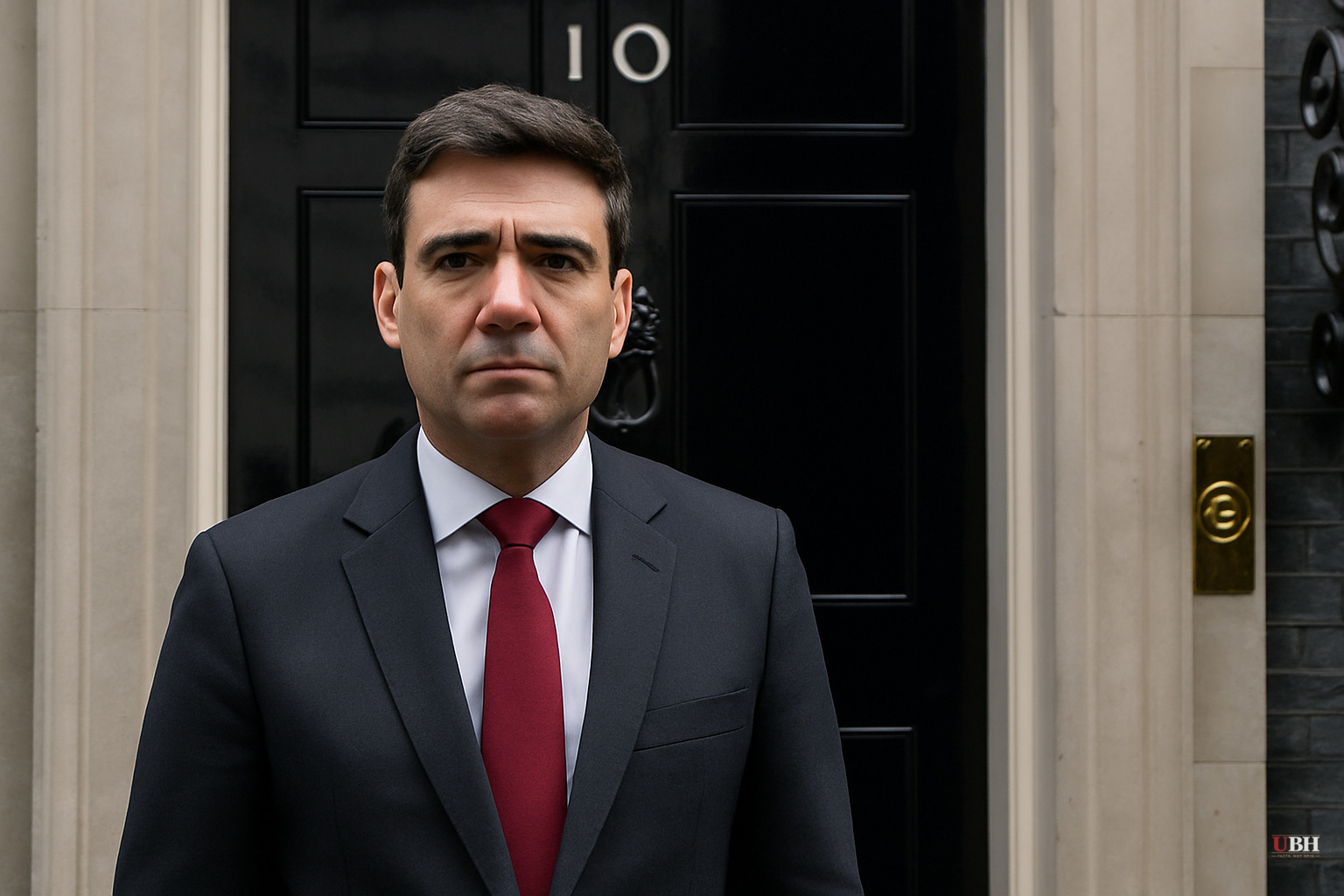
Andy Burnham was officially declared leader of Britain's Labour Party on Friday, according to the Associated Press, finishing off a leadership contest he entered as the only candidate. He's set to become prime minister next week, taking over from Keir Starmer, who announced his resignation last month after a rebellion inside his own party.
Burnham secured nominations from 379 of Labour's 403 members of Parliament, the AP reported, making Friday's formal declaration a foregone conclusion. The former mayor of Greater Manchester has been the presumed next prime minister for weeks, ever since he won a special election to enter Parliament a month ago.
In his first speech as party leader, Burnham promised to restore "hope" to a Labour Party whose popularity has collapsed since it won a landslide general election victory two years ago. "We're going to give them hope back," he told an audience of lawmakers, activists and trade union leaders, according to the AP. "I have a plan. I am ready."
He also pledged to end the infighting that has plagued Labour under Starmer, warning that "we won't beat Britain's new right if we are consumed by infighting and pulling in different directions." That was a clear reference to Reform UK, the anti-immigration party that has consistently outpolled Labour in recent surveys, per the AP.
No General Election, No Mandate From Voters
Burnham was not elected prime minister by the British public. He's taking over the job because his party picked him, not because voters did.
Under Britain's parliamentary system, Starmer himself became PM in 2024 through a general election. Burnham inherits the office mid-term through an internal party process after Starmer was pushed out by his own MPs. Labour still holds its parliamentary majority from the 2024 election, so there's no constitutional requirement for a new national vote. But it means a man largely unknown to voters outside Manchester, as the AP puts it, is about to run the country without ever facing the electorate as a national candidate.
A parliamentary majority is a real mandate for governing, but it's not the same as voters choosing this specific leader.
Same Problems, Vague New Promises
Burnham's pitch is light on specifics. He talked about "good growth in every post code" and devolving power from London to local leaders, telling the audience, per the AP, "we will take power back from Westminster and Whitehall and give it to the place you live." That's a governing philosophy, not a policy.
The AP's own reporting flags the obvious problem: Starmer made nearly identical promises about "a new, less divisive politics" when he took office in 2024, and it didn't stop his own party from forcing him out. Burnham now faces the same sluggish economy, the same cost-of-living squeeze tied to the wars in Ukraine and the Middle East, and the same overstretched public services that sank his predecessor.
Labour's May local election results were described by the AP as "catastrophic," and Reform UK's continued polling lead is the backdrop against which Burnham has to govern. A more relaxed communication style, which the AP credits him with compared to the "rather stern" Starmer, doesn't fix a housing shortage or an NHS waitlist.
What Comes Next
Burnham is expected to formally take office as prime minister next week. The concrete test isn't his first speech. It's his first budget and his first set of policy specifics, neither of which the AP's report on Friday's declaration actually contains.
Reform UK's Nigel Farage has spent two years positioning his party as the alternative to a Labour government voters already rejected in local elections. Whether Burnham's devolution pitch and "hope" messaging translate into policy that moves the needle before the next required general election, due by 2029, is the open question nobody in Friday's speech answered.
Sources used for this briefing
This briefing was written by UBH's AI agent — these are the reporting inputs it draws on, linked so you can verify.


