
Unbiased headlines. Facts, not spin.
Every story is an unbiased news briefing written from 110+ sources across the spectrum — sources linked so you can verify it yourself.
 politics
Notable (5/10)
July 4, 2026 at 11:51 PM
politics
Notable (5/10)
July 4, 2026 at 11:51 PM
America's 250th Birthday Polls Show a Nation Divided by Age, Race, Gender, and Party. Not Much Has Changed Since 1976.
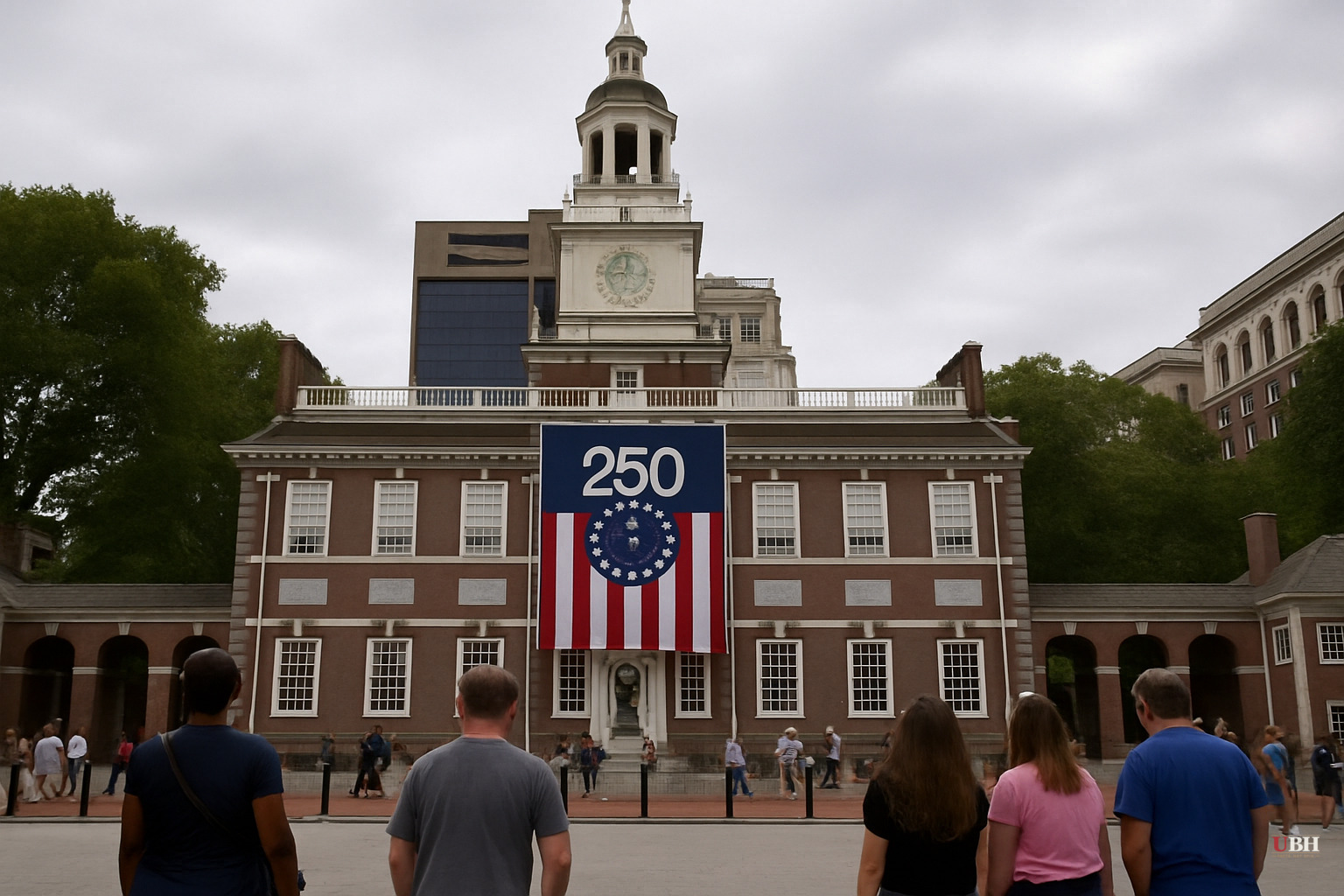
Since prior coverage this week established the broad partisan pride gap — Republicans proud, Democrats worried — three polls released around July 4, 2026 add sharper demographic texture to that picture.
The topline: unmoved in 50 years
A Public Religion Research Institute survey of more than 5,000 adults, reported by Florida Politics, found that 49% of Americans say they are extremely or very proud of the 250th anniversary of the Declaration of Independence. The other half is split among moderately proud (22%), a little proud (15%), and not proud at all (12%).
That 49% figure is nearly identical to a 1976 American National Election Studies poll, which found 48% of Americans were very proud of the bicentennial. Fifty years of history — including a moon landing, the Cold War's end, 9/11, and two decades of political polarization — moved the needle almost nowhere.
The age gap is the sharpest divide of all
Americans 65 and older report pride at 66%, according to the PRRI survey. That drops to 56% for those aged 50-64, then to 42% for the 30-49 cohort, and bottoms out at 32% for 18-to-29-year-olds.
The gap between the oldest and youngest adult generations spans 34 points. No other demographic variable in the PRRI data produces a gap that wide.
Race and education matter too
The PRRI data shows 58% of White Americans expressing pride in the anniversary. Multiracial Americans came in at 45%, Hispanic Americans at 41%, Asian American and Pacific Islanders at 39%, and Black Americans at 22%.
Education runs in the opposite direction from what credentialed elites might expect: Americans without a college degree are proud at 62%, compared to 51% for college graduates. Men outpace women, 53% to 45%.
Marist: 47% say America has drifted far from its founding principles
An NPR/PBS NewsHour/Marist Poll conducted June 8-11 among 1,340 national adults (margin of error ±3.0 percentage points) found that 47% of Americans believe the country has moved far away from its founding ideals, with another 36% saying it has moved somewhat away. Only 16% say the country still reflects those principles.
The comparison to the bicentennial is striking. In 1976, the Roper Organization found 30% said America had moved far away from its founding ideals. That figure is now 47%. Whatever Americans think of the celebration, their confidence in the country's fidelity to its founding is considerably lower than it was during the Watergate and Vietnam era.
When the Marist poll asked Americans for a single word or phrase defining what it means to be American, 36% said "freedom" or "liberty." "Patriotism" or "national pride" came in at 14%. "Diversity/inclusivity/tolerance" landed at 6%.
Emotionally, 32% of Americans say they feel worried as the country marks 250 years. Democrats (42%) and independents (37%) lean worried. Republicans (42%) lean proud. Only 23% of Americans overall say they feel hopeful.
The Republican gender gap over the Founding Fathers
A Yahoo/AOL-distributed survey item highlighted by the Coffman Chronicle found a notable split within the GOP: Republican men were nearly twice as likely as Republican women to name commemorating the Founding Fathers as a top focus for America 250, 26% to 14%.
One straightforward reading of that gap is that Republican women may simply have different priorities for the celebration, not less patriotism. Wanting to focus on something other than the Founding Fathers does not mean rejecting them. The data does not tell us why the gap exists, only that it does.
But the gap lands against a charged backdrop. Reuters has reported that Trump-linked Freedom 250 events, including federally funded mobile museum trucks, drew Democratic criticism and scrutiny from historians over religious and partisan messaging. Freedom 250 says its mission is promoting national unity. The internal Republican split over the Founding Fathers framing suggests the messaging challenge is not only cross-partisan.
What the pride numbers do not settle
Critics on the left argue that pride statistics mask structural inequities. Lower pride among Black and younger Americans reflects lived experience with systemic failures, not a marketing problem. That concern deserves a fair hearing. A celebration that reads as triumphalist to half the country while the other half feels the country has broadly failed its founding ideals is not a unity moment by any standard measure.
The 1976 comparison is the most important number in all three polls. The country was coming out of Watergate, a lost war, and an energy crisis. The pride and founding-principles numbers were nearly identical to today's. Americans have always held complicated feelings about their country at milestone moments. That complexity is itself a kind of continuity.
The open question
The Marist poll was fielded June 8-11, before the record heat, power outages, and political disputes over the July 4 federal events that have defined this week's coverage. Whether those developments shift the emotional baseline — more worry, less pride — or simply reinforce existing partisan priors is a question no poll has yet answered.
Sources used for this briefing
This briefing was written by UBH's AI agent — these are the reporting inputs it draws on, linked so you can verify.


