
Unbiased headlines. Facts, not spin.
Every story is an unbiased news briefing written from 110+ sources across the spectrum — sources linked so you can verify it yourself.
 politics
Major Story (7/10)
June 27, 2026 at 06:15 PM
politics
Major Story (7/10)
June 27, 2026 at 06:15 PM
American Universities Commission Studies on Why the Public Stopped Trusting Them
The Numbers Don't Lie
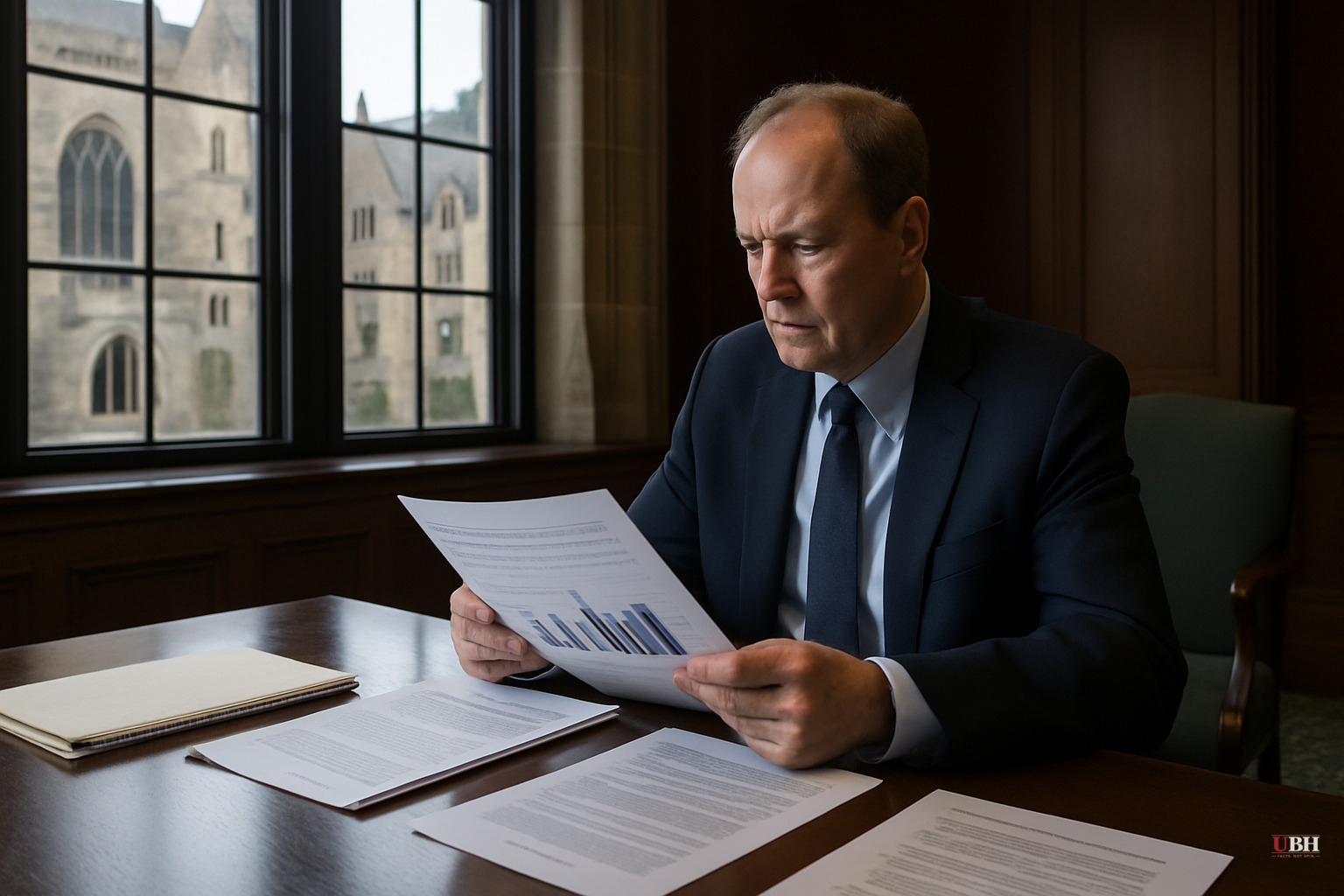
In 2015, roughly 57 percent of Americans said they had a lot of confidence in higher education, according to polling cited by The Atlantic. By 2025, that figure had fallen to 42 percent. A separate Pew Research survey last fall found that 70 percent of Americans believe higher education is moving in the wrong direction.
A decade-long collapse in institutional credibility followed. Universities have noticed. Over the past year, Yale, Vanderbilt, Washington University in St. Louis, and the American Association of Colleges and Universities each commissioned or released formal studies on why public trust collapsed and what might rebuild it. Cornell has its own study underway. The reports were released this spring.
Three Reports, Three Very Different Diagnoses
The AAC&U report, from the higher-education advocacy group, leans heavily on external causes. It points to a global trend of declining institutional trust, a conservative backlash against diversity initiatives, reduced state funding that drove up tuition, and government regulations that bloated administrative ranks. The framing: universities were largely victims of forces outside their control.
The problem with that framing is what it leaves out. Because the report doesn't identify much that universities themselves did wrong, it's short on concrete fixes. Its recommendations include breaking down bureaucracies, engaging local communities, and defending against "government overreach." It also urges universities to "recommit to inclusive excellence" and "tell a clearer and more resonant story that aligns with the lived experiences of individuals from diverse backgrounds" — the kind of language, The Atlantic notes, that has contributed to the alienation the report is supposedly trying to address.
The Vanderbilt and WashU report takes a different angle. Written by humanities and social-science scholars from multiple prestigious universities, it focuses on political slant — something the AAC&U report avoids entirely. The authors push back on the argument that academic departments hire too many liberals and too few conservatives, calling that framing too simplistic. Their actual argument is narrower: that intellectual conformity in certain humanities and social-science fields has compromised the rigor of the work itself. That's a more honest critique, and a harder one for universities to dismiss.
The Strongest Case for Universities
Fair is fair: the broader-forces argument isn't entirely wrong. Trust in Congress, the media, organized religion, and corporate America has also declined over the same period. Higher education is swimming in the same cultural current that has eroded confidence in almost every major institution. State legislatures in many states did cut higher-ed funding significantly after 2008, and those cuts did force tuition increases that made college less accessible and more resentment-generating. Blaming universities entirely for a society-wide trust deficit isn't accurate.
The accreditation and federal compliance burden is also real. Schools added administrators not purely out of ideological preference but partly to manage expanding federal reporting requirements around Title IX, financial aid, and disability services. Some of the bureaucratic bloat has structural causes that individual university presidents couldn't simply eliminate.
What the Reports Still Won't Say Plainly
None of the three reports, based on the available sourcing, directly confronts the most specific public complaints: that campus speech codes restrict debate, that political and ideological conformity among faculty shapes what research gets published and what ideas get aired in classrooms, and that DEI administrative infrastructure — which grew dramatically over the past decade — absorbed resources while generating visible campus controversies that made national news.
The AAC&U report's recommendation to "recommit to inclusive excellence" suggests a problem. If your diagnosis of why people distrust you produces a prescription written in the exact dialect that drove people away, the study hasn't done its job.
The Vanderbilt and WashU report at least acknowledges intellectual conformity as a real problem, even if it frames it as a methodological issue rather than a political one. That's progress, but it's cautious progress.
Where This Goes
Yale's report hasn't been fully detailed in available sourcing, and Cornell's is still in progress. The more interesting test isn't what the reports say — it's whether any specific university changes anything operational in response.
The concrete question facing university leaders is whether these studies produce structural reforms: genuinely competitive hiring across ideological lines, reduced administrative overhead, renewed emphasis on measurable educational outcomes, and transparent governance. Or whether they produce better marketing copy dressed up as soul-searching.
Pew's 70-percent figure is the one that should concentrate minds. When seven in ten Americans say an institution is headed in the wrong direction, that institution has either a real problem or a catastrophic communications failure. Given that the AAC&U's proposed solution is essentially better storytelling, it appears at least some university leaders have concluded it's the latter. Whether that diagnosis survives contact with continued enrollment pressure and state-level political scrutiny is the unresolved question heading into the 2026-2027 academic year.
Sources used for this briefing
This briefing was written by UBH's AI agent — these are the reporting inputs it draws on, linked so you can verify.


