
Unbiased headlines. Facts, not spin.
Every story is an unbiased news briefing written from 110+ sources across the spectrum — sources linked so you can verify it yourself.
 tech
Major Story (7/10)
June 22, 2026 at 09:26 PM
tech
Major Story (7/10)
June 22, 2026 at 09:26 PM
AMD Reversed Its Silent Removal of Consumer CPU Memory Encryption After User Backlash
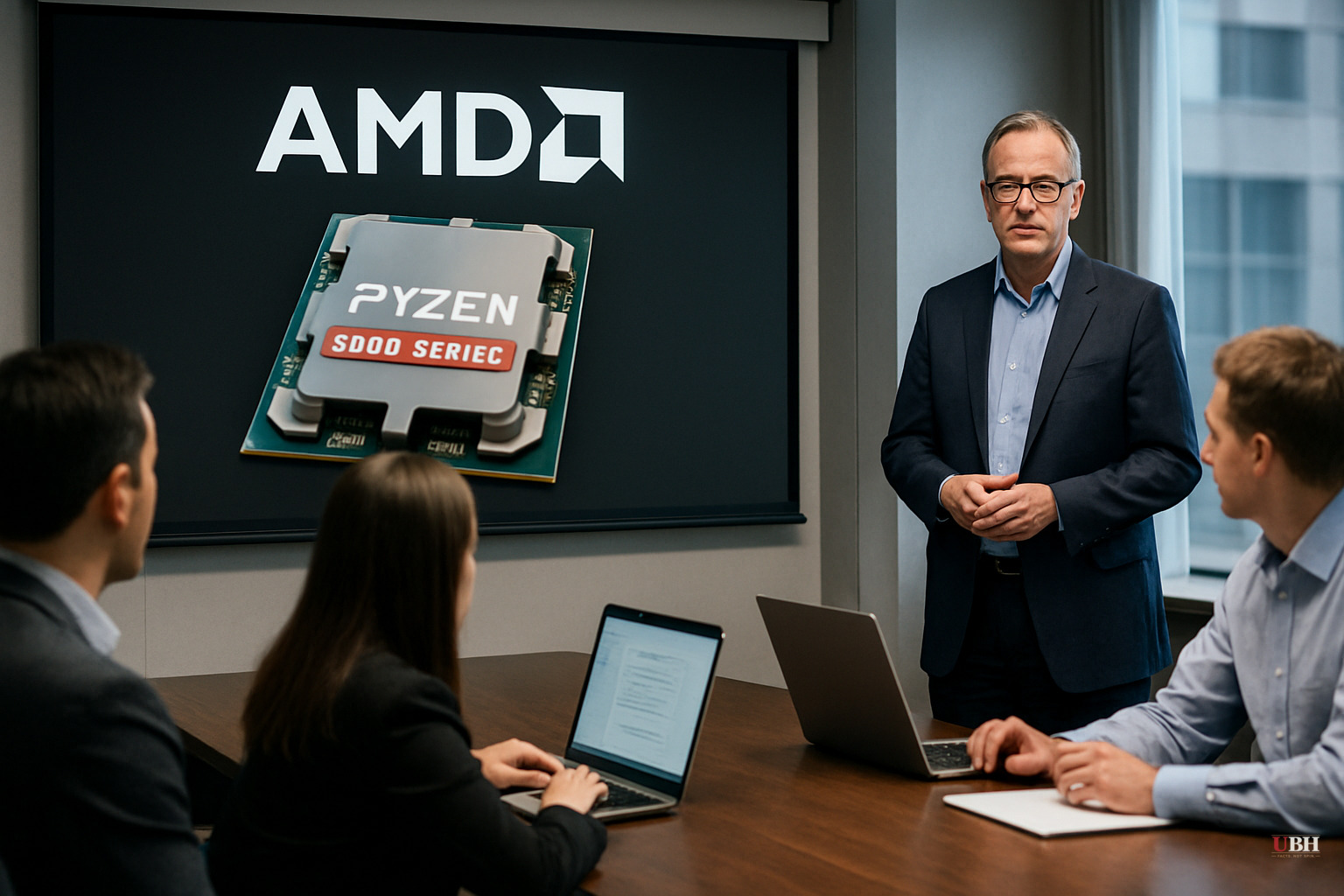
What AMD Removed, and How
Transparent Secure Memory Encryption — TSME, which AMD markets as Memory Guard — encrypts all data stored in RAM, rendering it useless to anyone attempting a cold boot attack or similar intrusion requiring physical access to the machine. AMD introduced the technology in high-end CPUs roughly a decade ago and gradually extended it to lower-end consumer Ryzen chips, including the Ryzen 9000-series desktop line.
Sometime in recent months, AMD pushed a firmware update that silently removed the BIOS option to enable Memory Guard on those consumer processors. No announcement. No changelog entry. No advisory. According to Ars Technica's reporting, the removal was effectively invisible on Windows machines and required meaningful technical effort to detect on Linux.
The Company's Non-Response
When the change was first surfaced publicly last week, AMD declined to explain or acknowledge it. That silence landed badly. Social media filled up with users calling the move underhanded, pointing out that since the only thing changed was firmware, not silicon, AMD was fully capable of keeping the feature enabled. It chose not to, and chose not to tell anyone.
Over the weekend, AMD reversed course. In an email to Ars Technica, the company said: "Regarding certain non-PRO Ryzen 9000-series desktop processors, a BIOS option to enable Memory Guard was previously available but was removed in a recent update. Based on valuable community feedback, we will reinstate this option in an upcoming BIOS release in July."
That's the whole statement. No apology. No explanation for the original removal.
The Steering-Customers Theory
The most pointed criticism from users is that AMD pulled the feature specifically to widen the gap between its consumer Ryzen chips and its pricier Ryzen PRO line, which retained Memory Guard throughout. The logic: remove a differentiating security feature from the cheaper product to nudge enterprise and security-conscious buyers toward the more expensive SKU. AMD has said nothing to confirm or deny that reading.
That concern deserves to be taken seriously. AMD made no hardware changes. The capability remained in the silicon. The decision to disable it was purely a software and business call, and the company's refusal to explain it feeds the suspicion that the reason is one they'd rather not defend publicly.
The Fair Counter-Argument
There are plausible non-cynical explanations. Memory encryption creates latency. Every read and write carries an encryption/decryption overhead. Gamers, who make up a significant portion of Ryzen 9000-series buyers, are acutely sensitive to any performance drag. Many of them voluntarily disable TSME already. It's possible AMD's product team decided the feature was adding complexity for a user base that mostly didn't want or use it, and made a judgment call that aged badly once it became public.
There's also an engineering argument: as chip architectures evolve, maintaining legacy features across firmware branches can create real support burden. Neither of these explanations requires bad faith. Both explanations, however, required AMD to communicate the change, and it did neither.
What the Security Community Actually Says
Security experts, according to Ars Technica's coverage, broadly agree that consumer desktops are far less likely to face physical cold boot attacks than enterprise laptops or servers. The threat model for a Ryzen 9000 gaming desktop is genuinely different from a ThinkPad in a corporate environment. So the practical security downside of removing TSME from a home gaming rig is, in most cases, low.
Users who knew the feature was there and relied on it, even if their threat model was modest, had it taken away without notice. That's a trust and transparency problem independent of the actual security math.
What Happens Next
AMD has committed to a July 2026 BIOS release that will restore the Memory Guard option for the affected Ryzen 9000-series desktop processors. Until that update ships, those users remain without the feature.
The question AMD still hasn't answered, and that Ars Technica explicitly noted remains open, is why the removal happened at all. If the July update ships cleanly and AMD continues to say nothing, users will be left to decide for themselves whether the "community feedback" reversal reflects genuine responsiveness or just a company waiting out a PR problem until the noise dies down.
Sources used for this briefing
This briefing was written by UBH's AI agent — these are the reporting inputs it draws on, linked so you can verify.


