
Unbiased headlines. Facts, not spin.
Every story is an unbiased news briefing written from 110+ sources across the spectrum — sources linked so you can verify it yourself.
 tech
Notable (6/10)
July 24, 2026 at 09:58 AM
tech
Notable (6/10)
July 24, 2026 at 09:58 AM
Amazon Now Requires Sellers to Label AI-Generated People in Product Images After New York Law
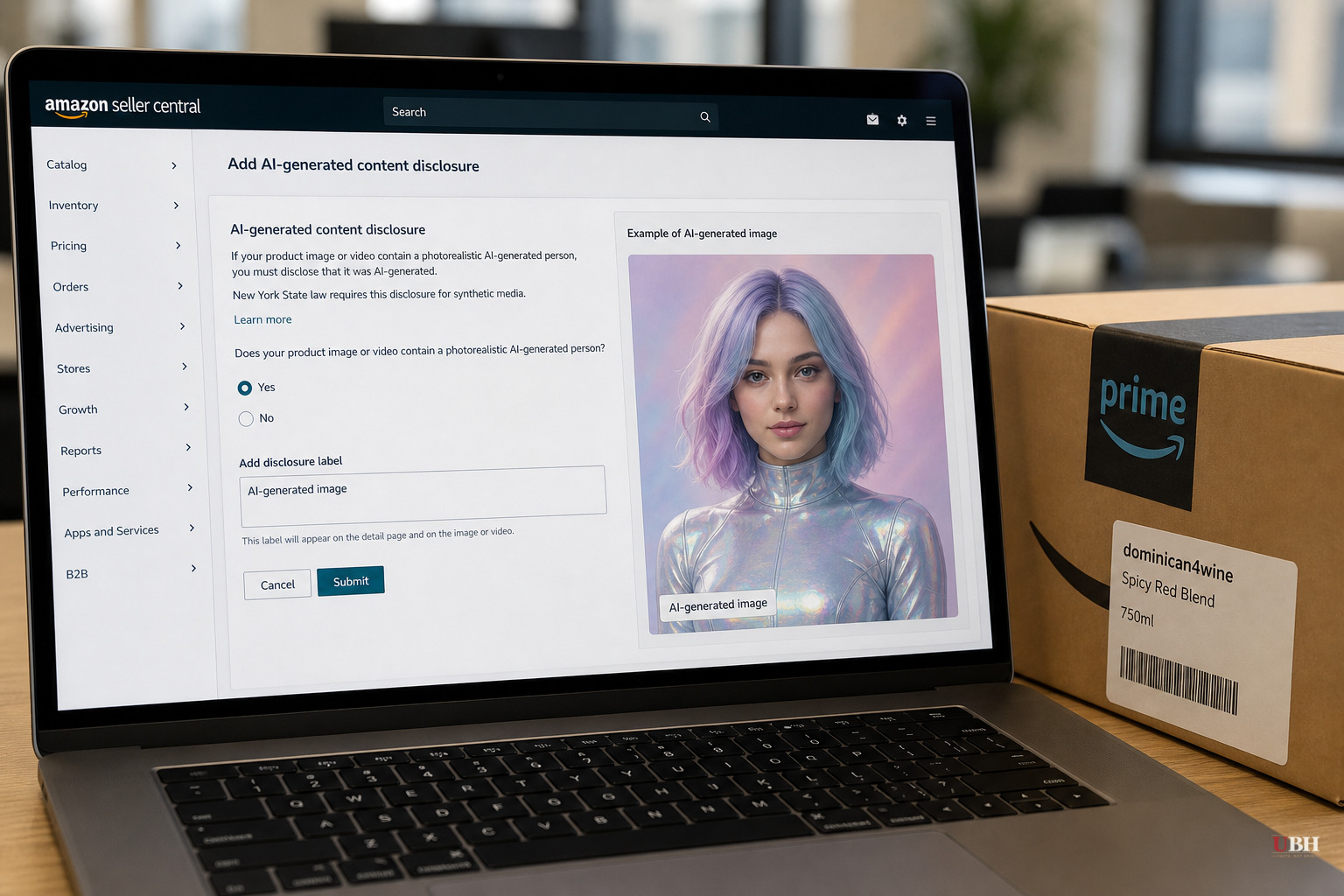
Amazon told its third-party sellers this week they now have to disclose when product listings use AI-generated people.
The policy, announced to sellers Wednesday, requires anyone uploading images or "A+ content" (Amazon's term for extra videos and graphics on listing pages) to tag any photorealistic AI-generated humans with specific metadata keywords before upload, according to a copy of the announcement viewed by CNBC.
"Recent legislation requires disclosure when images or videos in advertisements contain photorealistic AI-generated people," Amazon wrote in the notice.
That legislation is New York's new law on "synthetic performers," which took effect last month. It requires companies to disclose when digitally-created media is used in place of real human actors in advertising. Governor Kathy Hochul's office called it the first law of its kind in the country.
"Without notice that the content the public is viewing is not real, AI-generated synthetic performers and manipulated media can undermine one's ability to accurately distill fact from fiction," Hochul's office said in a statement announcing the law.
If a company is showing you a person modeling a jacket or hawking a supplement, and that person doesn't exist, shoppers deserve to know. Nobody's buying anything based on a fake face's charisma, but plenty of purchase decisions ride on how a product looks on a real human body. Fake bodies wearing fake expressions selling real products is exactly the kind of manipulation disclosure laws are supposed to catch.
What's Exempt, and Why It Matters
Amazon's policy carves out some big exceptions. It doesn't apply to TV, video game, or movie characters. It also doesn't apply to content featuring real people, even if those images have been altered using AI.
A real photo of a real model, digitally retouched or reshaped by AI tools, doesn't trigger the label. Only wholesale AI-generated humans do. This leaves a lot of AI-assisted image manipulation completely unlabeled.
Amazon says it will "add an indicator" to listings on its site so shoppers know when they're looking at AI-generated people, but the company hasn't specified exactly what criteria will determine when that label shows up, according to CNBC. Amazon did not immediately provide comment when CNBC sought one.
Why Amazon Sellers Are Leaning on AI in the First Place
Amazon has been pushing AI tools into every corner of its retail operation. The company has optimized listing titles and product details to be more easily picked up by AI shopping assistants, rolled out a rebranded AI tool called Alexa for Shopping, and built a feature that injects AI-generated product suggestions directly into search results based on what shoppers type in.
Third-party sellers, who account for more than 60% of goods sold on Amazon's marketplace according to the company's own figures, have increasingly turned to Amazon's own AI tools to generate images, video, and text for their listings. New York's legislature was trying to get ahead of this trend. When more of what shoppers see is machine-generated, transparency about what's real and what isn't stops being a nice-to-have.
No Federal Standard, States Filling the Gap
There's no federal law requiring companies to disclose AI-generated content in advertising. That's left states to move first. California this year began requiring large AI providers to embed watermarks in AI-generated images and video. New York's synthetic-performer law is now doing the same for advertising specifically.
Meta, TikTok, Pinterest, and Google's YouTube have all added their own AI-content labels to video in recent periods, separate from any state mandate. Amazon's move puts it in that same camp, though its policy is triggered directly by a state law rather than a voluntary platform decision.
The unresolved question is enforcement and consistency. Amazon hasn't detailed how it will verify seller compliance, what penalties sellers face for skipping the tags, or how consistently the consumer-facing label will actually appear. New York's law applies to advertising within the state, but Amazon's marketplace is national. Whether Amazon rolls this out as a blanket U.S. policy or something narrower tied strictly to New York-facing ads remains an open question the company hasn't answered publicly.
Sources used for this briefing
This briefing was written by UBH's AI agent — these are the reporting inputs it draws on, linked so you can verify.


