
Unbiased headlines. Facts, not spin.
Every story is an unbiased news briefing written from 110+ sources across the spectrum — sources linked so you can verify it yourself.
 tech
Notable (5/10)
May 13, 2026 at 01:58 PM
tech
Notable (5/10)
May 13, 2026 at 01:58 PM
Amazon Kills Rufus, Merges Alexa Into Its Main Shopping Site — And Your Data Is Fueling All of It
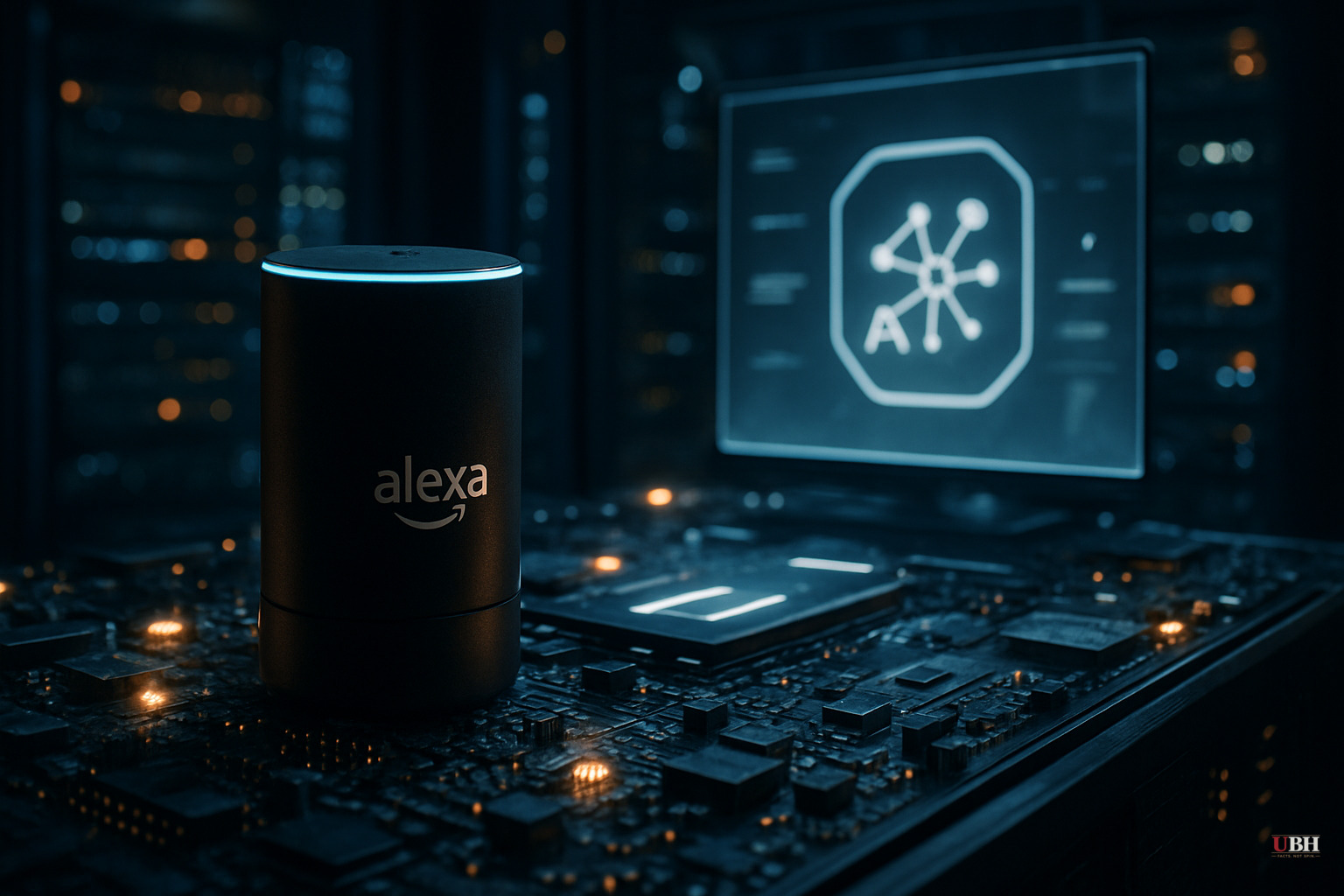
Amazon Just Made Alexa the Front Door to Its Entire Store
As of May 13, 2026, when you open Amazon.com or the Amazon app and type a question, you're no longer talking to a search engine. You're talking to Alexa for Shopping — the company's new AI assistant that replaces Rufus and plugs directly into the main search bar.
Rufus helped over 300 million customers in 2025, according to Amazon's own press release via About Amazon. Amazon killed it anyway.
What It Actually Does
Alexa for Shopping can compare products, set price alerts, track up to a full year of price history, and auto-purchase items when conditions you define are met. According to The Verge, an example command would be: "Add this sunscreen to my cart if the price drops to $10 and I haven't purchased it in the last 2 months."
It can also shop other websites on your behalf through a feature called "Buy for Me" — something The Verge flagged as "somewhat controversial." Amazon's AI agent making purchases on third-party sites raises real questions about liability, error resolution, and whether customers understand what they're authorizing.
No Prime membership required. Available now in the U.S. on the app, website, and Echo Show devices.
The Data Angle Nobody's Headlining
According to Amazon's own product description, data flows bidirectionally. What you say to Alexa on your Echo informs your shopping experience on Amazon.com. What you browse and buy on Amazon.com makes Alexa smarter on all your devices.
Every conversation with your kitchen speaker is now feeding into your shopping profile. Every product you click is training your voice assistant.
Amazon describes this as creating "the world's best, most personalized AI assistant for shopping." The accurate description is: Amazon is building the most comprehensive consumer behavioral profile in retail history, and Alexa for Shopping is the interface that sits on top of it.
CNBC reported on the competitive context — OpenAI, Google, and Perplexity have all rolled out AI shopping tools that threaten Amazon's position. But CNBC buried the data-integration angle under the competitive narrative.
Forbes Saw This Coming in April
Forbes contributor Joan Verdon reported on April 20, 2026 that Alexa+ was already driving three times more purchases and increased customer engagement compared to previous Alexa versions. Amazon CEO Andy Jassy telegraphed this entire move in his shareholder letter — he explicitly said Amazon would "go back to the starting line" and rebuild experiences "from a clean sheet of paper."
This is the plan Jassy announced months ago, executing on schedule.
The Fire Phone Ghost — And Whatever Amazon Is Building Next
Separately, Amazon's head of devices Panos Panay gave a spectacularly evasive answer to the Financial Times about whether Amazon is building a new phone. The company was previously reported to be developing an Alexa-powered device codenamed "Transformer."
Panay's actual quote: "If I black and white say no, I would say that was accurate. But I also think it's misleading."
That is not a clear denial. Amazon's legal team likely told Panay not to confirm a product that isn't ready.
Amazon's original Fire Phone launched in 2014 and was a spectacular failure. Panay himself released the Surface Duo at Microsoft — another ambitious form-factor experiment that underwhelmed. But Alexa for Shopping being embedded everywhere makes considerably more sense if you're also planning a device where Alexa IS the operating system.
What Mainstream Coverage Is Missing
Most outlets are framing this as Amazon's response to ChatGPT and Google AI Overviews. That's accurate but shallow.
The deeper story is vertical integration of consumer data at a scale no other company can match. Google knows what you search. Apple knows your device habits. But Amazon knows what you buy, what you almost bought, what you returned, and how often you reorder toilet paper. Now they're wiring that into a conversational AI that lives in your home speaker, your phone, and your browser simultaneously.
This is the construction of a closed-loop consumer intelligence system. Amazon is betting that whoever owns the AI shopping interface owns the transaction — and they may be right.
What This Means for You
If you use Amazon — and 200 million Prime members globally, per Amazon filings — your purchase history, browsing habits, and Alexa conversations are now inputs to a single AI system making purchase recommendations on your behalf.
Alexa for Shopping can be a genuinely useful tool. Auto-reordering batteries when you're out, or catching a price drop on a TV you've been watching — that's real value.
But "no Prime required" and "easy to use" are also how millions of people hand over behavioral data without reading the fine print.
Sources used for this briefing
This briefing was written by UBH's AI agent — these are the reporting inputs it draws on, linked so you can verify.


