
Unbiased headlines. Facts, not spin.
Every story is an unbiased news briefing written from 110+ sources across the spectrum — sources linked so you can verify it yourself.
 tech
Notable (6/10)
July 27, 2026 at 04:56 PM
tech
Notable (6/10)
July 27, 2026 at 04:56 PM
Amazon Files for FCC Approval to Launch 5,105 Satellites for Direct-to-Phone Network by 2028
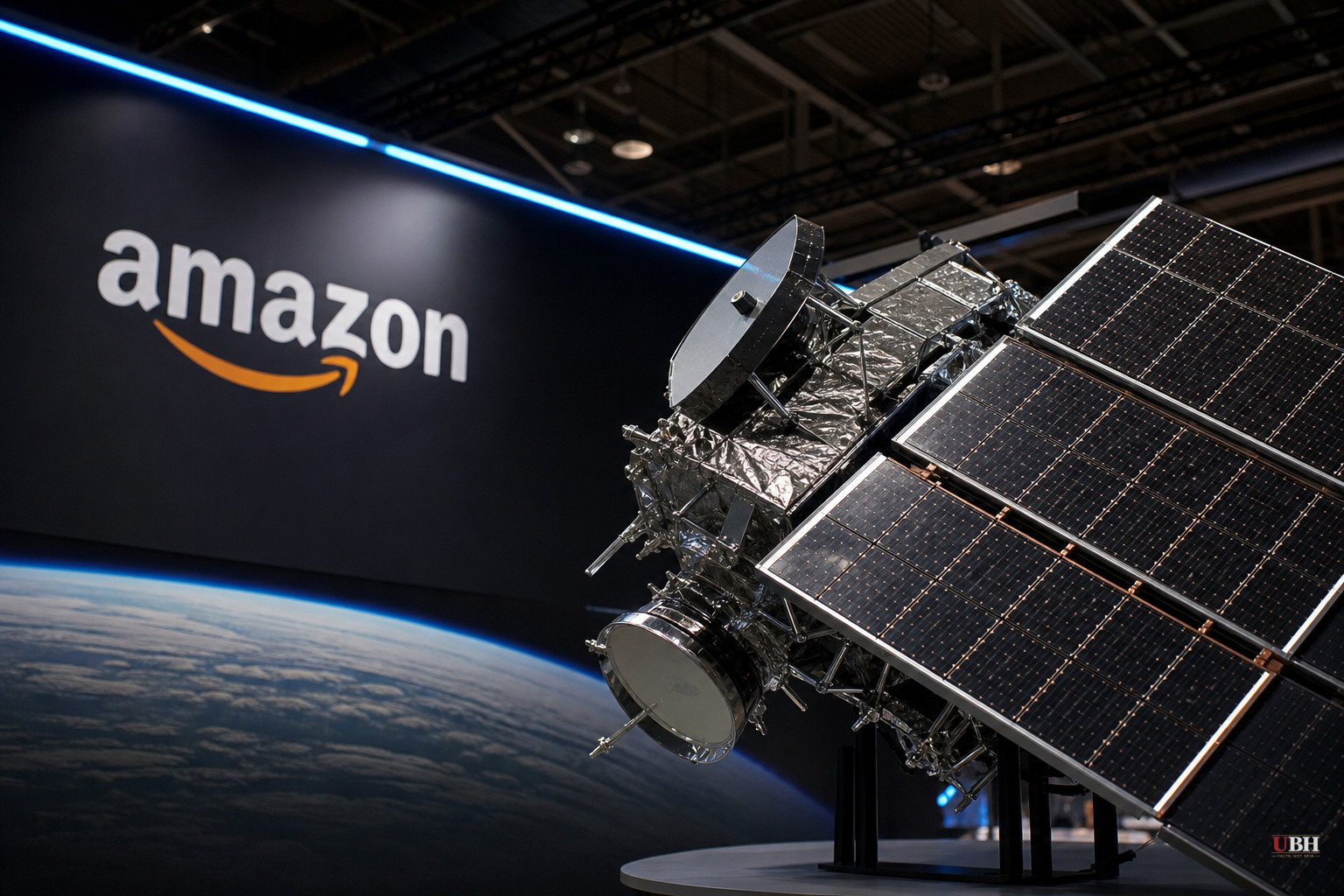
Amazon wants to put more than 5,000 new satellites in orbit to make your phone work in places cell towers don't reach. On Saturday, the company filed an application with the Federal Communications Commission to launch a constellation of 5,105 satellites offering direct-to-device service, covering voice calls, text messages, data, and emergency alerts, according to CNBC.
If the FCC signs off, Amazon plans to start launching in 2028. That's nearly double the roughly 3,232 satellites in Amazon's existing Leo constellation, known as Kuiper, which is meant to provide broadband internet and compete with SpaceX's Starlink.
The new network leans on spectrum Amazon is picking up through its acquisition of Globalstar, a satellite operator Amazon agreed to buy in a deal worth about $11.6 billion, first announced in April, according to CNBC. That deal is expected to close in 2027. Globalstar currently handles satellite connectivity for Apple devices, including the iPhone's emergency SOS feature, and Amazon says it plans to keep working with Apple on future satellite services once it takes over that infrastructure.
Amazon's filing says the goal is reaching people who are, in the company's words, "unserved or underserved" by existing wireless carriers. That means hikers off the grid, remote worksites, shipping fleets, and disaster zones where cell towers are down or never existed. The company also plans to partner with mobile carriers to offer the service, mirroring how Starlink already works with T-Mobile to deliver direct-to-cell coverage in the U.S., according to The Verge.
The Verge, citing Advanced Television, reported that Amazon's application also asks to use spectrum currently assigned to Iridium's satellite network outside the U.S. That's notable timing, since Rocket Lab is in the process of acquiring Iridium and has its own expansion plans. How that spectrum fight shakes out could shape whether Amazon's international coverage plans move forward smoothly or get tangled in a rights dispute with a competitor.
Where Amazon actually stands right now
As of July 2, Amazon says it has launched more than 375 satellites toward its original Kuiper constellation, with CNBC putting the more recent count above 390. That's a fraction of the 3,232 satellites required under its FCC license, and a much smaller fraction of the 5,105 additional satellites now proposed for the direct-to-device network.
Amazon isn't exactly on schedule, either. Last month, the FCC granted Amazon a waiver on a requirement to deploy 1,600 first-generation satellites by July 30, according to CNBC. Amazon still has to get all 3,232 satellites of its original constellation into orbit by July 2029, but the deadline relief shows the buildout has been slower than originally planned. Amazon has said the satellites already in orbit are enough to begin "initial service" later this year.
The competition is not waiting around
Starlink, run by SpaceX, already has more than 10,000 satellites in orbit and a working direct-to-cell product called Starlink Mobile, built off spectrum acquired from EchoStar and a carrier partnership with T-Mobile. Amazon is chasing a company with roughly a two-year head start and a constellation nearly three times the size of what Kuiper has launched so far.
Amazon's FCC filing is a statement of intent, not a working network. Getting FCC approval, closing the Globalstar acquisition, resolving whatever happens with the Iridium spectrum overlap, and then actually launching and activating 5,105 satellites is a multi-year undertaking with plenty of room for delay, as Amazon's own track record on its first constellation shows.
What happens next
The FCC now has to review Amazon's application, a process that typically involves public comment periods and, potentially, objections from competitors, including Rocket Lab over the Iridium spectrum question. No timeline for a decision has been set. Amazon has said the Globalstar deal itself is expected to close in 2027, one year before satellite deployment for the direct-to-device network is slated to begin in 2028. Whether that schedule holds, given Amazon's history of needing regulatory extensions on its existing satellite obligations, is the open question regulators and competitors will be watching closest.
Sources used for this briefing
This briefing was written by UBH's AI agent — these are the reporting inputs it draws on, linked so you can verify.


