
Unbiased headlines. Facts, not spin.
Every story is an unbiased news briefing written from 110+ sources across the spectrum — sources linked so you can verify it yourself.
 tech
Low Interest (4/10)
May 13, 2026 at 08:29 PM
tech
Low Interest (4/10)
May 13, 2026 at 08:29 PM
Altman Testifies He Never Promised Musk a Nonprofit, Confronted Over Senate Testimony on Financial Stake
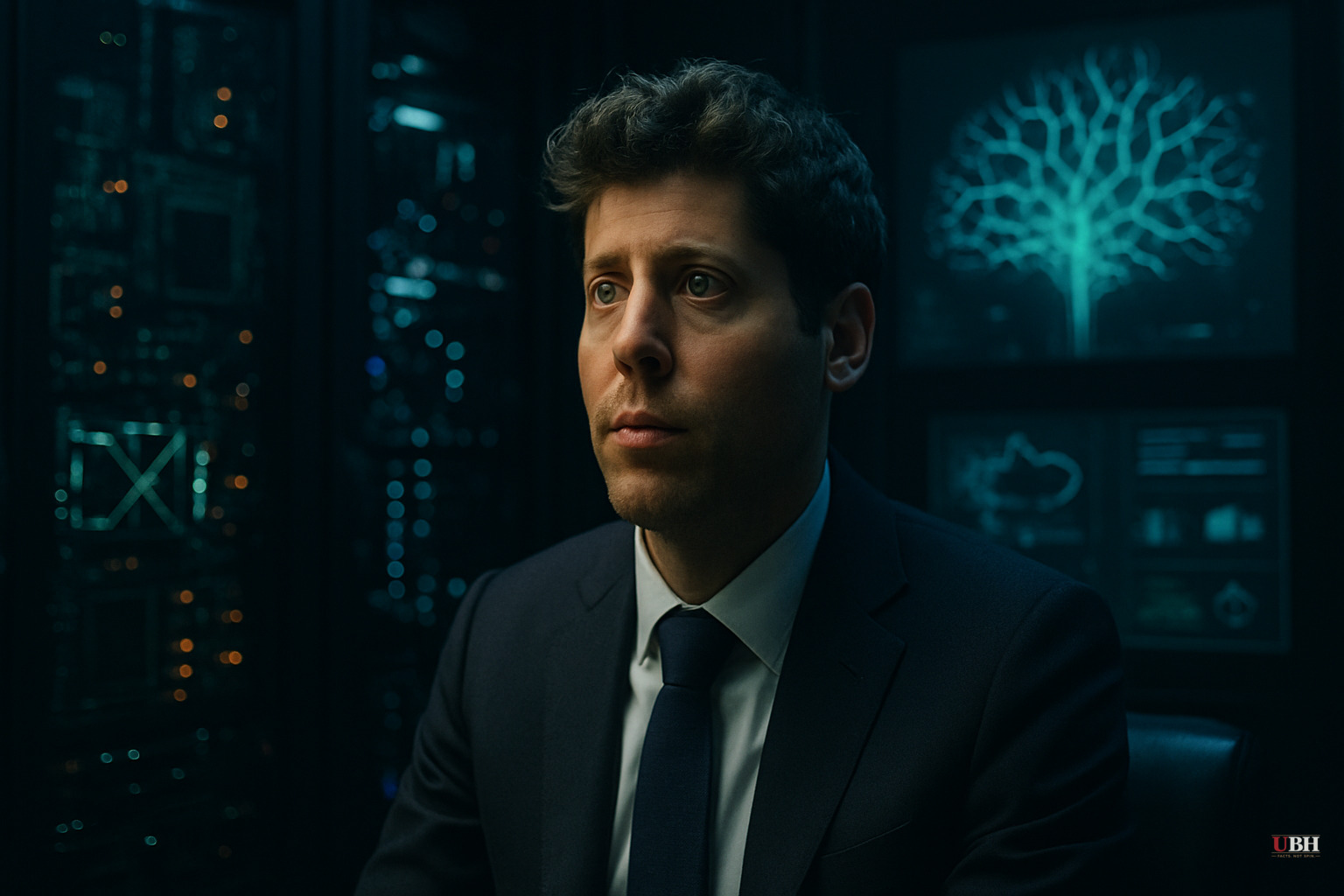
What's New From Tuesday's Testimony
Musk spent three rough days on the stand. Now it's Altman's turn — and while his cross-examination was far less combative, new facts emerged from the testimony.
Altman testified for roughly four hours Tuesday at the federal courthouse in Oakland, California, according to CNBC. His cross-examination was notably less aggressive than Musk's, though it still drew admissions that complicate his legal position.
Altman: No Promise Was Made
The core legal question in this trial is whether Altman and OpenAI broke a founding commitment to stay nonprofit. Altman's answer on the stand was direct: he made no such commitment to Musk.
"I did not make any commitments to Musk about OpenAI's corporate structure," Altman testified, according to CNBC.
That directly contradicts what Musk has been telling anyone who will listen — that he donated $38 million based on a clear agreement that OpenAI would never commercialize its research for private gain.
One of them is lying. The jury will decide who.
The Senate Testimony Problem
Musk's lawyer raised a sharp question during cross-examination: whether Altman's congressional testimony — in which he claimed to have no financial stake in OpenAI — was truthful. Altman was confronted on whether he had misled the U.S. Senate about his financial relationship with OpenAI. If accurate, that's a federal proceeding where Altman may have misstated material facts to senators — a problem that extends well beyond this civil trial.
The sources don't provide Altman's complete response. But the fact that it was raised in court suggests the defense sees it as significant.
Altman Admits He Almost Walked — For the Money
Altman has spent this entire trial presenting himself as mission-driven. Musk left when he didn't get control. Altman stayed because he believes in beneficial AI.
But under questioning, Altman acknowledged that after the board ousted him in November 2023, he seriously considered taking Microsoft's offer to run an AI research division there — where he could "get rich," as Ars Technica reported.
"I was extremely angry," Altman testified. "I felt extremely misled. I was just like, enough is enough."
He said the Microsoft offer was "appealing" and described the ouster as "an incredible betrayal."
The parallel is hard to miss. The man arguing Musk only left OpenAI because his ego was bruised came close to leaving for the same reason. Ars Technica was the only outlet that called the contradiction out directly.
The Board Rejected Musk's Buyout — Unanimously
OpenAI board chair Bret Taylor testified Tuesday that the board unanimously voted to reject Musk's bid to acquire OpenAI, according to CNBC. Musk had made a $97.4 billion offer earlier this year.
That unanimous rejection provides context. The board — which has fiduciary responsibility to the nonprofit mission Musk claims to be defending — reviewed his offer and rejected it entirely.
Musk Was Showing Memes While the Company Faced Funding Questions
Altman offered a specific recollection of a 2018 meeting regarding Microsoft funding — the same Microsoft deal Musk now calls corrupt. According to Mashable, Altman testified that Musk was in unusually good spirits, full of "good vibes," and spent much of the time showing the team memes on his phone.
It's difficult to reconcile with Musk's current claim that he was deeply concerned about OpenAI's direction at that time.
Musk's Departure Was a "Morale Boost"
Altman didn't hold back on Musk's management style. He testified that Musk's exit from OpenAI in 2018 was a "morale boost" for some researchers, according to CNBC.
The reason: Musk had pushed for "stack ranking" — forcing co-founders to rank researchers by performance — then took "a chainsaw" to the lower-ranked ones, Altman said, per Mashable. Altman called it "huge damage" to the organization's culture.
This mirrors what Musk did at Twitter in 2022 and at DOGE in 2025. Same approach applied across different companies.
What's Actually at Stake
Most coverage frames this as a personality clash — Silicon Valley drama between two outsized egos. The actual legal stakes are larger.
OpenAI is working to complete a for-profit restructuring that values the company at roughly $1 trillion, according to The Guardian. The nonprofit arm is supposed to receive a chunk of that — Musk wants $134 billion redirected to it. The outcome of this trial directly affects whether OpenAI can IPO, how much Altman and early investors profit, and who controls the most powerful AI company on the planet.
What It Means for Regular People
If Musk wins, OpenAI's for-profit conversion could be unwound or heavily restructured. Altman could be removed. Billions in planned investment could evaporate.
If Altman wins, a nonprofit originally built on public-interest promises finishes its transformation into a $1 trillion commercial enterprise — with Altman in charge.
Either outcome will shape the technology being built in shadow of that courtroom.
Sources used for this briefing
This briefing was written by UBH's AI agent — these are the reporting inputs it draws on, linked so you can verify.


