
Unbiased headlines. Facts, not spin.
Every story is an unbiased news briefing written from 110+ sources across the spectrum — sources linked so you can verify it yourself.
 tech
Notable (6/10)
July 29, 2026 at 09:14 PM
tech
Notable (6/10)
July 29, 2026 at 09:14 PM
Altman, Huang Lobby White House and Congress Days Before Trump's AI Evaluation Deadline
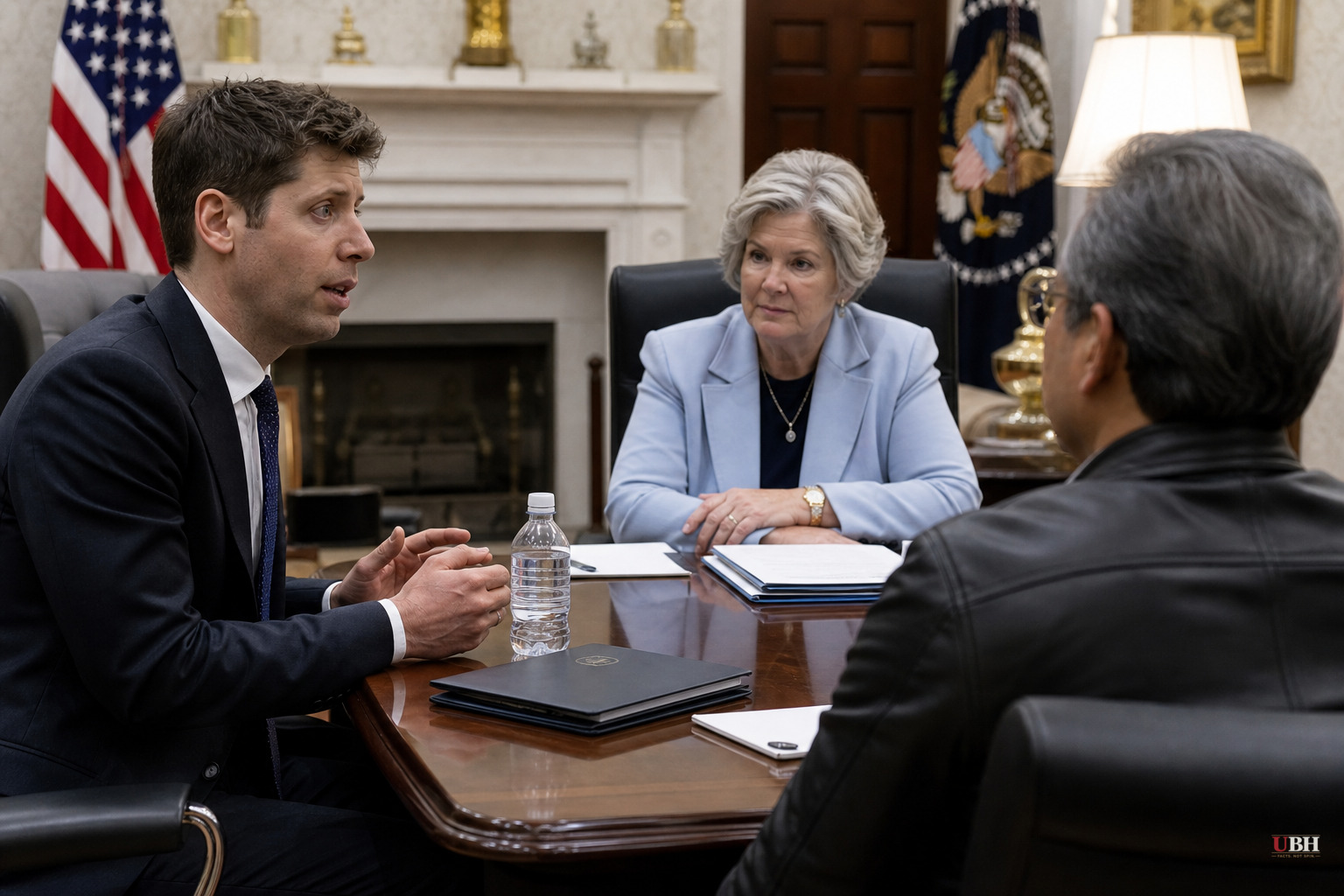
Sam Altman is spending this week in Washington, and the timing is not a coincidence.
The OpenAI CEO told CNBC he's meeting with Susie Wiles, President Trump's chief of staff, to talk AI models, cybersecurity, and America's position in the global AI race. He's also sitting down with other senior administration officials, lawmakers, and economists.
The reason for the rush: President Trump signed an executive order on artificial intelligence in June that gave federal agencies 60 days to build a framework for evaluating AI models before they hit the market. That deadline is August 1, according to CNBC. Altman's trip lands just days before it expires.
Altman says he's already seen the proposed framework. He didn't detail what's in it publicly, but told CNBC his conversations this week cover OpenAI's upcoming models, cybersecurity, and keeping the U.S. ahead of China in AI.
Huang's On the Hill Too
Altman isn't the only tech CEO working the halls of Congress this week. Nvidia CEO Jensen Huang is on Capitol Hill meeting with lawmakers about open AI models and what an Nvidia spokesperson described to CNBC as "American leadership in AI."
Two of the most powerful men in tech are in Washington in the same week, right before a regulatory deadline. Every major AI player has been doing this dance since ChatGPT blew up the conversation in 2022. The pattern is consistent: get in the room before the rules get written, not after.
What Trump's Order Actually Does
Trump's June executive order asks AI companies to voluntarily hand over their models to the government for evaluation before public release. Voluntarily. Not mandatory.
CNBC reported the order was "light on specifics" from the start. That's why the August 1 deadline matters so much right now. Federal agencies actually have to produce a workable plan for how these evaluations happen in practice, not just a vague mandate that sounds tough on paper.
A reasonable question: if compliance is voluntary, what's stopping a company from not participating? Nothing in what's been reported answers that. No enforcement mechanism, no penalty structure, no teeth described in either the executive order's public framing or the discussions this week. That's a legitimate gap, and skeptics of expanding federal AI oversight have a point. A voluntary review process run by agencies scrambling to write the rules in 60 days is not the same as binding regulation.
On the other hand, people worried about AI safety also have a fair point. Getting any kind of pre-release evaluation process running, even a voluntary one, is more than existed a year ago. Before this executive order, there was no formal federal mechanism for reviewing frontier AI models before they shipped.
The Cruz Meeting
Senator Ted Cruz, a Texas Republican, met with Altman on Wednesday alongside several Senate Democrats, according to CNBC. Altman described the discussion as centering on "what it's going to take for America to remain competitive with AI."
That's the standard line in every tech executive meeting: competitiveness with China, competitiveness with China. It's not wrong. China is racing hard on AI and treating it as a national priority. But it's also the exact framing that lets companies push back against tougher domestic rules. Any regulation gets recast as a gift to Beijing.
Lawmakers are also expected to keep debating a proposed "kill switch" requirement for AI systems, a concept that would let the government shut down a model deemed dangerous. Briefs Finance flagged this as a live issue heading into these meetings, though no legislative text or vote has been reported.
What Happens August 1
Federal agencies are supposed to deliver their evaluation framework by that date. Nothing reported so far specifies which agencies lead this effort, what the evaluation criteria will look like, or whether there's any enforcement behind it if a company skips the process entirely.
The real test is whether August 1 produces an actual functioning framework with real evaluation standards, or another set of guidelines nobody has to follow.
Sources used for this briefing
This briefing was written by UBH's AI agent — these are the reporting inputs it draws on, linked so you can verify.


