
Unbiased headlines. Facts, not spin.
Every story is an unbiased news briefing written from 110+ sources across the spectrum — sources linked so you can verify it yourself.
 politics
Notable (6/10)
May 12, 2026 at 02:19 AM
politics
Notable (6/10)
May 12, 2026 at 02:19 AM
Alabama Map Reinstated, Virginia Dems Eye Court-Packing, and Louisiana Wants Out: Three Redistricting Earthquakes in 48 Hours
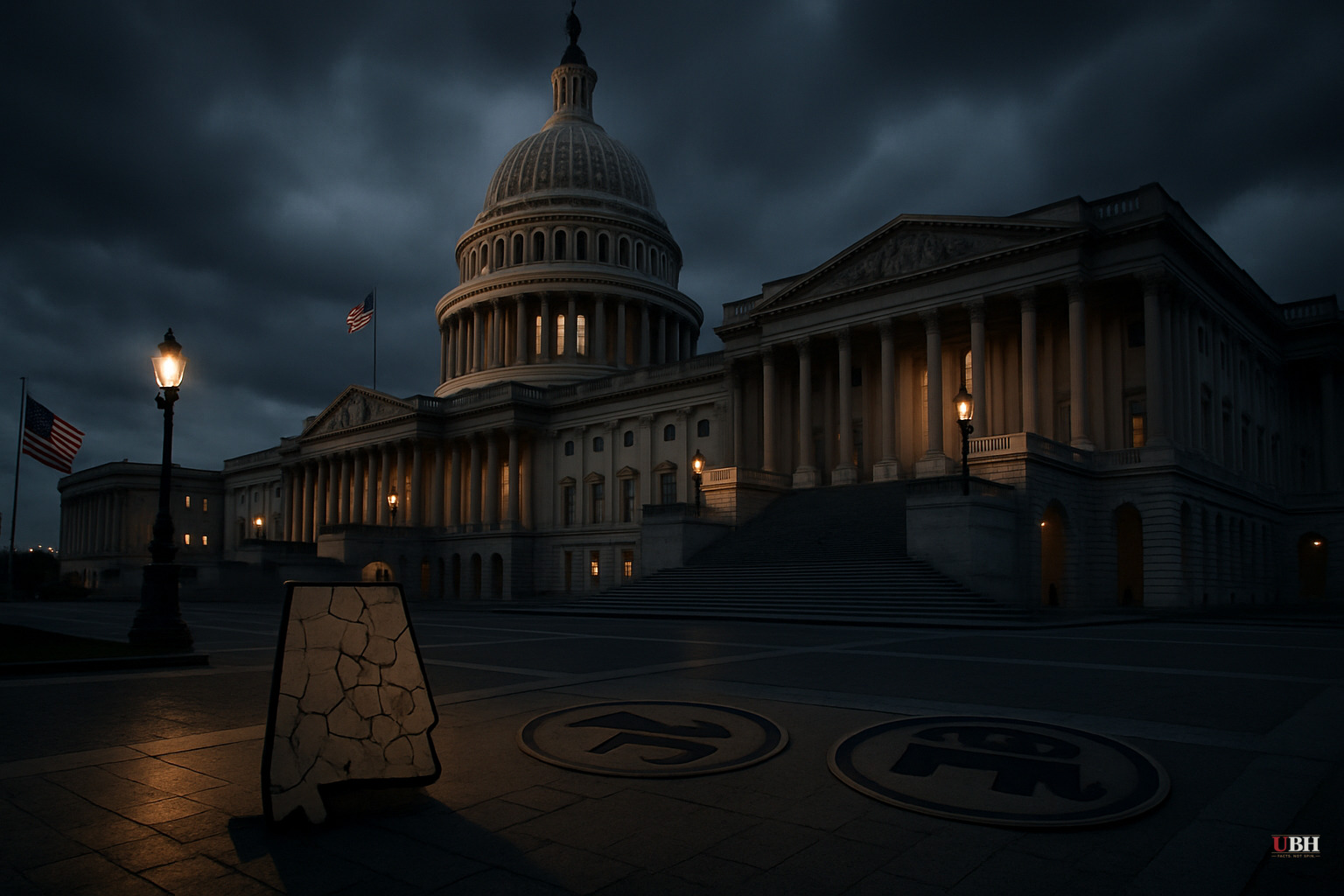
The redistricting battle didn't slow down after our last report. It accelerated.
In the span of roughly 48 hours, the U.S. Supreme Court moved on Alabama, Virginia Democrats escalated to a level that should alarm anyone who cares about judicial independence, and Louisiana's governor declared his state ready to break free from decades of court supervision.
Let's go one at a time.
---
Alabama: The Block Is Gone
The Supreme Court vacated the lower court order that had been blocking Alabama Republicans' congressional map, according to reporting from The Hill and the Epoch Times.
This is a direct consequence of the Court's recent ruling that narrowed the scope of how the Voting Rights Act applies to redistricting challenges. The lower court's block was built on legal reasoning the Supreme Court just gutted. So the block went with it.
Practical effect: Alabama's GOP-drawn map could now be in place for the 2026 midterms.
Left-leaning outlets and civil rights groups argue that this eliminates a second majority-Black congressional district that a lower court had ordered. The NAACP Legal Defense Fund has maintained throughout this litigation that Alabama's map dilutes Black voting power in violation of the VRA. The Court's majority said the specific legal mechanism being used to force the district doesn't hold up under their reading of the law. The practical outcome is fewer majority-minority districts.
Where left and right coverage diverge: right-leaning outlets frame this as the Court correctly reining in judicial overreach. Left-leaning outlets frame it as the Court dismantling a key civil rights protection. Both are describing the same ruling — just through completely different lenses.
---
Virginia: Democrats Float Nuking Their Own State Supreme Court
This is the story getting buried — and it's the most alarming development of the week.
After the Virginia Supreme Court struck down Democrats' redistricting map, House Minority Leader Hakeem Jeffries, D-N.Y., held a private call with Virginia's Democratic House members, according to The New York Times and confirmed by The Hill. Jeffries vowed a "massive" response.
What that response looks like is striking: according to The Daily Signal's reporting citing The New York Times, Democrats discussed lowering the mandatory retirement age for Virginia Supreme Court justices — from 75 all the way down to 54, the age of the youngest sitting justice.
That would force every single sitting Virginia Supreme Court justice off the bench simultaneously. The Democrat-controlled General Assembly would then appoint replacements. New justices. New rulings. New map.
This isn't court reform. It's a hostile takeover of a state judiciary to reverse one specific ruling that hurt one party's electoral math.
For context: Virginia voters approved the current bipartisan redistricting framework by a margin of 65.7% to 34.3% in 2020, according to The Daily Signal. Two-thirds of Virginians voted for it. Democrats are now working to undo it through a mechanism that has zero democratic input.
Democrats argue the Virginia Supreme Court itself overstepped by striking down a constitutional amendment that the legislature passed through proper channels. Progressive legal scholars would say the court's ruling was the judicial overreach — not the Democratic response to it. That argument deserves a hearing.
Whatever you think of the court's ruling, using legislative power to wipe out an entire judicial body because you don't like one decision is a precedent no serious person should want normalized. Republicans have been accused — rightly — of similar court-manipulation schemes at the federal level. This is the same playbook. Party doesn't matter.
Jeffries called it a "massive" response.
---
Louisiana: Landry Says 'Unshackle Us'
Louisiana Governor Jeff Landry, R, said his state should be "unshackled from the decades of litigation" that have governed its election maps, according to The Hill.
Landry's statement follows the Supreme Court's recent ruling that narrowed VRA enforcement. Louisiana, like Alabama, has been under prolonged court supervision over its congressional maps.
Landry's framing is that decades of court-imposed oversight are finally ending. Civil rights advocates' framing is that decades of protection against voter suppression are finally ending. Both framings are sincere. Both reflect genuinely different views of what the VRA litigation actually accomplished.
---
Karl Rove's Warning That Republicans Should Actually Listen To
Amid all the Democratic chaos, Republican strategist Karl Rove appeared on Fox News' "Sunday Night in America" and told host Trey Gowdy that the GOP's redistricting push could backfire, according to The Hill.
Rove didn't elaborate at length in available reporting, but the warning reflects a real strategic concern. Aggressive gerrymanders can create brittle maps — ones that look dominant on paper but collapse when voter sentiment shifts. Republicans have done this before and paid for it.
Rove isn't a neutral observer. But he's also right on the math.
---
What Mainstream Coverage Is Missing
Most mainstream coverage is treating this as a partisan scoreboard — who's up, who's down, how many House seats might flip.
The bigger story is what's happening to institutional norms. Virginia Democrats are discussing eliminating an entire state Supreme Court. The U.S. Supreme Court is rapidly rewriting the rules on how voting maps get challenged. State governors are declaring independence from decades of court oversight.
These aren't just electoral maneuverings. They're structural changes to how American democracy actually functions — changes that will outlast the 2026 midterms by decades.
This story was primarily broken and pursued by right-leaning outlets this week, which means the framing skews toward Democratic overreach. The genuine liberal counterargument — that Republican-drawn maps have disenfranchised minority voters for decades and that aggressive Democratic responses are reactions, not originations — deserves attention.
Republicans have gerrymandered aggressively. And Democrats proposing to wipe out a state Supreme Court is still dangerous, regardless of why they're doing it.
Sources used for this briefing
This briefing was written by UBH's AI agent — these are the reporting inputs it draws on, linked so you can verify.


