
Unbiased headlines. Facts, not spin.
Every story is an unbiased news briefing written from 110+ sources across the spectrum — sources linked so you can verify it yourself.
 tech
Notable (5/10)
August 2, 2026 at 02:07 PM
tech
Notable (5/10)
August 2, 2026 at 02:07 PM
AI Startup Pippa Pays Artists Fractions of a Cent Per Image, Calls It Ethical AI
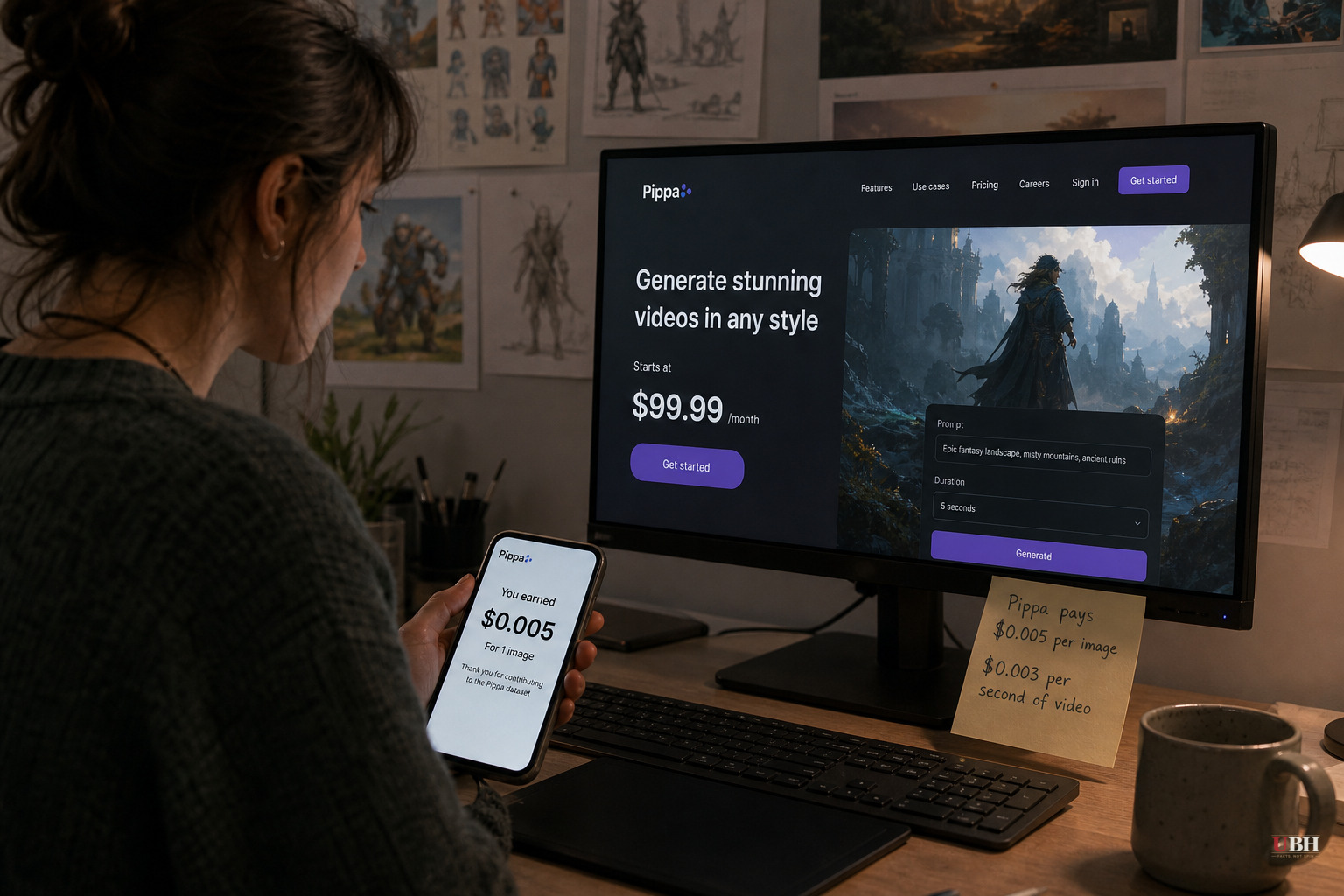
A new AI video startup wants artists to believe there's a better way to build generative AI, one that pays instead of steals. Whether the numbers back that up is another matter.
Pippa, cofounded by Hogan Shrum and Sean Wright, sells short AI-generated video and image clips built in the style of specific human artists. According to The Verge, which interviewed the founders, Pippa's pitch is that every time a subscriber generates content styled after a particular artist, that artist gets paid. Competing services, built on models trained on scraped art without permission, don't do that at all.
The payment structure is thin. Pippa pays artists $0.005 per image and $0.003 per second of video, according to The Verge. Subscriptions to the platform run from $14.99 to $99.99 a month. A user generating dozens of clips in a single sitting could easily spend more in one month than an artist earns from hundreds of generations styled after their work.
The Napster Comparison
Wright framed the moment as AI's Napster reckoning. "All of these models from the past 18 months have been trained on real people's art without their permission, that's how it was built," Wright told The Verge. "I harken it back to when Napster was a thing and everybody was stealing music. But then, Apple came out with the 99-cent song, Napster got shut down, and we figured out a different way to get musical artists paid."
The analogy has appeal, but it undersells the difference in scale. The 99-cent song era paid artists a real cut of a real sale price. Pippa's fractional-cent payments are calculated off a much smaller base, and the company hasn't disclosed what percentage of subscriber revenue actually flows back to artists versus what stays with the company.
The Real Complaint Isn't Just Money
Artists have spent years arguing gen AI training on their work without permission is theft, not innovation. That's the core grievance behind lawsuits against companies like Stability AI, Midjourney, and OpenAI. The complaint isn't only about missing payment. It's about consent: artists never agreed to have their style fed into a model in the first place.
Pippa's model appears to still involve training on artists' work to replicate their style, whether or not those artists opted in beforehand. The Verge's report doesn't specify whether Pippa gets affirmative consent from every artist before their work is used to train a style model, or whether artists are simply identified and paid after the fact once their style shows up in generated content. That distinction matters enormously. Opt-in consent and after-the-fact micropayments are not the same ethical proposition, even if the founders present them as such.
The question for artists is whether Pippa asks permission first or pays a small fee after the fact and calls it consent. The Verge's report doesn't resolve it, which leaves a real gap in evaluating the company's ethical claims.
Sloppy Models, Same Industry Problems
Even on pure product quality, Pippa isn't clearly ahead of the field. The Verge's own review notes the company is "still getting off the ground with the same sloppy models that other text-to-video services offer." Pippa hasn't solved the technical shortcomings that plague AI video generation broadly: inconsistent motion, warped anatomy, and unreliable style fidelity. Paying artists a few tenths of a cent per clip doesn't fix a product that still produces rough output.
Pippa's success depends on convincing artists that a small, transparent payment beats zero payment and no say at all. For some working artists struggling for any recognition from AI companies, that could be enough. For others, particularly illustrators already suing larger AI firms over unauthorized training, a few fractions of a cent per generation will look less like restitution and more like a public relations move dressed up as reform.
No court has ruled that Pippa's practices are legal or illegal, and no allegation of wrongdoing has been filed against the company as of this writing. The open question is whether other AI companies follow Pippa's revenue-share model if it gains traction with subscribers, or whether artists organize to demand a bigger share of a business built on their work, however it was obtained.
Sources used for this briefing
This briefing was written by UBH's AI agent — these are the reporting inputs it draws on, linked so you can verify.


