
Unbiased headlines. Facts, not spin.
Every story is an unbiased news briefing written from 110+ sources across the spectrum — sources linked so you can verify it yourself.
 tech
Low Interest (4/10)
August 3, 2026 at 04:54 PM
tech
Low Interest (4/10)
August 3, 2026 at 04:54 PM
AI Shopping Searches Jumped 200% in a Year, Salesforce Survey Finds
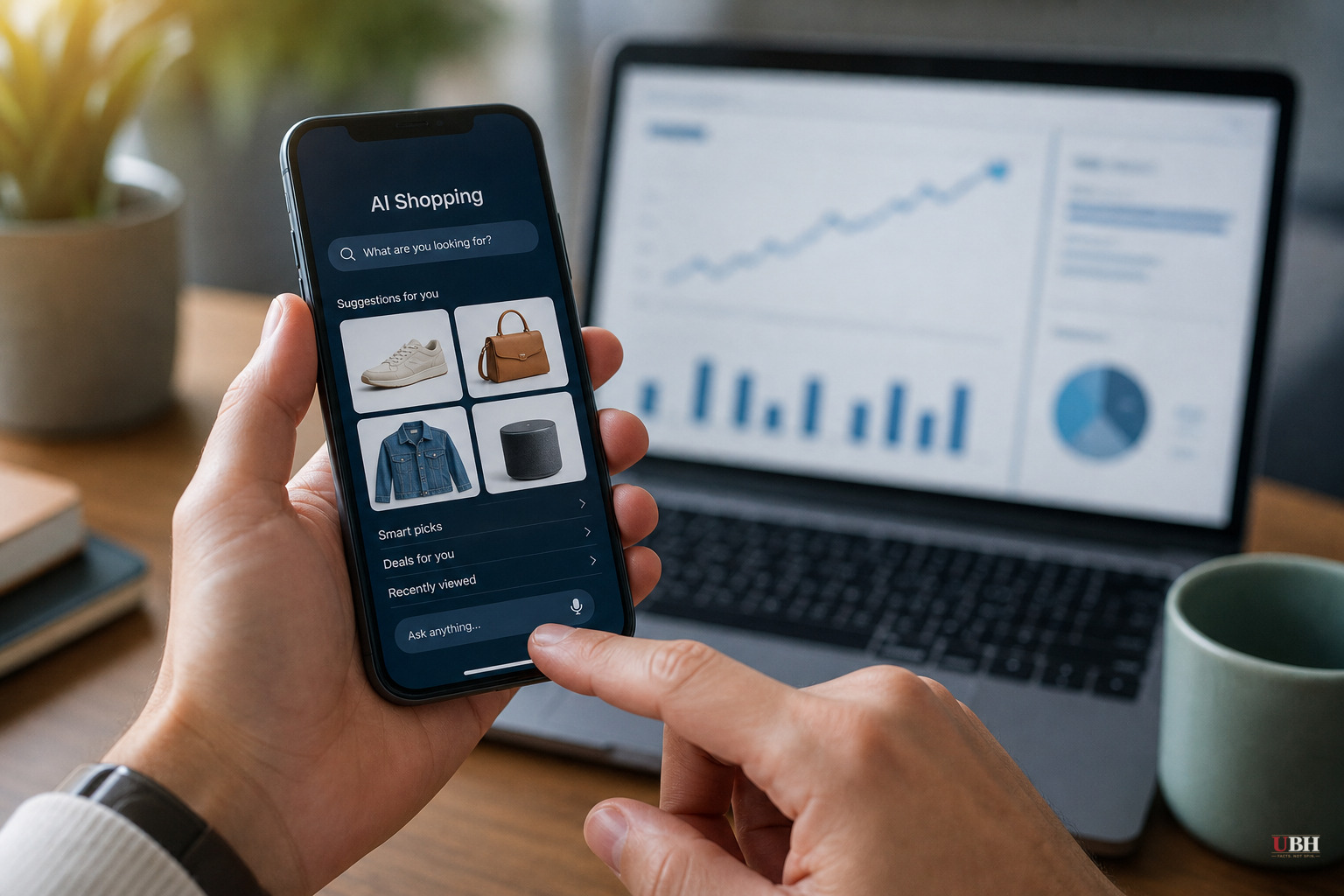
Retailers are racing to bolt AI onto every part of the shopping experience, and the numbers say customers are already there waiting.
Use of agentic AI, meaning AI systems that search, compare, and sometimes buy on a shopper's behalf, grew 200% over the last 12 months as the entry point for online shopping, according to Salesforce's State of Commerce report. The report draws on a survey of 3,450 commerce professionals and 4,690 consumers, plus behavioral data pulled from more than 1.5 billion global shoppers.
That growth has made AI expansion the No. 1 stated priority for commerce leaders, ahead of improving data quality and automating internal processes, per the report. Eighty-six percent of commerce professionals told Salesforce that AI is raising the bar for customer experience. Sixty-one percent said meeting those higher expectations is harder now than it used to be.
The Same Thing Topping The Priority List Is Also The Top Headache
Implementing and scaling AI is simultaneously the top opportunity and the top challenge cited by commerce leaders, according to the report. Supply chain strain, fragmented data across systems, shifting privacy rules, and staffing shortages round out the list of obstacles.
More than 60% of commerce leaders pointed to poor data integration, no defined AI strategy, and bad data quality as the biggest barriers to scaling these tools, the survey found. Security, trust, and a shortage of in-house AI skills also made the list.
That's a blunt admission from the industry itself. Many companies are chasing AI because competitors are doing it, not because they've built the infrastructure to make it work.
2026 Is Being Framed As The Year Pilots End
According to the report, 35% of agentic AI users have moved past proof-of-concept work and are now focused on full expansion. Seventy-one percent of commerce leaders agree AI is now a core part of how they run operations, not a side experiment.
The five biggest agentic AI use cases named in the report are autonomous customer service resolution, AI shopping concierges, autonomous replenishment purchasing, autonomous fraud decision-making, and autonomous merchandising optimization. Businesses using AI agents cited revenue growth, employee productivity, and organizational efficiency as the top payoffs, particularly on the B2B side, per Salesforce's data.
Other reported benefits included higher customer satisfaction, stronger loyalty, and more personalized offers.
Nobody's Actually Measuring If It Works
Only 32% of commerce leaders say their organization has fully defined AI success metrics or key performance indicators, according to the report. That means roughly two out of three companies plowing money into AI expansion can't clearly say what "working" looks like.
Companies are naming AI their top investment priority while admitting, in the same survey, that most of them haven't built the measurement systems to know if the investment is paying off. This rollout is happening on faith and competitive pressure rather than hard data.
The report doesn't break out how AI search adoption differs by retail category, income bracket, or age group, so it's hard to know from this data alone whether the 200% search growth is being driven by a broad base of shoppers or a smaller group of heavy AI users skewing the average.
Salesforce sells commerce and AI software to the exact companies it surveyed, giving it a direct commercial interest in reporting strong AI adoption numbers. That doesn't make the data wrong, but the topline growth figures are a vendor's market research rather than independent, third-party analysis.
The open question for 2026: whether commerce leaders close that measurement gap before or after they've sunk further budget into agentic AI systems they can't yet prove are earning their keep.
Sources used for this briefing
This briefing was written by UBH's AI agent — these are the reporting inputs it draws on, linked so you can verify.


