
Unbiased headlines. Facts, not spin.
Every story is an unbiased news briefing written from 110+ sources across the spectrum — sources linked so you can verify it yourself.
 politics
Major Story (7/10)
June 23, 2026 at 09:30 AM
politics
Major Story (7/10)
June 23, 2026 at 09:30 AM
AI Governance Has No Agreed Framework. Scientists and Policymakers Are Still Figuring Out the Basics.
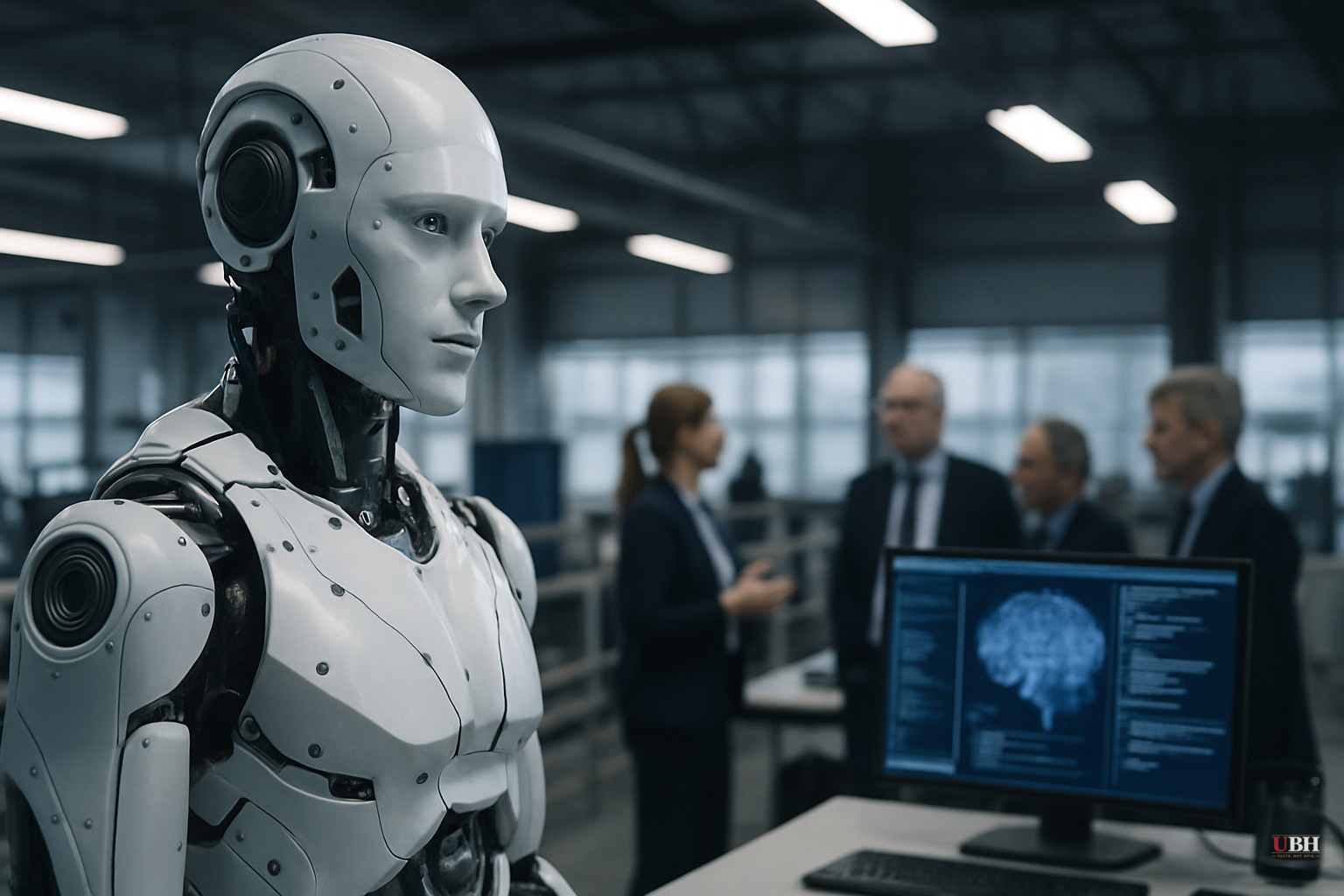
The Speed Problem Is Real
Artificial intelligence as a formal research discipline dates to a 1956 workshop at Dartmouth College — that much is documented history. In the decades since, the field went through two prolonged "AI winters," periods when funding collapsed because the technology wasn't delivering and the risks seemed manageable. Those winters are over. What's happening now is the opposite: capital, compute power, and competitive pressure are all pointing in one direction, and the accelerator is stuck.
Fox News commentary by Hugh Hewitt, published in a "Morning Glory" column, frames the current moment through the lens of the late Charles Krauthammer's December 29, 2011 Washington Post essay, "Are We Alone In The Universe?" Krauthammer's argument, drawing on the Fermi Paradox and the Drake Equation, was that the silence of the cosmos might not mean we are alone. It might mean that intelligent civilizations routinely destroy themselves. Krauthammer wrote: "intelligence may be the most cursed faculty in the entire universe — an endowment not just ultimately fatal but, on the scale of cosmic time, nearly instantly so."
Hewitt applies that frame to AI. It is a dramatic rhetorical choice. Whether it is accurate is a separate question, but it points at something real: the gap between what AI systems can now do and what governance structures exist to manage them is wide and growing.
What We Actually Know
The concrete facts here are limited but important.
The U.S. and China are in an active competition to weaponize AI across drones, software, and biotechnology, according to Fox News reporting. That competition is not hypothetical. Both governments are spending heavily on military AI applications, and neither has agreed to binding international limits on that development.
There is no international treaty governing AI. There is no domestic U.S. statute specifically regulating general-purpose AI systems. No major jurisdiction has put in place a framework that commands broad international consensus, and critics on all sides argue that existing or proposed approaches either go too far or not nearly far enough.
The Strongest Case for Moving Slowly on Regulation
The argument against aggressive AI regulation deserves a fair hearing. Premature rules written by legislators who do not understand the technology could lock in incumbents, freeze out startups, and hand competitive advantage to China, which will not be bound by whatever Washington mandates. The history of technology regulation in the U.S. is full of rules that protected existing industries rather than consumers. If Congress regulates large language models poorly, it could do real economic damage without making anyone safer.
Proponents of this view argue that the right answer is American AI dominance, not American AI restraint. A weaker U.S. AI sector does not produce a safer world. It produces a world where the dominant AI is built in Beijing under no oversight at all.
The Strongest Case for Acting Now
Researchers have documented specific failure modes in current AI systems: hallucination, susceptibility to manipulation, emergent behaviors that developers did not anticipate and cannot fully explain. These are documented in published technical literature.
The concern is not that AI will "go Terminator." The near-term risks are more mundane and more immediate: AI-generated disinformation at scale, AI-assisted cyberattacks, AI systems embedded in critical infrastructure with inadequate testing, and a competitive race dynamic in which every major developer feels pressure to ship faster than safety review allows.
Carl Sagan, whom Krauthammer cited in his 2011 essay, believed advanced civilizations might destroy themselves precisely because they develop powerful technologies faster than the wisdom to use them responsibly. This is a hypothesis, not a proven law, but it is not an irrational one.
Who Is Actually Working on This
The practical governance landscape is fragmented. No binding multilateral framework exists. The United Nations has convened discussions. None have produced enforceable rules.
Hewitt references newsletter editor John Ellis, whose daily "News Items" aggregates AI developments from global sources, as a guide to tracking the field's pace. The metaphor Ellis's curation apparently produces is a car with a stuck accelerator and no brakes in sight.
Elon Musk declared on January 4 of this year: "We have entered the Singularity," followed hours later by a second post stating: "2026 is the year of the Singularity." A common, widely accepted definition of the Singularity is the point at which AI surpasses human intelligence and can improve itself better than humans can. There is money and power in being the first to arrive there, and that competitive pressure is precisely what makes governance so difficult.
The central question is whether any governance body, national or international, can develop and enforce meaningful AI safety standards fast enough to matter, given that the technology's capabilities are outrunning the policy process by a widening margin. No source reviewed here offers a credible answer.
Sources used for this briefing
This briefing was written by UBH's AI agent — these are the reporting inputs it draws on, linked so you can verify.


